Do you ever feel like your attention is a scattered handful of confetti, constantly blown about by notifications and endless streams of content?
You’re not imagining it. In our hyper-connected world, our attention spans are shrinking, our stress levels are rising, and our sleep is suffering. The very technology designed to connect us is often leaving us feeling exhausted, isolated, and fundamentally unhappy.
But there is a simple, science-backed solution that acts as a profound reset button for your brain and life: Tech-Free Time.
This isn’t about Luddite living. It’s about being intentional. It’s about recognizing that happiness isn’t a digital commodity—it’s a chemical, cognitive, and emotional state we can cultivate by consciously stepping away from the screen.
In this deep dive, we’ll explore the real, clinical science behind why unplugging is an essential component of an unplugged routine and your most powerful tool for achieving lasting happiness.
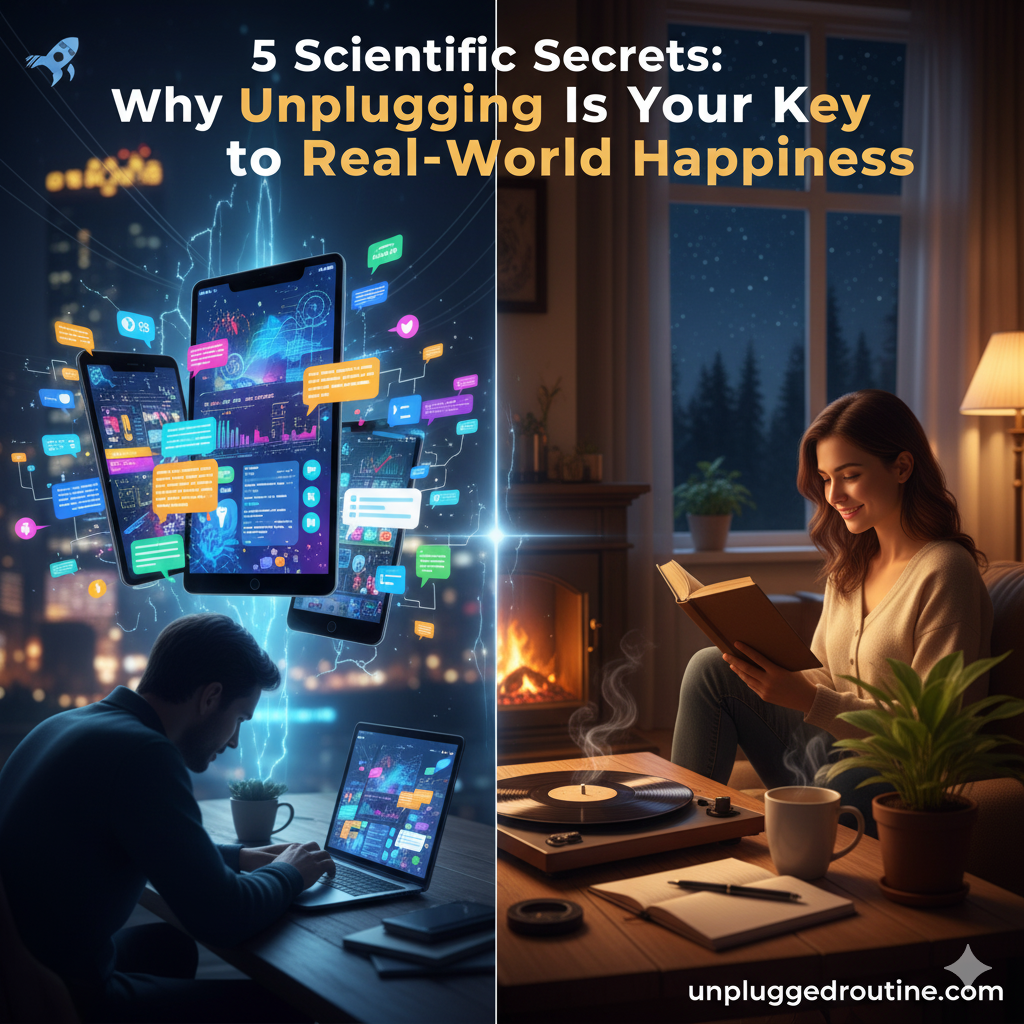
Section 1: The Neuroscience of Overload – Why Our Brains Need a Break
Before we get to the cure, we must understand the cause. Our constant digital engagement is placing a massive, unsustainable demand on our nervous systems.
The Dopamine Trap: Instant vs. Sustained Gratification
At the core of our digital addiction is the neurotransmitter dopamine. Often called the “pleasure chemical,” dopamine’s primary role is actually to drive motivation and seeking behavior.
Every like, every new text, every scroll-stop on a sensational headline delivers a small, predictable dopamine hit.
Technology companies engineer platforms to maximize these hits, keeping you in a cycle of constant seeking. Your brain learns that low-effort, fast-reward activities (scrolling) are the most efficient path to motivation, diminishing your tolerance for high-effort, slow-reward activities (deep work, reading a book, meaningful conversation).
- The Result: You lose the ability to find joy in quiet moments or sustain focus on complex tasks, leading to what psychologists call anhedonia—the inability to feel pleasure from normally enjoyable activities.
When you commit to Tech-Free Time, you reduce the flood of these immediate, impulsive rewards, allowing your dopamine system to recalibrate. This is the first, essential step to reclaiming sustained happiness.
Cognitive Overload and Decision Fatigue
Imagine trying to juggle twelve balls at once. That’s what your brain does when you constantly switch between apps, tabs, emails, and conversations. This mental strain is known as cognitive overload.
The sheer volume of information we process daily—from endless news feeds to work notifications—depletes our mental energy reserves. This leads to:
- Reduced Focus: Your brain sacrifices deep, sustained concentration for rapid, shallow task-switching. Studies confirm that excessive screen time degrades attention span.
- Decision Fatigue: When your mental energy is spent sorting through notifications, you have less capacity for important decisions in your real life, making you more prone to poor choices, stress, and irritability.
Unplugging is the act of turning off the data firehose, giving your prefrontal cortex—the decision-making hub—the space to rest and rebuild its strength.
Section 2: The 5 Scientific Secrets Benefits That Define True Happiness
When you integrate Tech-Free Time into your life, the positive changes aren’t just anecdotal—they are measurable shifts in your psychological and physiological well-being.
Secret 1: Enhanced Sleep Quality (The Melatonin Reset)
This is one of the most critical, immediate benefits of unplugging. Your sleep regulates everything from mood to immune function. Screens are its enemy.
- The Blue Light Problem: Devices emit blue light, which actively suppresses the production of melatonin, the hormone that tells your body it’s time to sleep. Using a screen before bed literally tricks your brain into thinking it’s still daytime.
- The Content Problem: Engaging with stimulating content—whether a suspenseful show, stressful emails, or doomscrolling the news—keeps your brain in an aroused state, making the transition to restful sleep impossible.
The Fix: Introducing a tech-free time window of at least one hour before bed allows your natural circadian rhythm to reassert itself, leading to faster onset of sleep and deeper, more restorative rest. Better sleep equals a dramatically better mood and greater resilience.
Secret 2: Real-Time Connection (The Oxytocin Boost)
We use technology to “connect,” but researchers find that substituting face-to-face interaction with digital conversation can actually increase feelings of loneliness and isolation.
Happiness is profoundly linked to the quality of our social bonds. Oxytocin, often called the “cuddle hormone,” is released during genuine, in-person social bonding, reducing stress and increasing trust and feelings of well-being.
- Without Screens: When you look someone in the eye, listen without interruption, and engage fully, your brain registers a safe, meaningful interaction.
- The Unplugged Advantage: Tech-Free Time, especially during meals or conversations, forces you to be present. This switch from distracted digital interaction to mindful physical presence boosts oxytocin, strengthens your relationships, and provides the psychological bedrock for lasting happiness.
Secret 3: Taming FOMO (The Comparison Cure)
Fear of Missing Out (FOMO) is a key psychological driver of social media addiction. When you’re constantly viewing curated highlight reels of other people’s lives—perfect vacations, career milestones, “couple goals”—your brain naturally engages in social comparison.
This comparison is often linked to:
- Low Self-Esteem: You feel inadequate because you’re comparing your complex reality to someone else’s polished fantasy.
- Increased Anxiety and Depression: Constant digital comparison has been shown in multiple studies to increase symptoms of anxiety and depression, particularly in young adults.
Tech-Free Time acts as an emotional shield. By temporarily removing the source of the comparison data, you allow your brain to settle into appreciating your own life, reducing feelings of dissatisfaction, and fostering gratitude—a psychological keystone of happiness.
Secret 4: Reclaiming Creativity and ‘Deep Work’
The state of deep, focused concentration—often called a ‘flow state’—is where real creativity, problem-solving, and professional fulfillment happen. Technology actively interrupts this state.
Every notification triggers a context switch, which can take up to 23 minutes for your brain to recover from. When you live in a cycle of constant interruption, you never get the mental momentum needed for deep work.
- The Neuroplasticity Benefit: When you dedicate large blocks of time to Tech-Free Time—such as reading a physical book, writing, or engaging in a complex hobby—you actively strengthen the neural pathways responsible for sustained attention.
- Boredom is the Muse: When you unplug and allow yourself to be genuinely bored, your mind enters the Default Mode Network (DMN). This is the brain state responsible for self-reflection, imagination, and connecting disparate ideas—the fertile ground where creativity is born.
Secret 5: Stress Reduction (Lowering Cortisol)
Chronic low-level stress from constant connectivity can keep your body’s stress hormone, cortisol, elevated. This state of ‘fight-or-flight’ exhaustion is the opposite of happiness.
The feeling of being “always on,” responsible for immediate digital replies, and continually reacting to external pings is exhausting.
Unplugging provides a direct pathway to lowering chronic stress. By turning off the source of perceived urgency, you send a signal to your nervous system that it is safe to rest. Activities commonly associated with an unplugged routine, like spending time in nature, mindful movement, or intentional journaling, have been scientifically proven to lower cortisol levels and engage the parasympathetic (rest and digest) nervous system.
Section 3: Implementing Your Happiness Strategy – 3 Hook Steps to a Better Routine
You don’t need a month-long retreat to reap the scientific benefits of unplugging. Small, intentional steps create lasting change.
Hook Step 1: The First Hour Rule (Reclaiming the Dawn)
The first hour of your day sets your stress and focus level. If you grab your phone immediately, you invite chaos and external demands into your mind before you’ve even established your own intention.
- The Practice: Do not look at your phone, tablet, or email for the first 60 minutes after waking.
- The Swap: Replace the scroll with low-stimulus, high-value activities: a 10-minute walk, 15 minutes of silent meditation, drinking water, or reading from a physical book. This simple swap significantly reduces morning cortisol spikes and enhances focus for the rest of the day.
Hook Step 2: The Analog Infrastructure (Friction is Your Friend)
Our use of technology is driven by habit and lack of friction. We grab the phone because it’s the easiest thing to do. Make non-tech alternatives easier.
- The Practice: Create a physical barrier. Buy a traditional alarm clock. Get a kitchen timer for your focus blocks. Invest in a beautiful notebook and pen.
- The Swap: When you need to read an article, print it out. When you need to cook, pull out a physical cookbook. Making the decision to use a screen slightly harder makes the decision to use an analog alternative much simpler.
Hook Step 3: The 30-Minute Digital Sunset (Protecting Your Sleep)
Protecting the hour before bed is the most powerful tool for improving sleep quality and therefore happiness.
- The Practice: Implement a strict 30-minute Digital Sunset every single night. All screens—phone, laptop, TV—must be off.
- The Swap: Engage in activities that activate the parasympathetic nervous system: listening to soothing music (not streamed from your phone), stretching, journaling thoughts, or reading fiction. This allows your natural melatonin production to kick in, promoting restorative sleep and waking up feeling genuinely rested.
Conclusion: The Ultimate Investment in Your Own Joy
The science is clear: Tech-Free Time isn’t a luxury or a punishment; it is a fundamental biological necessity for optimal brain function and emotional well-being.
Your happiness, your creativity, your relationships, and your sleep are all being chipped away by the relentless demands of constant digital connection. By consciously and strategically unplugging, you are not missing out on life; you are actively engaging with the real components that make life rich, meaningful, and genuinely joyful.
The ability to be present, to focus deeply, and to connect truly is the ultimate, non-digital superpower.
It’s time to make the science work for you.
Commit to your happiness: Start with just one of the 3 Hook Steps today—set your 30-Minute Digital Sunset.
What is the first unplugged activity you will replace your screen time with tonight? Share your plan in the comments below and join the unpluggedroutine.com community in reclaiming their joy!