Remember when you first started? When a 10-minute jog felt like a marathon, or a set of ten push-ups on your knees was a monumental achievement. You created a schedule, you stuck to it, and you saw amazing results. You got stronger, faster, and more confident. But lately, something has changed. The workouts feel less challenging, the progress has slowed to a crawl, and the initial excitement has started to fade.
Congratulations. You’ve officially reached the most important and exciting phase of your fitness journey: the moment you’ve earned the right to evolve. The truth is, the routine that got you from beginner to intermediate is not the same one that will take you to the next level. The key to long-term, sustainable success is mastering the art of adjusting your schedule as your fitness improves.
This guide is your roadmap for that evolution. We’re not just talking about adding more weight; we’re talking about a strategic overhaul of your routine. We’ll cover the signs that show you’re ready for a change, the core principles of smart progression, and provide concrete examples of how to restructure your schedule for continuous gains.

Table of Contents
The “Why”: Recognizing the Signs You’ve Outgrown Your Routine
Your body is an adaptation machine. It gets incredibly good at handling the stresses you repeatedly place on it. The first step in adjusting your schedule is recognizing when that adaptation is complete and it’s time for a new stimulus. Here are the four key signs:
- Your Workouts Feel “Easy”: The Rate of Perceived Exertion (RPE) for your standard workouts has dropped significantly. A session that used to feel like an 8/10 now feels like a 5/10. You’re finishing with plenty of gas left in the tank.
- You’re No Longer Getting Sore: While muscle soreness (DOMS) isn’t the only indicator of a good workout, a complete lack of it can mean your muscles are no longer being sufficiently challenged to create the micro-tears necessary for growth.
- Your Progress Has Plateaued: This is the most obvious sign. You’ve been stuck lifting the same weight, running at the same pace, or unable to complete one more rep for weeks. Your progress charts have flatlined.
- You’re Bored: Mental burnout is just as real as physical burnout. If you dread your workout because it feels stale and repetitive, your motivation will plummet, and consistency will suffer. Your mind needs a new challenge just as much as your body does.
The Core Principle: Progressive Overload Revisited
You’re likely familiar with the concept of progressive overload—the gradual increase of stress placed upon the body during training. As a beginner, this usually just means adding more weight. But as an intermediate, you have more variables to manipulate. Smartly adjusting your schedule means looking beyond just one variable.
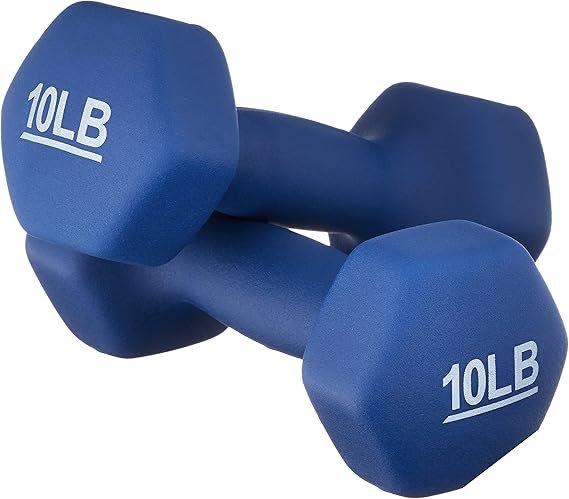
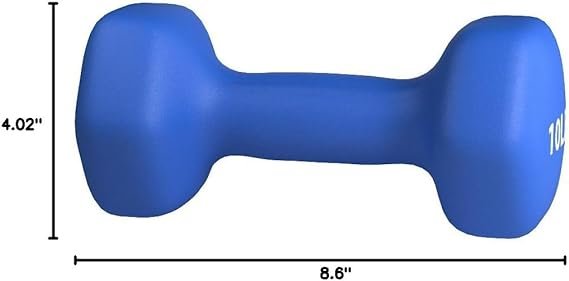
- Intensity: This is how hard the work is. It can mean lifting heavier weight, running faster, or increasing your RPE. The most direct way to increase intensity is by adding weight. For home workouts, an adjustable dumbbell set is the most efficient tool for this. Unlike fixed-weight dumbbells, they allow you to make small, incremental jumps (e.g., 2.5 or 5 lbs), which is the key to consistent, long-term progress as an intermediate athlete.
- Volume: This is how much work you do. It’s a combination of your sets, reps, and frequency (how often you train).
- Density: This is how much work you do in a given amount of time. You can increase density by performing the same amount of work in less time (i.e., reducing rest periods).
- Complexity: This refers to the difficulty of the exercise itself.
Adjusting your schedule effectively means strategically manipulating one or more of these variables.
Practical Strategies for Adjusting Your Schedule as Your Fitness Improves
Once you’ve recognized the signs, it’s time to take action. Here are the most effective strategies for restructuring your routine.
Strategy 1: Manipulating Volume & Frequency (Workout Splits)
A 3-day full-body routine is fantastic for beginners because it provides high frequency for each muscle group. As you get stronger, however, you can handle more focused work. This is where workout splits come in.
- Move from Full-Body to an Upper/Lower Split: Instead of working every muscle three times a week, you dedicate days to your upper body and days to your lower body. This allows you to increase the volume (more exercises, more sets) for each muscle group, creating a greater stimulus for growth.
- Consider a Push/Pull/Legs (PPL) Split: This is another classic split where you train chest, shoulders, and triceps on “push” day; back and biceps on “pull” day; and your entire lower body on “legs” day. This is a great option for those who can train 4-6 days a week.
Strategy 2: Increasing Intensity & Density
If you don’t have more days to train, you can make your existing workouts harder.
- Introduce Supersets: A superset involves performing two exercises back-to-back with no rest in between. This is a fantastic way to increase the density of your workout. (e.g., A set of dumbbell bench press followed immediately by a set of push-ups).
- Use Dropsets: A dropset is an advanced technique where you perform a set to failure, immediately reduce the weight, and then perform another set to failure.
- Systematically Decrease Rest Time: If you typically rest 90 seconds between sets, try reducing it to 75 seconds for a few weeks, then 60.
Strategy 3: Advancing Exercise Complexity
Sometimes, the best way to progress is to graduate to a more challenging movement that requires more strength, stability, and skill.
- Push-up Progression: Push-ups on Knees → Standard Push-ups → Decline Push-ups → Archer Push-ups.
- Squat Progression: Bodyweight Squat → Goblet Squat → Dumbbell Front Squat → Barbell Back Squat.
- Row Progression: Dumbbell Bent-Over Row → Barbell Bent-Over Row → Pull-ups.
Evolving Your Schedule: Sample Intermediate Routines
Let’s see what this looks like in practice.
The “Before” Schedule: Beginner 3-Day Full-Body
- Workout A (Mon): Squats, Push-ups, Rows, Overhead Press, Plank
- Workout B (Wed): Deadlifts, Incline Press, Lat Pulldowns, Lunges, Leg Raises
- Workout A (Fri): Squats, Push-ups, Rows, Overhead Press, Plank
The “After” Schedule: The 4-Day Upper/Lower Split
- Monday (Upper Body Strength):
- Bench Press: 3 sets of 6-8 reps
- Bent-Over Rows: 3 sets of 6-8 reps
- Overhead Press: 3 sets of 8-10 reps
- Lat Pulldowns: 3 sets of 8-10 reps
- Bicep Curls / Tricep Pushdowns: 2 sets of 10-12 reps
- Tuesday (Lower Body Strength):
- Barbell Squats: 3 sets of 6-8 reps
- Romanian Deadlifts: 3 sets of 8-10 reps
- Leg Press: 3 sets of 10-12 reps
- Leg Curls: 3 sets of 10-12 reps
- Calf Raises: 4 sets of 15 reps
- Thursday (Upper Body Hypertrophy):
- Incline Dumbbell Press: 3 sets of 10-12 reps
- Seated Cable Rows: 3 sets of 10-12 reps
- Dumbbell Lateral Raises: 3 sets of 12-15 reps
- Face Pulls: 3 sets of 15-20 reps
- Hammer Curls / Overhead Tricep Extensions: 3 sets of 10-12 reps
- Friday (Lower Body Hypertrophy):
- Dumbbell Lunges: 3 sets of 10-12 reps per leg
- Glute Ham Raises: 3 sets to failure
- Goblet Squats: 3 sets of 10-12 reps
- Seated Leg Extensions: 3 sets of 12-15 reps
- Ab Circuit
Don’t Forget Recovery: Adjusting Rest as You Advance
As your workouts become more intense and voluminous, your recovery practices must also level up. Pushing harder in the gym requires smarter recovery outside of it.
- Schedule a Deload Week: A deload is a planned week of reduced volume and intensity (typically every 4-8 weeks). This allows your nervous system and joints to fully recover, preventing burnout and injury.
- Add Dedicated Mobility Days: Consider making one of your “off days” an active recovery day focused on stretching, foam rolling, or light yoga.
- Double Down on Sleep: This is non-negotiable. As you push your body harder, its need for 7-9 hours of quality sleep increases dramatically.
The Mental Game: Adjusting Your Mindset for the Long Haul
The shift from beginner to intermediate is also a psychological one.
- Embrace Slower Progress: The rapid “newbie gains” are over. Progress now is measured in small increments over months, not weeks. Fall in love with the process, not just the rapid results.
- Listen to Your Body: As an intermediate, you have a better sense of what “good pain” and “bad pain” feel like. This intuition is a skill. Trust it. If something feels wrong, it’s better to back off than to push through and risk injury.
- Set Performance-Based Goals: Shift your focus from just “losing weight” or “looking better” to specific, performance-based goals. Examples: “Add 20 lbs to my squat in 3 months,” “Complete 5 unassisted pull-ups,” or “Run a sub-25-minute 5k.”
Fitness is a Journey of Evolution
Reaching a plateau isn’t a sign of failure; it’s a badge of honor. It’s proof that you have been so consistent and worked so hard that your body has adapted. You have earned this new challenge.
The skill of adjusting your schedule as your fitness improves is what separates a temporary hobby from a lifelong pursuit. By learning to recognize the signs, manipulate the right variables, and prioritize recovery, you transform yourself from a passive follower of a plan into the active architect of your own strength and health. Embrace the evolution—your next level awaits.
How have you adjusted your own routine as you’ve gotten stronger? What’s your best tip for breaking through a plateau? Share your experience and advice in the comments below!