For many, the story of their garden is a short one. It begins with the vibrant promise of spring, peaks in the lush abundance of summer, and then, as the first chill of autumn arrives, the final chapter is written. The pots are emptied, the soil is forgotten, and the balcony sits dormant until the next year. But what if your garden’s story didn’t have to end? What if it was a beautiful, continuous narrative with four distinct and rewarding chapters?
This is the promise of year-round cultivation. A truly thriving urban garden doesn’t shut down; it simply changes its rhythm. This Seasonal Urban Gardening Guide is your companion for that journey. It’s a blueprint for transforming your container garden from a fleeting summer fling into a dedicated, year-long relationship—the ultimate unplugged routine that connects you to the natural world’s beautiful, endless cycle.
Forget the idea that your gardening season is only a few months long. We’ll walk you through the key tasks, planting opportunities, and mindful moments that each season offers your small-space oasis. Let’s begin.
Table of Contents
First, A Crucial Note on Your Climate
Before we dive into the seasons, let’s set our clocks. The single most important factor in gardening is timing, which is dictated by your local climate. “Spring” in Miami is vastly different from “spring” in Minneapolis. To make this guide truly work for you, you need to know two things:
- Your USDA Plant Hardiness Zone: This tells you the average coldest winter temperature in your area, which helps you choose plants that can survive your winters. You can find your zone by simply entering your zip code on the USDA Plant Hardiness Zone Map website.
- Your First and Last Frost Dates: This is your true planting calendar. The “last frost date” in spring tells you when it’s safe to put tender plants outside. The “first frost date” in fall tells you when your warm-weather crops’ season will end. A quick online search for “[Your City] first and last frost dates” will give you this essential information.
With these two pieces of data, you can perfectly tailor the following advice to your unique corner of the world.
Chapter 1: Spring (The Great Reawakening)
This is the season of potential. The air is fresh, the sun is gaining strength, and the garden is waking from its slumber. Spring is all about preparation and planting the seeds for the abundance to come.
Key Tasks for a Spring Urban Garden:
- The Big Clean-Up: Your first task is to clear the slate. Remove any dead plants, weeds, and debris from last year. Scrub your empty pots and containers with a stiff brush and a solution of one part vinegar to nine parts water to kill any lingering pests or diseases.
- Assess Your Survivors: Check on any perennial plants or herbs that you overwintered. Prune away any dead or damaged stems to encourage vigorous new growth from the base.
- Refresh Your Soil: Container soil becomes compacted and depleted of nutrients over a single season. You don’t need to replace all of it. Instead, remove the top third of the soil from your pots and amend the rest by mixing in a generous amount of fresh, high-quality compost. This “recharges” your soil with the nutrients needed for a strong start.
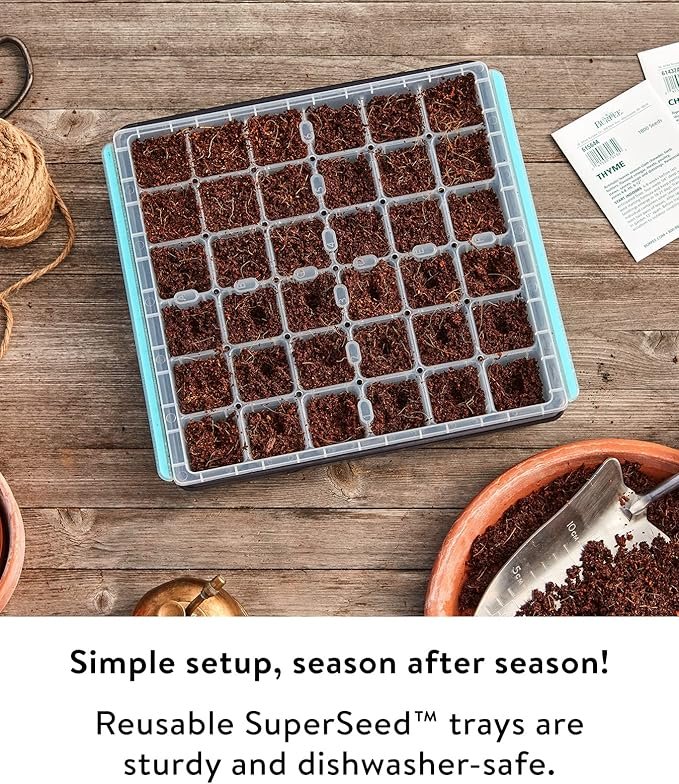
- Start Seeds Indoors: For warm-weather plants like tomatoes, peppers, and basil, you’ll need to give them a head start. Begin sowing seeds indoors on a sunny windowsill or under a grow light 6-8 weeks before your last frost date.
- Harden Off Your Seedlings: Don’t shock your indoor-grown seedlings by moving them directly outside. About two weeks before your last frost date, start “hardening them off.” This means placing them outside in a sheltered spot for just an hour on the first day, gradually increasing their outdoor time each day until they are acclimated to the sun, wind, and temperature changes.
To give your seedlings the strongest possible start before they face the great outdoors, we recommend a complete system like the Jiffy Seed Starting Greenhouse Kit. It includes the tray, expandable soil pucks, and a humidity dome to create the perfect, warm environment for germination right on your windowsill.
What to Plant in Spring:
- Cool-Weather Veggies: As soon as the soil is workable, plant crops that love the cool, crisp weather. Think leafy greens (lettuce, spinach, arugula, kale), radishes, peas, and green onions.
- Hardy Herbs: Many herbs can handle a light frost. Now is the time to plant parsley, cilantro, chives, thyme, and oregano.
- Early Spring Flowers: For an instant splash of color, plant cool-weather-loving annuals like pansies, violas, and snapdragons.
Chapter 2: Summer (The Sun-Drenched Peak)
This is the season of explosive growth and glorious abundance. Your balcony is a lush jungle, and the daily routine shifts from preparation to active maintenance and, best of all, harvesting.
Key Tasks for a Summer Urban Garden:
- Master Your Watering: This is your #1 job in the summer. The heat and wind on a balcony can dry out containers in hours. Check your soil daily with the “finger test.” Water deeply in the early morning to minimize evaporation and prepare your plants for the heat of the day.
- Feed Your Plants: Container plants have limited access to nutrients and need to be fed regularly during their peak growing season. Use a balanced liquid organic fertilizer (like one made from fish emulsion or seaweed) every 2-4 weeks to keep them happy and productive.
- Stay Vigilant with Pests: Inspect your plants regularly for common pests like aphids or spider mites. A quick blast of water from a spray bottle or a treatment with organic insecticidal soap is often all you need to keep them in check.
- Deadhead for More Blooms: To keep your flowering plants producing all summer long, you need to “deadhead” them. This simply means pinching or snipping off the spent, faded flowers. This tricks the plant into producing more blooms instead of putting its energy into making seeds.
- Harvest, Harvest, Harvest! The best part! Regularly harvest your herbs, vegetables, and edible flowers. For many plants, the more you harvest, the more they will produce.
What to Plant in Summer:
- Heat-Loving Veggies: Once all danger of frost has passed, it’s time for the stars of the summer garden: tomatoes, peppers, cucumbers, and beans. Choose “bush” or “patio” varieties that are specifically bred for compact container growth.
- Tender Herbs: This is prime time for basil. Plant lots of it! You can also plant mint, rosemary, and dill.
- Succession Planting: Don’t let a pot sit empty! After you harvest your fast-growing spring radishes or lettuce, sow another round. This is called succession planting, and it maximizes your harvest from a small space.
- Pollinator-Friendly Flowers: Keep the bees and butterflies happy by planting zinnias, cosmos, marigolds, and lavender.
Chapter 3: Autumn (The Golden Hour)
The intense heat of summer begins to fade, replaced by golden light and crisp air. Autumn isn’t the end; it’s a “second spring.” It’s a time for final harvests, cleaning up, and planting crops that thrive in the cool weather to come.
Key Tasks for an Autumn Urban Garden:
- The Final Harvest: Harvest the last of your warm-weather crops like tomatoes and peppers before the first frost date. Green tomatoes can be brought inside to ripen on a windowsill.
- Clear Out Spent Plants: As summer annuals and vegetable plants finish their life cycle, remove them from their pots. Add the disease-free material to your compost bin. This prevents pests and diseases from overwintering in your soil.
- Save Your Seeds: Let some of your best-performing, open-pollinated herbs and flowers (like marigolds, cilantro, or beans) go to seed. Collect the dried seed heads and store them in a cool, dark, dry place for next year’s garden. It’s a free, sustainable, and deeply rewarding practice.
- Bring Tender Plants Indoors: If you have any tropical houseplants or tender perennials that won’t survive the winter, now is the time to bring them inside, before the first frost. Inspect them carefully for pests first!
What to Plant in Autumn:
- Fall & Winter Greens: You can get another amazing harvest! Plant another round of fast-growing, cool-weather crops like spinach, arugula, kale, and mache.
- Garlic: For a delicious harvest next summer, plant garlic cloves in the fall. Plant them a few inches deep, and they will overwinter in their pots and sprout in the spring.
- Fall Flowers: Replace your tired summer annuals with vibrant, frost-tolerant flowers like chrysanthemums, asters, and ornamental kale for a beautiful autumn display.
- Spring-Flowering Bulbs: Plant bulbs like tulips, daffodils, and crocuses in your pots now for a spectacular surprise show in the spring.
Chapter 4: Winter (The Peaceful Slumber)
The garden enters a state of quiet rest. For the gardener, this is a time for protection, reflection, and—most importantly—dreaming of the year to come.
Key Tasks for a Winter Urban Garden:
- Protect Your Pots: The biggest danger to perennial plants in containers is not the cold air, but the freezing and thawing of the soil, which can damage roots. Insulate your pots by wrapping them in burlap or bubble wrap, or by grouping them together against a protected wall.
- Water Sparingly: While dormant, your plants still need some moisture. Check the soil every few weeks on a mild day. If it’s bone dry, give it a small amount of water.
- Tool Care: This is the perfect time to give your tools some love. Clean, sharpen, and oil your pruners and trowels so they are in perfect condition for spring.
- The Best Unplugged Routine: Plan Your Next Garden: This is perhaps the most joyful winter task. Grab a notebook, a warm drink, and your seed catalogs. Reflect on what worked and what didn’t. Dream about new plants you want to try. Sketch out a plan for your containers. This mindful planning is the first act of gardening for the new year.
What to Plant in Winter:
- Indoor Herb Garden: The gardening doesn’t have to stop! Set up a small herb garden on your sunniest windowsill to enjoy fresh flavors all winter long.
- Start Early Seeds: For plants that need a very long growing season, like onions or certain flowers, you can start sowing seeds indoors as early as late winter.
The Never-Ending Story
Your urban garden is a living, breathing space that offers something beautiful in every season. By learning to work with its natural rhythms, you transform a simple hobby into a year-round source of joy, connection, and mindfulness. The cycle of cleaning, planting, tending, harvesting, and planning is a story that never truly ends. It just waits for you to turn the page to the next chapter.
Which season of urban gardening do you find most rewarding, and why? Share your favorite seasonal tasks in the comments below!
you’re in point of fact a excellent webmaster. The web site loading velocity is incredible. It seems that you’re doing any distinctive trick. Moreover, The contents are masterwork. you’ve done a great activity on this subject!
I have been absent for some time, but now I remember why I used to love this site. Thank you, I will try and check back more often. How frequently you update your web site?