Do you ever look at your garden and feel a deep sense of satisfaction watching a new leaf unfurl or a bud begin to bloom? It’s a powerful connection to the natural world. But what happens when a plant looks a little lackluster, its leaves yellowing, its growth stalled? The temptation can be strong to reach for a brightly colored box of synthetic, “miracle” fertilizer, promising instant results.
At UnpluggedRoutine.com, we believe in a more patient, holistic approach. We believe in working with nature, not just demanding from it. That’s why we’re so passionate about using natural fertilizers. This isn’t just about swapping one product for another; it’s about a fundamental shift in perspective. It’s about feeding the soil’s living ecosystem, so the soil, in turn, can feed your plants for years to come.
Forget the quick fixes and the chemical cocktails. This guide will introduce you to 9 incredible, time-tested natural fertilizers that will help you build a thriving, resilient, and truly eco-friendly garden. Let’s dig in and learn how to nurture your garden from the ground up!

Table of Contents
Why Go Natural? The Soil Food Web Explained
Before we dive into our list, let’s talk about the “why.” Synthetic fertilizers are like giving your plants a jolt of caffeine and a candy bar. They provide a quick burst of energy (nutrients), but they do nothing to build long-term health. In fact, their high salt content can harm the beneficial microorganisms that form the backbone of a healthy soil ecosystem.
Natural fertilizers, on the other hand, are like a wholesome, home-cooked meal. They are made from organic materials that feed the vast and complex “soil food web” – a teeming community of bacteria, fungi, earthworms, and other critters. These organisms break down the organic matter, slowly releasing a balanced diet of nutrients that your plants can easily absorb.
By using natural fertilizers, you’re not just a gardener; you’re an ecosystem builder. You’re creating a garden that is more resilient to pests, diseases, and drought.
A Quick Refresher: What Do Plants Really Need? (N-P-K)
You’ve likely seen three numbers on fertilizer bags, like “10-10-10.” This is the N-P-K ratio, representing the three primary macronutrients plants need. Understanding them helps you choose the right natural fertilizer for the job.
- Nitrogen (N): The “Leaf Maker.” Promotes vigorous, green, leafy growth. Essential for vegetables like lettuce, spinach, and for the overall greenness of plants.
- Phosphorus (P): The “Root and Flower Builder.” Encourages strong root development, blooming, and fruit production. Crucial for flowers, root vegetables like carrots, and fruiting plants like tomatoes.
- Potassium (K): The “Overall Health Guardian.” Regulates a plant’s vital functions, from water uptake to disease resistance. It contributes to overall strength, vigor, and productivity.
Natural fertilizers provide these nutrients and more, including a whole host of essential micronutrients and trace minerals that are often missing from synthetic formulas.
9 Incredible Natural Fertilizers for Your Garden
1. Compost: The Undisputed Champion
If you only use one natural fertilizer, make it compost. We’ve called it “black gold” before, and for good reason. It is the single best soil amendment you can add to your garden.
- What it is: Decomposed organic matter from kitchen scraps and yard waste.
- Key Nutrients: A balanced, slow-release source of all major and minor nutrients.
- Why it’s Great: Compost does it all. It improves the structure of both clay and sandy soils, boosts water retention, and inoculates your garden with a universe of beneficial microbes. It’s a soil conditioner and a fertilizer in one.
- How to Use It: Mix a generous amount into new garden beds. Top-dress existing plants by spreading a 1-2 inch layer around their base (avoiding the stem). Use it as a nutrient-rich component of your potting mix.
2. Worm Castings (Vermicompost)
Think of worm castings as the extra-potent, super-concentrated version of compost. It’s the “caviar” of the garden world.
- What it is: The digested excrement of earthworms. It’s odorless, looks like fine coffee grounds, and is teeming with microbial life.
- Key Nutrients: Rich in a wide range of easily absorbable nutrients and beneficial microbes.
- Why it’s Great: Worm castings are incredibly gentle and won’t burn even the most delicate seedlings. They improve soil aeration and water retention and have been shown to help plants grow faster and stronger.
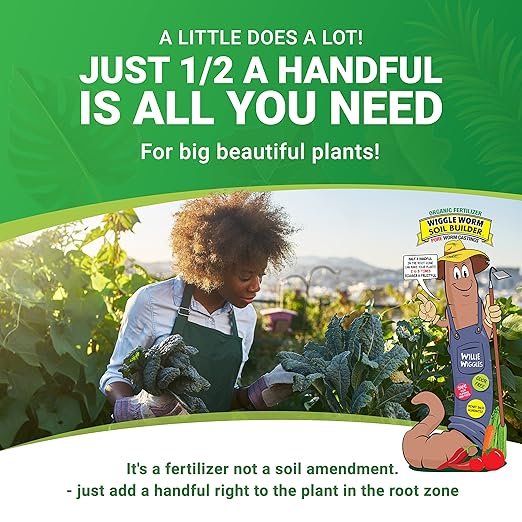
- How to Use It: A little goes a long way. Mix it into your seed-starting mix. Sprinkle a small amount around the base of houseplants and container vegetables. Create a “worm tea” by steeping castings in water overnight and using it as a liquid fertilizer.Where to find it: While you can create your own, a bag of high-quality worm castings is a great investment for any organic gardener. A trusted brand like Wiggle Worm Soil Builder will give your seedlings and container plants the best possible start.”
3. Composted Manure
This is one of the oldest and most effective natural fertilizers, used by farmers for centuries. The key word here is composted.
- What it is: Aged and decomposed animal waste. Never use fresh manure, as its high nitrogen content can burn plants and may contain harmful pathogens.
- Key Nutrients: Particularly rich in Nitrogen (N), making it excellent for leafy greens and heavy feeders.
- Why it’s Great: Manure adds a significant amount of organic matter and nutrients to the soil. Different types offer different benefits (chicken manure is very high in N, while rabbit manure is more balanced and can be used with less composting).
- How to Use It: Work well-rotted manure into your vegetable garden soil in the fall or early spring, a few weeks before planting. Use it to supercharge your compost pile.
4. Coffee Grounds
Don’t throw away that morning coffee filter! Your garden can benefit from your daily caffeine habit.
- What it is: Used coffee grounds.
- Key Nutrients: A good source of Nitrogen (N).
- Why it’s Great: Coffee grounds provide a gentle nitrogen boost. While fresh grounds are acidic, used grounds are closer to pH neutral, making them safe for most plants. They can also help improve soil tilth and are loved by earthworms.
- How to Use It: The best way to use coffee grounds is to add them to your compost pile. You can also sprinkle them sparingly around the base of acid-loving plants like blueberries, azaleas, hydrangeas, and rhododendrons. Don’t apply a thick layer, as it can cake and repel water.
5. Eggshells
Here’s another kitchen scrap that can be diverted from the trash can straight to the garden with a little preparation.
- What it is: The crushed outer shells of eggs.
- Key Nutrients: An excellent source of calcium carbonate.
- Why it’s Great: Calcium is crucial for building strong cell walls in plants. It can help prevent blossom-end rot in tomatoes and peppers, a common issue caused by calcium deficiency.
- How to Use It: For the calcium to be available to plants, the eggshells must be crushed into a fine powder. Rinse them, let them dry completely (baking them for a few minutes helps), and then crush them with a mortar and pestle or a coffee grinder. Sprinkle the powder into the planting hole when transplanting tomatoes, peppers, and squash.
6. Banana Peels
Give your flowering and fruiting plants a potassium boost with this simple kitchen scrap.
- What it is: The outer peel of bananas.
- Key Nutrients: Exceptionally high in Potassium (K).
- Why it’s Great: Potassium is vital for flower and fruit development and overall plant vigor. It helps plants move water and nutrients internally. Roses, tomatoes, and peppers particularly love a potassium boost.
- How to Use It: Chop up banana peels and bury them in the soil near the base of your plants. You can also make “banana peel tea” by soaking peels in a jar of water for a week, then using the water to feed your plants. Or, simply toss them in your compost bin.
7. Grass Clippings (Untreated)
If you have a lawn, you have a fantastic and free source of nitrogen-rich fertilizer.
- What it is: Clippings left after mowing the lawn. Crucially, only use clippings from a lawn that has not been treated with any chemical herbicides or pesticides.
- Key Nutrients: Very high in Nitrogen (N).
- Why it’s Great: As they break down, grass clippings provide a powerful nitrogen feed. They also act as a mulch, helping to retain soil moisture and suppress weeds.
- How to Use It: Apply a thin (1-inch) layer of fresh grass clippings around the base of your vegetable plants. As it dries and decomposes, you can add another thin layer. This is often called “chop and drop” mulching. You can also add them to your compost pile as a “green” material.
8. Kelp Meal / Liquid Seaweed
This fertilizer from the ocean is a powerhouse of micronutrients and growth stimulants.
- What it is: Dried, ground seaweed (kelp meal) or a liquid concentrate made from seaweed.
- Key Nutrients: While low in N-P-K, it’s packed with over 60 trace minerals, vitamins, and amino acids. It also contains natural growth hormones.
- Why it’s Great: Kelp is a super-vitamin for your soil and plants. It stimulates root development, increases resistance to stress from pests and diseases, and improves fruit and flower production.
- How to Use It: Mix kelp meal into your soil before planting. Use liquid seaweed as a foliar spray (spraying directly on leaves for quick absorption) or as a soil drench when watering.
9. Bone Meal
For big roots and beautiful blooms, bone meal is a classic organic choice.
- What it is: A powder made from steamed and ground animal bones.
- Key Nutrients: An excellent source of Phosphorus (P) and calcium.
- Why it’s Great: Phosphorus is absolutely essential for robust root systems, which is the foundation of a healthy plant. It’s also a key driver for abundant flowering and fruiting.
- How to Use It: Bone meal is slow to break down, so it’s best applied where roots can grow into it. Mix a tablespoon or two into the planting hole when transplanting flowers, bulbs (like tulips and daffodils), and root vegetables (like carrots and onions).
Cultivate a Living Garden
Shifting to using natural fertilizers is one of the most rewarding steps you can take on your eco-friendly gardening journey. It moves you away from a cycle of chemical dependency and towards a partnership with nature. You begin to see your kitchen scraps not as waste, but as future nutrients. You focus on cultivating a living, breathing soil ecosystem that will, in turn, produce the healthiest, most resilient, and most delicious plants you’ve ever grown.
This is the heart of the unplugged routine: small, mindful actions that create a deep and lasting connection to the world around us. Your garden will not only be more beautiful and productive, but it will also be a safer, healthier place for you, your family, and the countless beneficial creatures that call it home.
What is your go-to natural fertilizer, or which one from this list are you most excited to try first? Share your thoughts and experiences in the comments below! Let’s grow a vibrant community of natural gardeners together!