If your weekends feel less like a break and more like a catch-up session—full of frantic chores, endless scrolling, and digital burnout—you’re not alone. The modern hustle has blurred the line between weekdays and the one time we’re supposed to recharge.
It’s time to stop letting your precious Saturday and Sunday slip through your fingers.
What if you could turn your next two days off into a deeply restorative experience? Imagine the clarity, calm, and energy you’d gain. This isn’t about expensive spa trips or far-flung destinations; it’s about the powerful, yet simple, act of mindful unplugging right where you are.
Welcome to the ultimate guide for hosting your own Mini Wellness Retreat at home. We’ll show you a 5-step strategy to reset your mind, re-energize your body, and reclaim your peace.
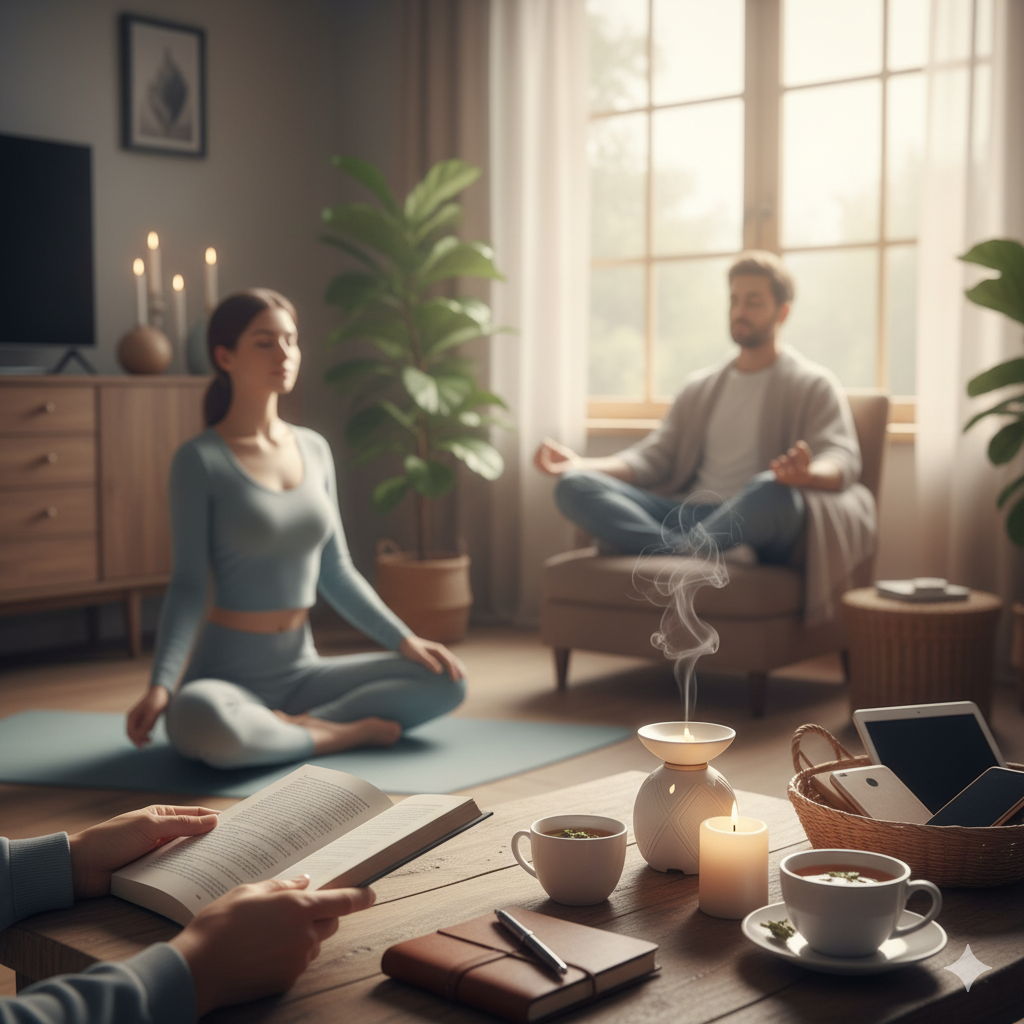
🔥 The Hook: Why Your Brain Desperately Needs This Weekend Reset
Let’s be real: your phone is a slot machine, and your brain is getting wired for distraction. Constant notifications, the glow of screens, and the pressure to be “always on” keep your nervous system in a perpetual state of low-grade stress. This is called digital fatigue.
It chips away at your ability to focus, ruins your sleep, and makes you feel perpetually behind, even when you’re doing nothing.
The antidote? A deliberate, thoughtful break. A Mini Wellness Retreat is an intentional pause, giving your brain the silence and space it needs to switch from ‘hustle mode’ to ‘healing mode.’ This is the cornerstone of true wellness and sustainable productivity. Ready to reclaim your time? Let’s dive in.
Step 1: 📅 Booking the Retreat (The Non-Negotiable Start)
A DIY retreat can’t be a spontaneous “maybe.” It needs to be treated with the same seriousness as a booked vacation or a doctor’s appointment. This is the most crucial step for success.
Commitment is Key
Open your calendar right now and block off 48 hours. Seriously, do it. Make a physical note that says: “Mindful Unplugging: Wellness Retreat – Do Not Disturb.”
This act of commitment signals to your mind (and anyone around you) that this time is sacred. It’s not free time to fill with errands—it’s time dedicated to your health.
Set Up a Soft Digital Wall
You don’t have to throw your phone in a river, but you do need boundaries.
- Set an Out-of-Office Reply: A simple message like, “I am offline until Monday morning to focus on rest and recovery. I will respond to your email then,” creates a firm professional boundary.
- Communicate with Loved Ones: Let close family and friends know you’ll be unplugged for a weekend. Assure them you’re okay, just taking a break. This stops the anxiety of “what if someone needs me?”
Focus Keyword Reminder: This intentional break is the essence of mindful unplugging—a conscious choice to be present.
Step 2: 🏡 Curating Your Sanctuary (Create the Retreat Vibe)
You don’t need a Balinese villa to find peace; you just need a clean, intentional space. The environment profoundly impacts your mindset. Retreat centers spend thousands on ambiance for a reason—you can do the same, affordably.
Declutter for Clarity
Start by tidying the areas you’ll be spending the most time in. Mental clutter is mirrored by physical clutter. A clean, organized space equals a calmer mind.
Focus on your bedroom, a comfortable chair, or a small corner of your living room. This is your temporary sanctuary.
Engage the Senses
Your senses are the gateway to presence. Use them to signal to your body that it’s time to relax:
- Scent: Use an essential oil diffuser or light a high-quality candle. Scents like lavender, chamomile, or frankincense are natural nervous system calmers.
- Sound: Swap podcasts and the news for quiet. Use ambient nature sounds, calming instrumental music, or, even better, a vinyl record if you have one.
- Light: Ditch harsh overhead lighting. Use dimmer switches, floor lamps, or string lights. As evening approaches, switch to candles to naturally boost melatonin for better sleep.
Pro-Tip for US Traffic: Invest in a comfortable pair of noise-canceling headphones for moments of deep reading or meditation, especially if you live in a busy area. They are a small investment for massive peace.
Step 3: 🧘 The Mindful Unplugging Protocol (Activities, Not Distractions)
This is the core of your Mini Wellness Retreat: replacing screen-time with self-care and authentic presence. The key is to choose activities that engage your hands or your mind without demanding immediate digital response.
Movement: Wake Up Your Body
Start your weekend by reconnecting with your physical self. This isn’t about an intense workout, but mindful movement:
- Gentle Yoga or Stretching: Find a short, beginner-friendly routine on YouTube before the retreat starts (and save it offline). Or simply do 15 minutes of slow, intuitive stretching.
- The Mindful Walk: Step outside and focus on the sensory details: the sound of birds, the feel of the air, the colors of the leaves. Leave your phone at home, or put it in a bag just for emergencies.
Nourishment: Slow Food
Treat your meals as events, not pit stops. Plan and shop for easy, healthy recipes ahead of time so you don’t break your unplugging commitment by looking up recipes or ordering takeout.
- Mindful Eating: Sit down, put away your book, and actually taste your food. Notice the textures, the smells, and how your body feels as you eat. Eating without digital distraction is an incredibly grounding experience.
- Hydration Rituals: Focus on clean water and calming herbal teas (chamomile, peppermint). Make the act of preparing tea a meditative ritual.
The Analog Hour
This is the time to embrace simple, offline pleasures.
- Journaling: Use a simple pen and paper to let your thoughts pour out. No need to structure it; just write until the mental chatter quiets down. This is therapeutic decluttering for your mind.
- Reading: Pick up that physical book you’ve been meaning to read. The feeling of paper pages is a soothing contrast to the cold glass of a screen.
- Creative Play: Do a puzzle, knit, sketch, or try an adult coloring book. These activities engage a different part of your brain, boosting creativity and relieving stress.
Focus Keyword Integration: Remember, every time you choose one of these offline activities over a screen, you are actively practicing mindful unplugging.
Step 4: 🛁 The Deep De-Stress Session (Pamper and Reflect)
No wellness retreat is complete without some serious self-pampering. This is about indulging in activities that soothe your nervous system and make you feel deeply cared for.
The At-Home Spa
Transform your bathroom into a luxury haven.
- The Epsom Salt Soak: Run a hot bath and add two cups of Epsom salts. The magnesium can help relax muscles and calm your mind. Add essential oils and play soft music. The rule: no phones allowed in the bathroom!
- Face Masks and Foot Rubs: Give yourself a facial or treat your feet. Use this time not just for the physical act, but as a practice in self-kindness. Look at yourself in the mirror with compassion, not criticism.
Deep Reflection
The end of the day is the perfect time for quiet contemplation.
- Meditation and Breathwork: Use a guided meditation (again, downloaded beforehand!) or simply sit in silence. Focus on a 4-7-8 breathing pattern: inhale for 4 counts, hold for 7, exhale for 8. This is a powerful technique for calming anxiety.
- The Gratitude List: Before bed, write down 3-5 things you are genuinely grateful for from the day. Shifting your focus to positivity is one of the quickest routes to happiness.
Step 5: ✨ The Re-Entry Strategy (Sustaining the Peace)
The goal of your Mini Wellness Retreat isn’t just to feel good for two days—it’s to capture that feeling and carry it forward. The Monday morning ‘tech-bomb’ can erase all your progress if you’re not careful.
Mindful Reconnection
Don’t jump straight into email the second you wake up Monday.
- Morning Ritual: Before checking your phone, spend 15 minutes in silence, or make a cup of coffee and sit outside. Create a buffer zone between the peaceful weekend you just had and the demands of the week.
- The “Slow Open”: Instead of checking all your apps at once, choose one essential task—like sending a few urgent emails—before letting the digital floodgates open.
The Two-Habit Rule
Look back at the last 48 hours. What two activities made you feel the most calm, energized, or present?
- Was it reading before bed?
- Was it your morning walk?
- Was it the act of journaling?
Choose just two of those practices to weave into your daily or weekly routine. This small, intentional action is how you transform a weekend escape into an unplugged routine that lasts.
Conclusion: Reclaim Your Time, Reclaim Your Life
You’ve successfully completed your Mindful Unplugging challenge and transformed a regular weekend into a deeply nourishing Mini Wellness Retreat. You’ve proven that you don’t need to escape the country to find peace—you just need to escape the noise.
The benefits are immediate: better sleep, a clearer mind, reduced anxiety, and a renewed sense of purpose. This wasn’t a luxury; it was a necessity. It was an investment in the most important person in your life: you.
Now, the real work begins: maintaining this newfound connection with yourself.
⚡️ Your Call to Action:
Ready to make Mindful Unplugging your new normal? You’ve seen the power of transforming your weekend. Now we want to hear from you.
Which one of these 5 steps are you most excited to try first? Share your plan in the comments below, and let us know what analog activities bring you the most peace!