Are you constantly chasing elusive sleep, only to find yourself tossing and turning, mind racing? In our hyper-connected world, winding down has become an art form, a skill many of us have forgotten. We spend our days tethered to screens, and often, our nights are no different. But what if I told you that achieving truly restorative sleep isn’t about magic pills or endless counting sheep, but about a simple, actionable Bedtime “Unplug Checklist”?
This isn’t just about putting your phone down; it’s about intentionally crafting an environment and routine that signals to your body and mind: “It’s time to rest.” If you’re ready to ditch the groggy mornings and embrace energized days, keep reading. Your journey to perfect sleep hygiene starts right here.
The Sleep Struggle is Real: Why We’re So Bad at Winding Down
Let’s be honest. Our modern lifestyles are not designed for optimal sleep. From demanding jobs and constant social media pings to endless streaming options, our brains are perpetually stimulated. We often push ourselves to the brink, then wonder why we can’t instantly switch off the moment our head hits the pillow.
The truth is, our bodies crave routine and a clear distinction between activity and rest. When we fail to create this distinction, our sympathetic nervous system (our “fight or flight” response) remains activated, keeping us alert when we should be drifting off. This, coupled with the blue light emitted from our devices, which suppresses melatonin, creates a perfect storm for chronic sleep deprivation. It’s time to take back control, and our “Unplug Checklist” is your ultimate weapon.
Why Sleep Hygiene Matters More Than You Think
“Sleep hygiene” might sound a bit clinical, but it simply refers to the habits and practices necessary to have good quality sleep on a regular basis. Think of it like dental hygiene for your sleep! Just as brushing and flossing prevent cavities, good sleep hygiene prevents sleep problems and promotes consistent, restful slumber.
The benefits extend far beyond just feeling less tired:
- Boosted Immune System: Quality sleep strengthens your body’s defenses.
- Enhanced Cognitive Function: Better memory, focus, and problem-solving skills.
- Improved Mood & Emotional Regulation: Reduced irritability, anxiety, and stress.
- Increased Productivity & Creativity: A well-rested brain performs at its peak.
- Better Physical Health: Supports heart health, metabolism, and hormone balance.
Ignoring sleep hygiene is like trying to run a marathon on an empty tank. You might get by for a while, but eventually, you’ll crash.
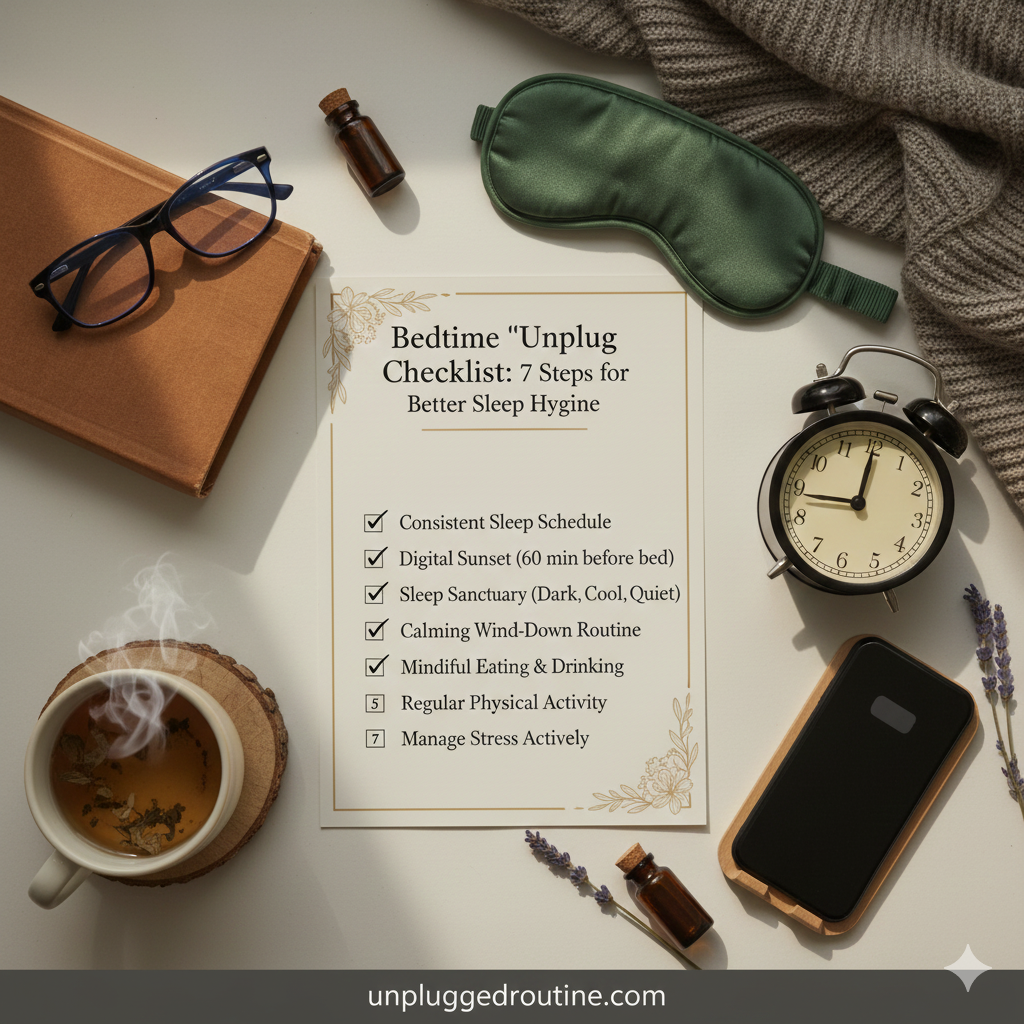
Your 7-Step Bedtime “Unplug Checklist” for Superior Sleep
Ready to transform your nights? Here’s your actionable checklist, designed to be easy to implement and incredibly effective.
1. Establish a Consistent Sleep Schedule (Yes, Even on Weekends!)
This is the cornerstone of good sleep hygiene. Our bodies thrive on rhythm. Going to bed and waking up around the same time every day, including weekends, helps regulate your circadian rhythm, making it easier to fall asleep and wake up naturally.
- Action Step: Choose a bedtime and wake-up time that allows for 7-9 hours of sleep. Stick to it religiously for at least a week, even if you feel tired initially. Your body will adjust!
2. Create Your Digital Sunset (At Least 60 Minutes Before Bed)
Remember our friend, blue light? It’s public enemy number one for melatonin production. Giving yourself a full hour (or even 90 minutes if possible) without screens before bed is a game-changer. This means no TV, no phone, no tablet, no laptop.
- Action Step: Set an alarm on your phone for your “digital sunset.” When it goes off, plug your phone into its charging station (preferably outside your bedroom) and switch off all other screens. Be firm with yourself!
3. Transform Your Bedroom into a Sleep Sanctuary
Your bedroom should be a haven dedicated to sleep and relaxation, not an extension of your office or entertainment center. Think dark, quiet, cool, and comfortable.
- Action Step:
- Darkness: Invest in blackout curtains or an eye mask. Even tiny lights can disrupt sleep.
- Quiet: Use earplugs, a white noise machine, or a fan to block out disruptive sounds.
- Cool: Keep your bedroom temperature between 60-67°F (15-19°C).
- Comfort: Ensure your mattress and pillows are supportive and comfortable. Clear clutter to create a peaceful visual space.
4. Engage in a Calming Wind-Down Routine
Once you’ve put away your devices, what do you do? This is where your personalized unplug routine comes in. The goal is to gently transition your mind and body from active mode to rest mode.
- Action Step: Experiment with these activities and find what resonates with you:
- Read a physical book: Immerse yourself in a story without screen glare.
- Journal: Write down thoughts, anxieties, or your gratitude list to clear your mind.
- Gentle Stretching or Yoga: Release physical tension and promote relaxation.
- Listen to Soothing Music or a Podcast: Choose calming instrumental music or a gentle, non-stimulating podcast.
- Take a Warm Bath or Shower: The drop in body temperature afterward can induce sleepiness.
- Meditate or Practice Deep Breathing: Even 5-10 minutes can significantly calm your nervous system.
5. Be Mindful of Food & Drink Before Bed
What you consume in the hours leading up to bedtime can significantly impact your sleep quality. Caffeine and alcohol are major culprits. While alcohol might make you feel drowsy initially, it disrupts sleep later in the night. Heavy, spicy, or sugary meals too close to bedtime can also cause indigestion and discomfort.
- Action Step:
- Caffeine: Avoid caffeine at least 6-8 hours before bed. That includes coffee, certain teas, energy drinks, and chocolate.
- Alcohol: Limit alcohol intake, especially in the 3-4 hours before sleep.
- Heavy Meals: Aim to finish your last large meal at least 2-3 hours before bedtime. If you need a snack, opt for something light like a banana or a small handful of almonds.
6. Get Regular Physical Activity (But Time It Right!)
Regular exercise is fantastic for promoting deeper, more restful sleep. It reduces stress and helps your body expend energy, making it easier to fall asleep at night. However, timing is everything.
- Action Step:
- Aim for at least 30 minutes of moderate exercise most days of the week.
- Avoid intense workouts too close to bedtime. The stimulating effects of exercise can keep you awake. Try to finish vigorous activity at least 3-4 hours before you plan to sleep. Lighter activities like a gentle walk are generally fine closer to bedtime.
7. Manage Stress & Worry Actively
One of the biggest sleep disruptors is a racing mind. Worries about work, finances, or personal life can keep you wide awake, even if your body is tired. Addressing stress actively, rather than ignoring it, is crucial for good sleep.
- Action Step:
- “Brain Dump” Journaling: Before your digital sunset, spend 10-15 minutes writing down everything that’s on your mind – your to-do list, your worries, your ideas. Get it all out of your head and onto paper.
- Problem-Solving Time: Dedicate a specific time during the day to address problems or plan for tomorrow. This prevents these thoughts from invading your bedtime.
- Mindfulness & Meditation: Incorporate short mindfulness practices throughout your day, not just before bed, to build your ability to stay present and less reactive to stressful thoughts.
Common Obstacles & How to Master Them
- “I’m too busy for a routine!” Start small. Even 15 minutes of dedicated wind-down time can make a difference. Consistency over perfection is key.
- “I just can’t fall asleep without my phone.” This is a habit that needs breaking. The first few nights might be tough, but persistence will pay off. Try moving your phone further away.
- “My partner watches TV in bed.” Discuss your sleep goals and find a compromise. Perhaps headphones for them, or a dedicated “quiet time” for both of you. Communication is vital.
- “I’m afraid I’ll miss an emergency.” Keep your phone in another room, on “do not disturb,” but allow calls from important contacts (like emergency services or immediate family) to come through.
Conclusion: Your Best Sleep Starts Tonight!
Implementing the Bedtime “Unplug Checklist” isn’t about deprivation; it’s about empowerment. It’s about taking control of your nights so you can fully embrace your days. By consciously creating a consistent schedule, unplugging from devices, preparing your sleep sanctuary, and engaging in calming rituals, you’re building a foundation for truly restorative sleep.
Imagine waking up feeling genuinely refreshed, energized, and ready to tackle whatever comes your way. This isn’t just a dream; it’s the natural outcome of prioritizing your sleep hygiene.
Ready to transform your sleep and reclaim your nights? Start with just one item on this checklist tonight and gradually add more. For more comprehensive guides and resources on optimizing your unplugged routine, visit unpluggedroutine.com. Share your progress and tips using #UnpluggedChecklist and inspire our community!