Do you find your hand instinctively reaching for your phone the moment you settle into bed? Does “just a quick scroll” turn into an hour of doom-scrolling, leaving you wide-eyed and stressed when you finally try to sleep? You are certainly not alone. For millions, the smartphone has become the final, most disruptive ritual of the day, actively sabotaging the restorative rest our bodies desperately need.
But what if you could break free from this digital tether? What if you could replace that anxiety-inducing screen time with deeply relaxing, genuine wellness habits that not only help you fall asleep faster but also improve your mood and mental clarity?
This post is your ultimate guide to mastering the art of the mindful wind-down. We’re going to show you exactly how to replace nighttime phone use with powerful practices that prepare your mind and body for the best sleep of your life. Get ready to swap the blue light for true serenity.
The Sneaky Saboteur: Why Your Phone Ruins Your Rest
We’ve talked about blue light before, and it remains a primary culprit. The short-wavelength blue light tricks your brain into thinking it’s still midday, hitting the brakes on melatonin production, the hormone essential for initiating sleep.
But the issue goes beyond light. It’s the content.
- Mental Overload: Reading the news, checking emails, or engaging on social media right before bed floods your brain with new information, stimulation, and often, stress. Your brain enters “processing mode” when it should be entering “power-down mode.”
- The FOMO Trap: Scrolling keeps you engaged with the outside world, creating a fear of missing out (FOMO) that spikes anxiety and keeps you mentally tethered to your device.
- The Habit Loop: Over time, your brain associates your bed and the act of lying down with using your phone, making it incredibly difficult to break the habit and transition to sleep.
Breaking this cycle requires more than just willpower; it requires replacing the old habit with a new, equally engaging, and beneficial one.
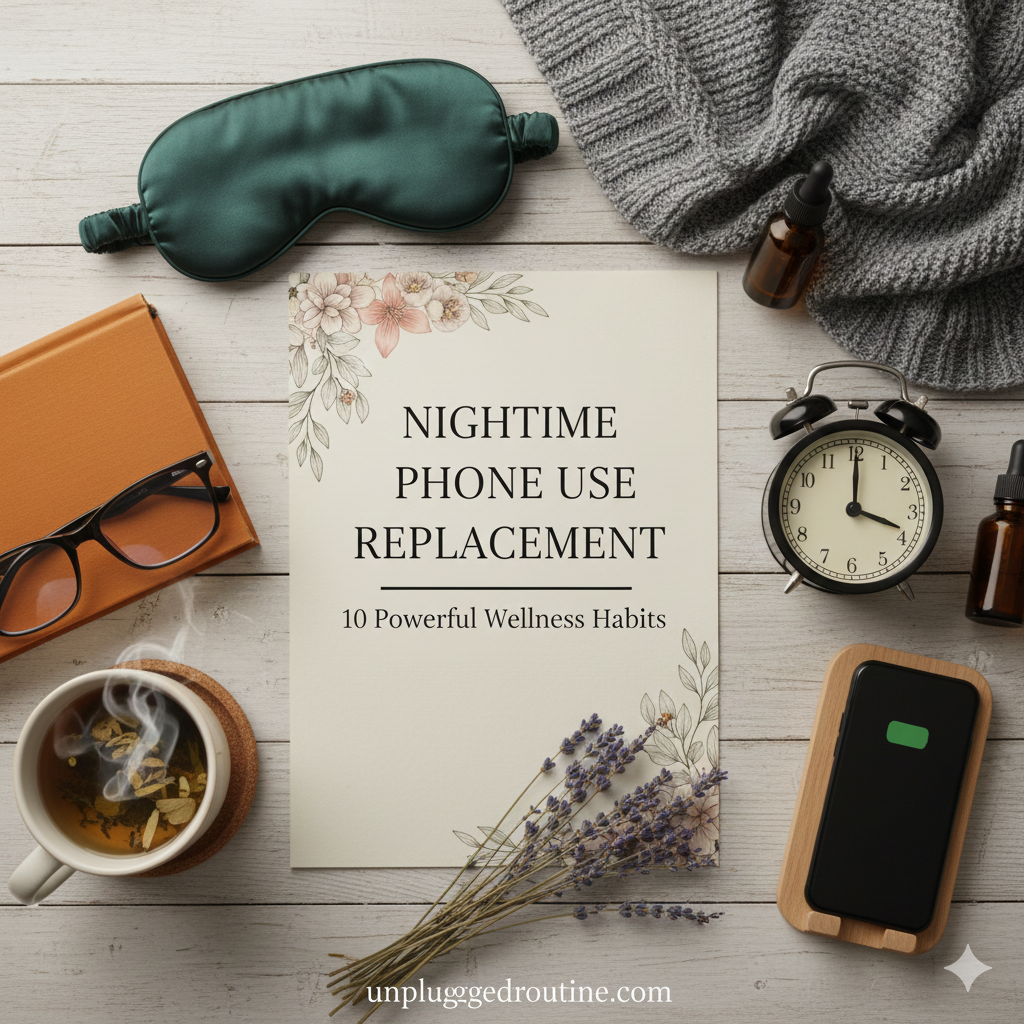
The Wellness Solution: The Power of Intentional Habits
Wellness isn’t just a buzzword; it’s the active pursuit of health in mind and body. The time before bed is the most crucial, untapped window for micro-wellness habits. By choosing relaxing, non-digital activities, you are actively doing three key things:
- Lowering Cortisol: Reducing stress hormones (cortisol) and shifting your nervous system into the calming parasympathetic state.
- Boosting Melatonin: Allowing the natural sleep-inducing hormone to flow freely.
- Creating a Mental Buffer: Giving your brain the time and space it needs to process the day and de-escalate before sleep.
10 Powerful Wellness Habits to Replace Nighttime Phone Use
Ready to swap scrolling for serenity? Here are ten intentional, screen-free habits to make your nightly ritual genuinely restorative.
1. The “Brain Dump” Journaling Session (Clear the Mental Clutter)
This is arguably the most effective way to quiet a racing mind. Instead of letting anxious thoughts swirl in your head, get them out onto paper.
- How-To: Grab a notebook and pen. Dedicate 5-10 minutes to writing down everything on your mind: your worries, tomorrow’s to-do list, any unresolved thoughts from the day. Once it’s on paper, your brain knows it’s recorded and can let it go until morning.
- Why it Works: It prevents “Revenge Bedtime Procrastination” and the mental chatter that keeps you awake.
2. Deep Relaxation Breathing Exercises (The Instant Calm Button)
Your breath is your body’s most direct link to your nervous system. Simple, deep breathing techniques can quickly lower your heart rate and induce a state of calm.
- How-To: Try the 4-7-8 method. Exhale completely, then inhale quietly through your nose for a count of 4. Hold your breath for a count of 7. Exhale completely through your mouth with a whoosh sound for a count of 8. Repeat 4 times.
- Why it Works: This specific technique activates the parasympathetic nervous system, signaling safety and relaxation.
3. Reading a Physical, Paper Book (The Mindful Escape)
This is a classic for a reason. Immersing yourself in a non-work, non-digital book allows your mind to focus softly on a narrative without the visual stimulation of a screen.
- How-To: Keep your book and a small, low-wattage reading lamp (ideally red or amber light) next to your bed. Choose fiction or a light non-fiction topic. Avoid intense thrillers or complex instructional manuals.
- Why it Works: It keeps your eyes gently engaged and is a proven way to reduce stress.
4. Gentle Stretching or Restorative Yoga (Release Physical Tension)
Our bodies hold onto stress from the day—in our shoulders, hips, and lower back. Slow, intentional movement can release this tension and cue the body for rest.
- How-To: Focus on simple, floor-based poses like Child’s Pose, Legs-Up-the-Wall (Viparita Karani), or a supported twist. Hold each pose for 1-3 minutes.
- Why it Works: This kind of movement is somatic—it brings you into your body and away from mental distractions.
5. Listening to an Audiobook or Podcast (The Eyes-Free Entertainment)
If you find reading a bit too engaging, or if you prefer to lie completely still, listening is a fantastic replacement for your phone.
- How-To: Use a smart speaker or a non-blue light emitting audio player. Choose a calming voice, a boring-but-interesting history podcast, or an audiobook you’ve already enjoyed. Set a timer so it turns off automatically.
- Why it Works: It provides gentle distraction without visual stimulation.
6. Practice Gratitude and Positivity (Shift Your Focus)
Ending the day on a positive note can dramatically influence your sleep quality, as it counters the natural tendency to dwell on negative events.
- How-To: Spend 2-5 minutes thinking or writing down three things you are genuinely grateful for that day, no matter how small.
- Why it Works: It shifts your brain’s focus away from stress and anxiety toward peace and contentment.
7. Prepare a Non-Caffeinated, Warm Beverage (The Calming Ritual)
The simple act of sipping something warm is inherently comforting and signals to your body that it’s time to slow down.
- How-To: Brew a cup of herbal tea like chamomile, peppermint, or valerian root. Focus on holding the warm mug and slowly savoring the taste. Avoid sugars or heavy creams.
- Why it Works: The warmth is soothing, and the herbs often have natural calming properties. The ritualistic nature reinforces the transition to rest.
8. Progressive Muscle Relaxation (Physical Mind-Body Scan)
If you often feel physically restless, this technique is excellent for identifying and releasing tension you didn’t even know you were holding.
- How-To: Lying in bed, tense a specific muscle group (like your toes) tightly for 5 seconds, then completely release the tension for 10 seconds. Slowly move up your body, from your feet to your head.
- Why it Works: By intentionally tensing and relaxing, you highlight the difference between a stressed state and a relaxed state, leading to deep physical relaxation.
9. Connect with a Partner or Loved One (Real-World Bonding)
If you share your life with someone, this is the perfect time to replace scrolling with genuine human connection.
- How-To: Spend 10-15 minutes talking about your day (without complaining or problem-solving), planning a fun future activity, or simply giving each other undivided attention.
- Why it Works: Social connection releases oxytocin, the “cuddle hormone,” which is strongly associated with stress reduction and feelings of well-being.
10. Do Light Prep for the Next Day (Taming Tomorrow’s Anxiety)
A major reason people check their phones late at night is anxiety about the next day. A little proactive, screen-free prep can soothe that worry.
- How-To: Spend a few minutes laying out your clothes for the morning, packing your lunch box, or organizing your essential items (keys, wallet). Crucially: Do not look at your digital calendar or email.
- Why it Works: Removing minor decisions from the morning routine reduces subconscious anxiety, allowing your mind to rest knowing the basics are covered.
Building Your New Unplugged Routine: A Step-by-Step Transition
Switching from a deeply ingrained phone habit to a relaxing wellness routine won’t happen overnight. Use this strategy for success:
Week 1: The Phone-Free Zone
- Goal: Establish the physical boundary. Charge your phone outside the bedroom (or at least out of arm’s reach).
- Action: Replace your phone alarm with a traditional alarm clock. For the first night, you might just stare at the ceiling—that’s okay! Stick to it.
Week 2: The 15-Minute Swap
- Goal: Implement one new wellness habit for 15 minutes before your scheduled bedtime.
- Action: Choose one habit from the list above (e.g., Brain Dump Journaling) and do it every night for 15 minutes.
Week 3: The 30-Minute Routine
- Goal: Extend your screen-free time and layer two wellness habits.
- Action: Try 15 minutes of reading followed by 15 minutes of deep breathing. Find the combination that works best for you.
Conclusion: Reclaim Your Nights, Reclaim Your Power
Your nighttime routine is a declaration of self-respect. When you choose to step away from the digital noise and engage in mindful, soothing wellness habits, you are choosing restorative sleep, mental clarity, and a life with less stress.
How to replace nighttime phone use is simple: substitute the bad habit with a great one. The phone doesn’t just fill your time; it drains your energy. These 10 powerful wellness habits will fill your life with peace, preparing you to fall asleep easily and wake up energized.
Ready to start your transformation? Take the first step tonight! Pick one habit from the list and commit to it for the next seven nights. For more personalized guides and tips on building a lasting “unplugged” lifestyle, be sure to visit unpluggedroutine.com. Share your favorite new wellness habit with us using #WellnessOverWire!