Unlock Deeper Rest and Wake Up Refreshed
Hook Step 1: The Restless Night Cycle
It’s 2 AM. You’re staring at the ceiling, brain buzzing with to-do lists, worries, or the lingering glow of your phone screen from just an hour ago. You know you need sleep, but it feels just out of reach. Sound familiar?
In our hyper-connected world, quality sleep has become a luxury for many. The constant digital stimulation, the endless stream of information, and the pressure to be “always on” leave our minds overstimulated and our bodies struggling to switch off.
The Missing Piece: Mindfulness
You’ve heard about unplugging, and you know it’s good for you. But what if there’s a secret ingredient that transforms unplugging from a chore into a profound pathway to truly restorative sleep? That ingredient is mindfulness.
It’s not just about putting your phone down; it’s about what you do with your mind once the screen is off.
This guide will show you how mindfulness improves sleep by calming your nervous system, quieting your racing thoughts, and preparing your body for the deep rest it craves. Discover 7 simple, mindful hacks you can integrate into your unplugging routine tonight to unlock better sleep and wake up genuinely refreshed.
Ready to reclaim your nights? Let’s dive in.
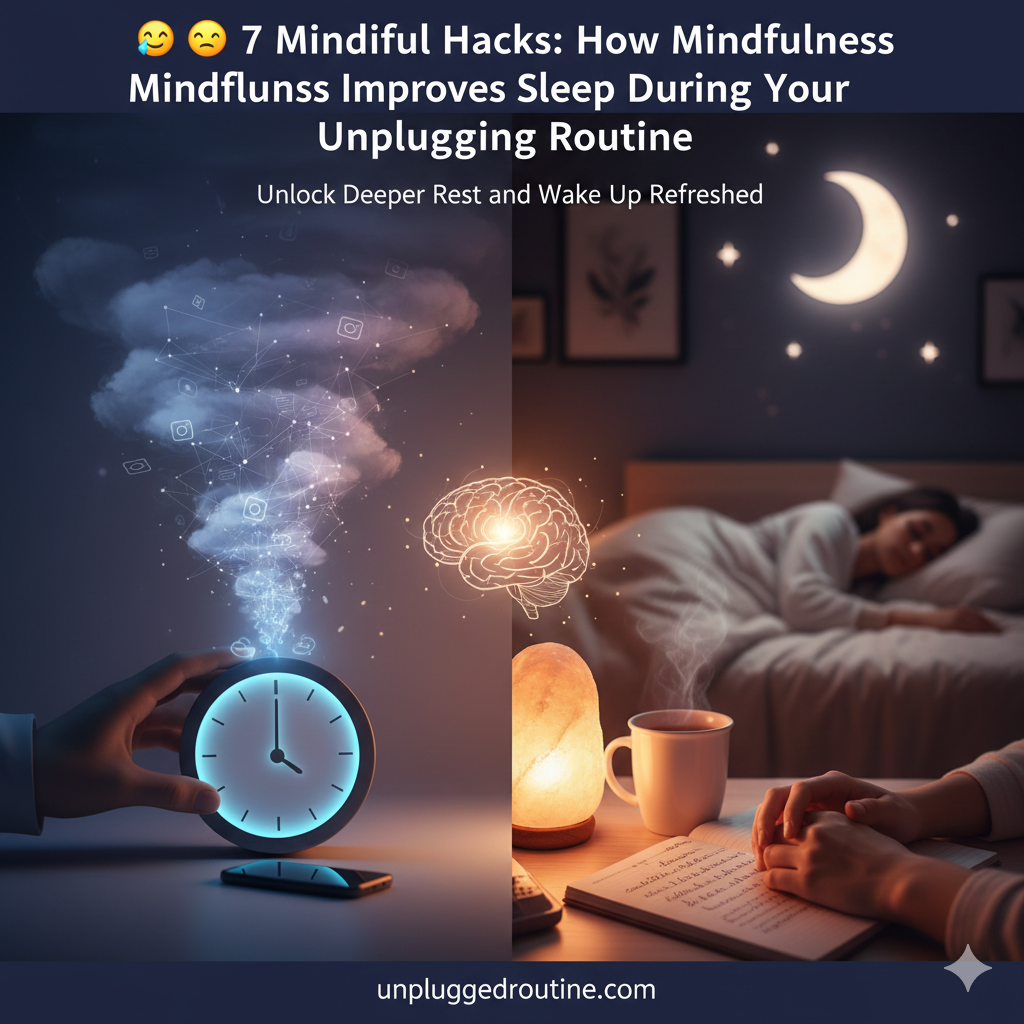
🧠 The Sleep-Mindfulness Connection: Why Your Brain Needs Both
To understand how mindfulness improves sleep, we first need to look at what prevents us from sleeping well and how mindfulness directly addresses these issues.
The Overactive Mind: Your Primary Sleep Thief
Most sleep problems aren’t physical; they’re mental. Our modern lives cultivate:
- Racing Thoughts: Replaying the day, worrying about tomorrow, generating endless to-do lists.
- Stress & Anxiety: The constant “on” state of our digital lives keeps our nervous system in fight-or-flight mode.
- Mental Stimulation: Engaging with screens right before bed floods our brain with information and blue light, preventing the natural wind-down.
The Body’s Natural Sleep Mechanism: Melatonin & Relaxation
For optimal sleep, your body needs to:
- Produce Melatonin: The sleep hormone, which is suppressed by light (especially blue light) and mental stimulation.
- Shift to Parasympathetic State: Your “rest and digest” nervous system needs to be active, moving away from the “fight or flight” (sympathetic) state.
How Mindfulness Bridges the Gap
Mindfulness is the practice of being present, fully aware of the current moment without judgment. It directly counteracts the mental obstacles to sleep:
- Quiets the Mind: By focusing on the present, mindfulness reduces the tendency for racing thoughts and worries.
- Calms the Nervous System: Mindfulness practices activate the parasympathetic nervous system, promoting relaxation and preparing the body for sleep.
- Enhances Awareness: It helps you tune into your body’s signals of tiredness and recognize when it’s time to truly disengage.
Integrating mindfulness into your unplugging routine creates a powerful synergy that fundamentally changes how mindfulness improves sleep. It’s not just about disconnecting; it’s about reconnecting with your body’s natural ability to rest.
✨ 7 Mindful Hacks: How Mindfulness Improves Sleep During Your Unplugging Routine
Ready to transform your nights? Here are 7 simple, mindful hacks that you can easily weave into your evening unplugging routine to encourage deeper, more restorative sleep.
1. 🌅 The Mindful Digital Sunset (An Intentional Wind-Down)
This is the foundational step. It’s not just about turning off screens, but how you do it and what you do next.
- How to Do It: Commit to a “digital sunset” at least 90 minutes to 2 hours before your desired bedtime. This means no phones, tablets, laptops, or even TV. As you power down, take a moment to acknowledge the transition. Consciously tell yourself, “I am now moving into my evening unplugged routine.”
- Why it Works: This intentional act signals to your brain that the day’s stimulation is ending. It allows natural melatonin production to begin without interruption and creates a clear boundary between your active day and your restful evening. It’s the first step in demonstrating how mindfulness improves sleep.
2. 🌬️ Mindful Breathing for Relaxation (Your Instant Calm)
Your breath is your most powerful and always-available tool for immediate relaxation.
- How to Do It: Find a quiet spot during your unplugged time (e.g., in bed, on the couch). Close your eyes if comfortable. Place one hand on your belly. Inhale slowly through your nose for a count of 4, feeling your belly rise. Hold for 2. Exhale slowly through your mouth for a count of 6, feeling your belly fall. Repeat 5-10 times. Focus entirely on the sensation of your breath.
- Why it Works: This specific breathing pattern (longer exhale) activates your vagus nerve, which in turn stimulates your parasympathetic nervous system, shifting your body into a state of deep relaxation and making it easier to fall asleep.
3. 🚶♀️ The Mindful Evening Walk (Nature’s Tranquilizer)
Getting outdoors, even briefly, can significantly calm your mind.
- How to Do It: Take a gentle 15-20 minute walk in your neighborhood or a nearby park during your evening unplugged time, ideally before it gets completely dark. Leave your phone at home. Pay attention to your senses: the coolness of the air, the sounds of nature, the feeling of your feet on the ground, the fading light.
- Why it Works: Light physical activity helps release tension, and immersing yourself in nature has scientifically proven stress-reducing effects. Focusing on sensory input pulls your mind out of worries and into the present, demonstrating how mindfulness improves sleep through environmental immersion.
4. 👂 Mindful Listening (Aural Anchor to Calm)
Our ears are constantly bombarded by noise, but rarely do we mindfully listen.
- How to Do It: During your unplugged routine, choose a calming sound source: soft instrumental music, nature sounds (rain, ocean waves), or a gentle sleep story/meditation (use a speaker, not headphones with a screen). Close your eyes and focus purely on the sounds. Notice their texture, rhythm, and how they make you feel.
- Why it Works: This practice redirects your attention away from internal chatter and towards external, soothing sounds. It trains your mind to focus and disengage from stimulating thoughts, creating a peaceful auditory environment conducive to sleep.
5. ✍️ Mindful Journaling (Processing Without Pressure)
Journaling can be a powerful way to offload thoughts before bed, but it needs to be mindful, not just a brain dump.
- How to Do It: During your unplugged time, use a physical notebook and pen. Instead of just listing worries, try “brain dumping” everything that’s on your mind onto the page. Then, read it back and mindfully acknowledge each thought without judgment. You might also write down 3-5 things you are grateful for, or 1-2 small wins from the day.
- Why it Works: This process helps you acknowledge and release racing thoughts, reducing their power to keep you awake. The gratitude practice shifts your focus to positive emotions, which are conducive to relaxation.
6. 📖 Mindful Reading (Engaging Your Imagination, Not Your Nerves)
Reading a physical book is a classic unplugging activity, but bringing mindfulness to it enhances its sleep-promoting benefits.
- How to Do It: Choose a physical book (fiction, light non-fiction, poetry – avoid anything too stimulating or screen-based). Find a comfortable position in soft, warm lighting (amber bulbs are ideal). As you read, notice the texture of the pages, the weight of the book, and allow yourself to become fully immersed in the story. When your mind wanders, gently bring it back to the words on the page.
- Why it Works: Reading a physical book in dim light avoids blue light exposure. Mindful immersion in a story redirects your attention from daily worries, allowing your imagination to engage in a relaxing way that prepares your mind for sleep.
7. 😴 The Body Scan Meditation (Releasing Tension for Rest)
This is a fantastic practice to do once you’re already in bed, during your final moments of unplugging.
- How to Do It: Lie comfortably in bed. Close your eyes. Bring your awareness to your toes. Notice any sensations there without judgment. Then, slowly move your attention up your body, segment by segment: feet, ankles, calves, knees, thighs, hips, abdomen, chest, back, fingers, hands, arms, shoulders, neck, face, and head. As you focus on each part, consciously invite it to relax and release any tension. If your mind wanders, gently guide it back to the current body part.
- Why it Works: The body scan grounds you in physical sensations, pulls your attention away from mental chatter, and systematically promotes physical relaxation, which is essential for falling into a deep sleep. It directly illustrates how mindfulness improves sleep by fostering somatic awareness.
🔑 Cultivate Your Mindful Sleep Sanctuary
Integrating these mindful hacks into your unplugging routine is a powerful act of self-care. It’s about creating a conscious bridge from your busy day to your much-needed rest.
Remember, the goal isn’t perfection, but consistent, gentle effort. Even practicing one or two of these techniques regularly can make a significant difference in how mindfulness improves sleep for you.
Be patient with yourself. Your mind has been accustomed to constant stimulation. It will take time to re-train it to embrace stillness and prepare for sleep. But with each mindful moment, you are building a stronger foundation for deeper rest and a more vibrant, energized tomorrow.
Conclusion: Embrace Mindfulness, Embrace Rest
The relentless pace of the digital age often leaves us feeling wired and weary. But the good news is that you have the power to change this narrative. By intentionally weaving mindfulness into your unplugging routine, you unlock a natural and profohttps://unpluggedroutine.com/und way to improve your sleep.
You’ve learned 7 powerful mindful hacks that directly address the mental and physical barriers to restful nights. From mindful digital sunsets to body scan meditations, each practice is a step towards calming your nervous system, quieting your mind, and inviting the deep, restorative sleep your body craves.
Ready to transform your nights and wake up truly refreshed?
💡 Call to Action: Which of these 7 mindful hacks will you try tonight to improve your sleep? Share your choice in the comments below! And for a complete guide to building a personalized sleep-friendly unplugged routine, download our free “Mindful Sleep Blueprint” – your step-by-step roadmap to a calmer mind and deeper rest.