Do you ever feel like you’re constantly “on call” for your devices? Like your phone is practically glued to your hand, and the thought of an hour without Wi-Fi gives you a mild panic attack? You know deep down that all this digital noise isn’t doing you any favors – it’s zapping your energy, stealing your focus, and maybe even making you feel a bit more stressed than you’d like to admit.
You’ve probably heard all about the benefits of unplugging. But let’s be real, actually doing it can feel impossible. Where do you even start? How do you break habits that are so deeply ingrained in your daily life?
Welcome to unpluggedroutine.com! We believe that finding balance in our digital world doesn’t have to be overwhelming. Today, we’re not just talking about the why; we’re giving you the ultimate how. Get ready for a practical, step-by-step, 30-day plan designed to help you practically create an unplugging routine that sticks
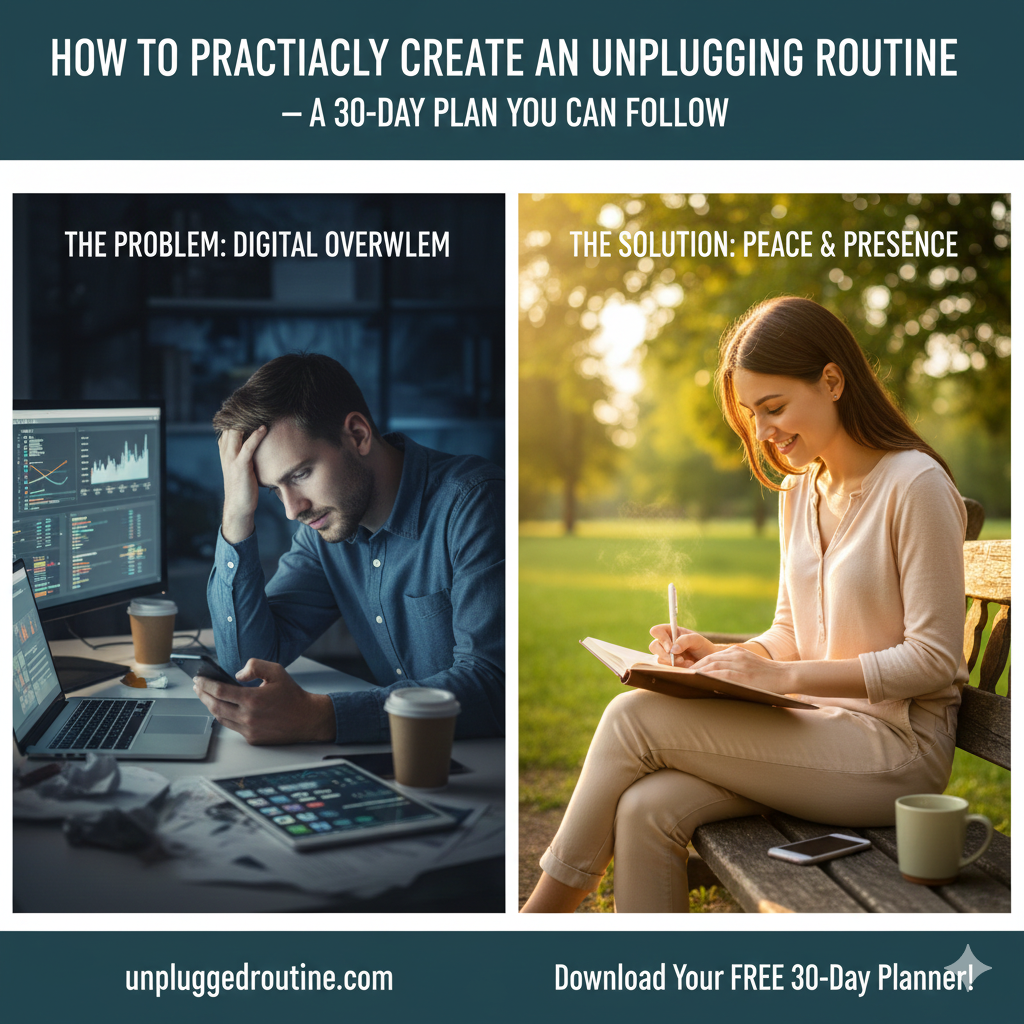
Why a “Routine” and Not Just a “Detox”?
The term “digital detox” often conjures images of extreme measures: going off-grid for a week, deleting all your apps, or shattering your smartphone (please don’t do that!). While these can be powerful experiences, they’re often not sustainable for real life.
That’s why we focus on creating an unplugging routine. A routine is about building small, consistent habits that gradually shift your relationship with technology. It’s about intentionality, not deprivation. It’s about finding harmony, not a complete break. And by breaking it down into a 30-day plan, it becomes manageable, achievable, and far less intimidating.
This plan is for anyone who feels overwhelmed by their digital life but doesn’t know how to start making a change. Whether you’re a student, a busy professional, a parent, or simply someone craving more presence, this step-by-step guide is for you.
Your 30-Day Plan to Practically Create an Unplugging Routine
This plan is designed to be progressive. Each week builds on the last, gradually introducing new habits and reinforcing positive changes. Remember, be kind to yourself. Some days will be easier than others. The goal is progress, not perfection!
Week 1: Awareness & Basic Boundaries – Laying the Foundation
The first step to change is awareness. You can’t fix a problem until you understand its scope. This week is about observing your habits and setting foundational boundaries.
Day 1-2: Observe Without Judgment
- Action: For two days, simply notice your screen habits. Don’t try to change anything. Just observe. How often do you pick up your phone? What triggers you to check it? What apps do you open instinctively? When do you feel the urge to scroll?
- Goal: Understand your current digital consumption patterns.
- Why it helps: You can’t fight a battle you don’t understand. This step provides crucial data.
Day 3: The Notification Cull
- Action: Go into your phone settings and turn off all non-essential notifications. Keep only calls/texts from important contacts. Absolutely disable social media, news, game, and shopping app notifications.
- Goal: Reduce constant digital interruptions that fragment your attention.
- Why it helps: Each “ding” pulls you out of the present moment. Silencing them gives your brain a much-needed break from constant alerts.
Day 4-5: Introduce the Tech-Free Zone (Meals)
- Action: Make all mealtimes (breakfast, lunch, dinner) completely screen-free. No phones on the table, no TV in the background. If you eat alone, practice mindful eating, noticing your food. If you’re with others, engage in conversation.
- Goal: Reclaim mindful moments and foster real-life connection.
- Why it helps: Mealtimes are natural anchors for daily life. Making them screen-free helps you be more present.
Day 6-7: The “Screen Sunset” Challenge
- Action: For one hour before bed, power down all non-essential screens (phone, tablet, laptop, TV). Charge your phone outside your bedroom. Use this time to read a physical book, journal, listen to music, or talk to a loved one.
- Goal: Improve sleep quality and prepare your mind for rest.
- Why it helps: Blue light from screens disrupts melatonin. This boundary is crucial for restorative sleep and reducing morning grogginess.
Week 2: Intentionality & Mindful Engagement – Taking Control
Now that you’ve set some basic boundaries, this week focuses on being more intentional about how and when you use your devices.
Day 8-10: The “Purposeful Pick-Up”
- Action: Before you pick up your phone, pause and ask yourself: “Why am I picking this up right now? What is my specific purpose?” Once you achieve that purpose (e.g., reply to a text, check directions), put the phone down immediately. Avoid aimless scrolling.
- Goal: Break the habit of unconscious phone checking.
- Why it helps: This simple pause creates a micro-moment of mindfulness, making you aware of your digital triggers.
Day 11-12: App Reorganization & Deletion
- Action: Go through your phone and delete any apps you haven’t used in a month, or that consistently make you feel bad (e.g., social media you only “doomscroll”). Move distracting apps off your home screen into a folder. Change your phone’s screen to grayscale if you want an extra nudge.
- Goal: Reduce visual clutter and access to time-wasting apps.
- Why it helps: Less friction to engage with distracting apps means you’re less likely to fall into the scroll hole.
Day 13-14: Introduce a “Digital-Free Block”
- Action: Choose one 1-2 hour block during your day (e.g., during deep work, after arriving home, on your commute) where your phone is on airplane mode or completely put away. Commit to this block daily.
- Goal: Cultivate periods of sustained focus and presence.
- Why it helps: This trains your brain to function without constant digital input, improving your concentration and peace of mind.
Week 3: Deepening the Disconnection & Exploring Alternatives
This week is about extending your unplugging periods and actively filling the space with enriching offline activities.
Day 15-17: The “Active Commute” (If Applicable)
- Action: If you commute, make it screen-free. Instead of scrolling, look out the window, listen to a podcast or audiobook, or simply practice mindfulness and observe your surroundings. If you drive, enjoy the silence or music without phone distractions.
- Goal: Turn passive digital consumption into active mental space.
- Why it helps: Commutes are often wasted time digitally. Reclaiming them can be surprisingly refreshing.
Day 18-20: The “Offline Hobby” Challenge
- Action: Dedicate at least 30 minutes each day to an offline hobby or activity you enjoy. This could be reading, drawing, playing an instrument, gardening, cooking, exercising, or doing a puzzle. Actively seek out joy away from screens.
- Goal: Discover and integrate fulfilling alternatives to screen time.
- Why it helps: Replacing digital habits with enriching offline ones makes unplugging feel less like deprivation and more like gain.
Day 21: The Social Media “Check-in” (Limited Use)
- Action: Instead of constantly checking, designate 1-2 specific times a day (e.g., 10 minutes in the morning, 10 minutes in the evening) to briefly check social media. Engage purposefully, then close the app.
- Goal: Reclaim control over social media use, turning it into a tool, not a time sink.
- Why it helps: This helps you manage FOMO while still allowing for connection, but on your terms.
Week 4: Sustaining & Expanding Your Unplugging Routine
This final week focuses on integrating these habits into your lifestyle and planning for long-term sustainability.
Day 22-24: The “Digital-Free Morning”
- Action: For the first hour after waking up, avoid checking your phone, email, or social media. Instead, focus on a calm morning routine: hydrate, stretch, journal, or enjoy a screen-free breakfast.
- Goal: Start your day intentionally, rather than reactively.
- Why it helps: This sets a positive, calm tone for your entire day, reducing morning anxiety and promoting clarity.
Day 25-27: The “Weekend Warrior” Mini-Detox
- Action: Pick a longer chunk of time over the weekend (e.g., a Saturday afternoon, an entire Sunday morning) to go completely device-free. Let friends/family know you’ll be offline. Use this time to explore nature, spend quality time with loved ones, or dive deep into a hobby.
- Goal: Experience extended periods of disconnection to fully appreciate the benefits.
- Why it helps: Longer breaks allow your brain to truly reset and reconnect with the real world, reinforcing the value of your new routine.
Day 28-30: Reflect & Plan for the Future
- Action: Take time to reflect on your 30-day journey. What changes have you noticed in your mood, focus, sleep, and relationships? Which habits will you keep? Plan how to integrate your most successful unplugging strategies into your daily life permanently.
- Goal: Consolidate your learning and create a sustainable, personalized unplugging lifestyle.
- Why it helps: Reflection solidifies your progress and empowers you to make conscious choices for the long term.
Conclusion: Your Life, Unfiltered and Unplugged
You’ve made it! By following this 30-day plan, you’ve taken significant strides to practically create an unplugging routine that works for your life. You’ve moved from being a slave to your screen to being the master of your digital habits.
The aim isn’t to demonize technology, but to foster a healthier, more intentional relationship with it. You’ve given your brain a much-needed reset, reclaimed precious time, deepened your real-life connections, and rediscovered the simple joys of an unfiltered existence.
Remember, this is an ongoing journey. There will be days you slip up, and that’s perfectly okay. The goal is consistent effort and mindful awareness. Keep experimenting, keep reflecting, and keep prioritizing your well-being over constant digital demands.
Isn’t it time to truly live in the present, enjoying the richness of an unplugged life?
Call to Action (CTA)
Ready to take control of your digital life and boost your well-being?
Download your FREE printable “30-Day Unplugging Routine Checklist & Journal” today! This essential resource includes daily prompts, habit trackers, and extra tips to guide you through each step of the plan and help you build a sustainable, fulfilling unplugging routine. Click here to grab your guide and start your journey to digital freedom!