We’re all searching for that elusive “unplugged” feeling, aren’t we? That moment when the endless to-do lists fade, the digital hum quiets, and you finally feel like yourself again. For many, a walk is the go-to solution. But is any walk created equal?
At unpluggedroutine.com, we’re constantly exploring the most effective ways to break free from the digital tether. And today, we’re diving deep into the age-old debate: Nature Walks vs. Urban Walks: Which Helps You Unplug Better?
You might think the answer is obvious. “Of course, nature!” you might exclaim. But the science, and our personal experiences, reveal a more nuanced and surprisingly helpful truth. Let’s unpack the key differences and help you choose the best path to peace.
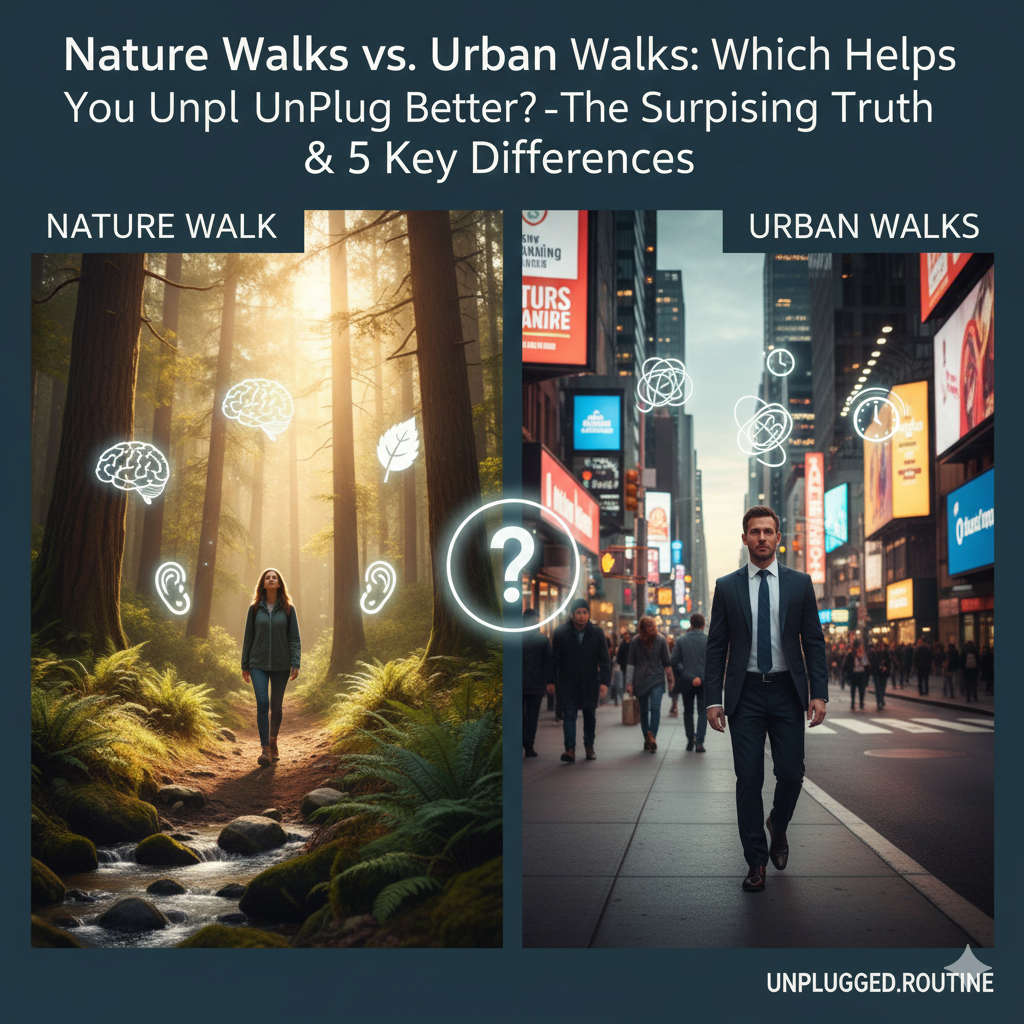
The Unplugging Imperative: Why We Need to Walk
Before we pit urban against nature, let’s remember why walking is so crucial for our mental well-being in the first place. Our modern lives are characterized by constant “directed attention”—focusing intensely on tasks, screens, and solving problems. This depletes our mental energy.
Walking, especially in certain environments, allows for “involuntary attention” or “soft fascination”—a gentle engagement that subtly restores our cognitive resources. It’s like hitting a mental reset button. The question is, which button is more effective?
Hook Step 1: Your “Current Walk” Inventory
Think about your last 3-5 walks. Were they on bustling city streets, in a quiet park, or deep in the woods? Jot down how you felt before and after each one. You might already be noticing a pattern!
1. Noise Pollution: The Sound of Stress vs. Serenity
This is often the most significant difference.
- Urban Walks: Characterized by car horns, sirens, chatter, construction, and traffic. This constant barrage of sound is known as “noise pollution,” and research consistently links it to increased stress, elevated heart rate, and even higher risks of cardiovascular disease. Your brain is constantly filtering and reacting to these sounds, even if you don’t consciously notice it, making true relaxation difficult.
- Nature Walks: Dominated by natural sounds – birdsong, rustling leaves, flowing water, wind. These sounds, particularly birdsong, have been shown to actively reduce stress, lower blood pressure, and improve mood. They evoke a sense of calm and safety, allowing your nervous system to genuinely unwind.
Winner for Unplugging: Nature Walks. The auditory environment is a critical factor in how well your brain can relax and restore itself.
2. Visual Stimulation: Overload vs. Restoration
What you see profoundly impacts your mental state.
- Urban Walks: Visuals are often complex and demanding: flashing billboards, busy storefronts, traffic lights, crowds, and endless screens. This constant, high-stimulus environment keeps your directed attention engaged. While it can be stimulating, it doesn’t offer the gentle, restorative visual experience needed for deep unplugging.
- Nature Walks: Visuals are typically less complex, featuring fractal patterns (like branches or leaves), flowing water, expansive skies, and natural colors. These elements engage “soft fascination” rather than directed attention. Your mind can wander gently, allowing for mental fatigue to dissipate.
Winner for Unplugging: Nature Walks. The visual simplicity and restorative patterns of nature are far more conducive to mental restoration.
Hook Step 2: The “Color Count” Challenge
During your next walk, whether urban or natural, count how many distinct shades of green you see. You’ll likely be surprised by the difference, and this simple act will force you to truly see your surroundings.
“Don’t reach for your phone to take notes! Keep a [Field Notes Pocket Journal] on you to jot down those creative sparks or observations that happen when your brain finally enters ‘soft fascination’ mode.”
3. Air Quality: The Breath of Life (or Pollution)
The air you breathe directly affects your physical and mental health.
- Urban Walks: Often expose you to higher levels of air pollution from vehicle emissions and industrial activity. While a short walk might not cause immediate harm, chronic exposure can contribute to respiratory issues and even affect cognitive function. The subtle awareness of poor air quality can also add to a sense of unease.
- Nature Walks: Benefit from cleaner air, especially in areas with dense vegetation. Trees and plants act as natural filters, absorbing pollutants and releasing oxygen. This fresher air is invigorating and contributes to a feeling of vitality and well-being, making it easier to take deep, calming breaths.
Winner for Unplugging: Nature Walks. Better air quality directly translates to a better physiological and psychological state for relaxation.
4. Sense of Safety & Pace: Comfort vs. Vigilance
Your feeling of security influences your ability to relax.
- Urban Walks: Can sometimes require a heightened sense of awareness—navigating traffic, watching for crowds, and being aware of your surroundings. This constant low-level vigilance, while necessary, taps into your nervous system and prevents deep relaxation. Your pace might also be dictated by pedestrian flow.
- Nature Walks: Generally offer a greater sense of safety, particularly on established trails. This allows your nervous system to relax its guard. You can walk at your own pace, stop to observe, and simply be without constant vigilance, which is crucial for genuine unplugging.
Winner for Unplugging: Nature Walks. The reduced need for vigilance allows for deeper mental relaxation and restoration.
5. Biophilia: Our Innate Connection to Life
This is the psychological core of the debate.
- Urban Walks: While they can offer connection to human society and culture, they often lack a direct connection to other living systems. The concrete jungle is a human construct.
- Nature Walks: Tap into our inherent human tendency to connect with nature and other living systems, a concept called “biophilia.” Studies show that even brief interactions with natural environments can reduce stress, improve mood, and enhance cognitive function. We are hardwired to respond positively to nature.
Winner for Unplugging: Nature Walks. Our evolutionary history has wired us for natural environments, making them uniquely restorative.
The Surprising Truth: Urban Green Spaces Can Help You Unplug
So, does this mean if you live in a city, you’re doomed to be perpetually plugged in? Absolutely not! The surprising truth is that urban green spaces offer a powerful compromise.
Even a small city park, a tree-lined boulevard, or a community garden can provide many of the benefits of a full-blown nature walk. These “micro-doses” of nature offer:
- Reduced noise: Parks often buffer city sounds.
- Restorative visuals: Trees, grass, and flowers provide biophilic elements.
- Cleaner air: Greenery helps filter pollutants.
- Sense of safety: Dedicated park paths can feel more secure.
- Biophilic connection: Seeing plants and trees taps into our innate love for nature.
So, while a deep forest walk might be the gold standard, don’t discount your local park. Consistency in accessing any green space is more important than waiting for the perfect wilderness escape.
Conclusion: Choose Your Path Wisely (But Just Choose a Path!)
When it comes to Nature Walks vs. Urban Walks: Which Helps You Unplug Better?, the science strongly favors nature walks for optimal mental restoration and unplugging. The cumulative effect of cleaner air, natural sounds, restorative visuals, and a sense of safety creates an environment where your brain can truly recover from the demands of modern life.
However, the “perfect” walk is the one you actually take. If a short stroll through your local city park is all you can manage today, embrace it. It’s a powerful step towards an unplugged routine.
Ready to find your peace, no matter where you are?
Join the Unplugged Routine community! What’s your favorite type of walk, and how does it make you feel?