Hey there, digital scholars! Can you believe it’s already 2026? It feels like just yesterday we were talking about simple screen-time limits. But let’s be real: as a student in 2026, your “digital world” looks a lot different than it used to. With AI tutors, immersive VR classrooms, and constant “hyper-personalized” notifications, the pressure to be online is at an all-time high.
If you’ve been feeling “tech-fried”—you know, that specific mix of brain fog, eye strain, and social fatigue—you aren’t alone. The good news? The 2026 digital detox trends are actually pretty cool. We’ve moved past just “turning off your phone.” Today, it’s about high-tech wellness and low-tech soul-searching.
Ready to find out how the smartest students are staying sane this year? Let’s break down the cutting-edge strategies for your unplugging routine in 2026.
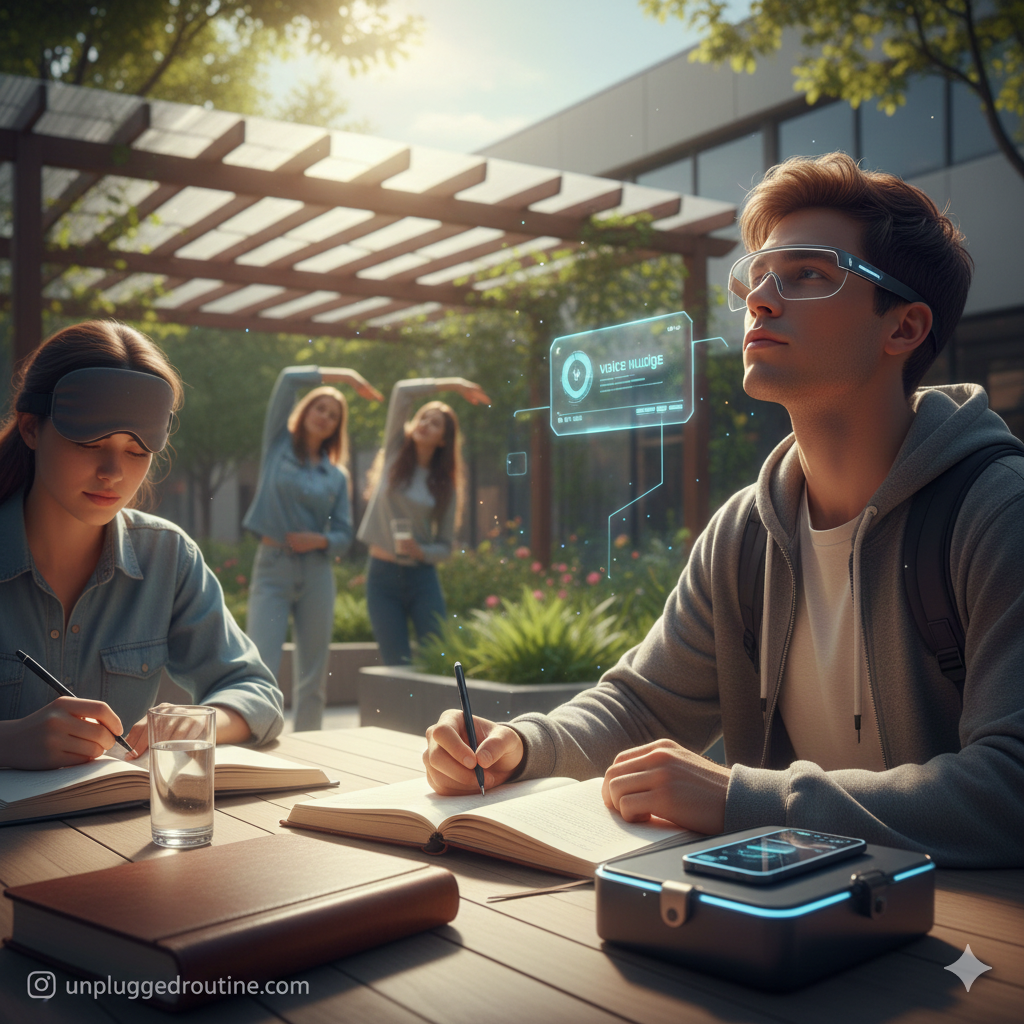
The Evolution of Digital Detox: Why 2026 is Different
For years, a “digital detox” meant locking your phone in a drawer for a weekend. In 2026, that’s almost impossible. Your homework is in the cloud, your campus ID is on your watch, and your study group meets in a digital lounge.
The shift this year is from digital abstinence (quitting everything) to digital dietetics (consuming tech mindfully). It’s about being “intentional” rather than “habitual.” Students are realizing that while AI can write a summary, it can’t replace the “deep work” and creativity that happens when you’re offline.
1. Using AI to Fight AI: The Rise of Smart Detox Tools
It sounds ironic, right? Using tech to get away from tech. But in 2026, “Tech-to-Fight-Tech” is a massive trend. We’ve moved beyond simple timers.
Smart Behavioral Monitoring:
New AI-powered wellness tools can now sense when you’re “doomscrolling” or “app-switching” too fast. Instead of a harsh block, these tools offer a “voice nudge.” Imagine your AI assistant saying, “Hey, you’ve been switching between TikTok and your Essay for 20 minutes. Want to start a 5-minute breathing break?”
Voice-First Interventions:
Many students are switching to “Voice-First” modes. Instead of looking at a screen to check your schedule or set a reminder, you use voice agents. This reduces “screen fatigue” and keeps your eyes away from the blue light that ruins your focus.
2. Somatic Wellness: Healing the “Digital Body”
One of the biggest 2026 digital detox trends isn’t digital at all—it’s somatic. Students are realizing that tech burnout isn’t just in their heads; it’s in their bodies.
The “Digital Sunset” 2.0:
It’s no longer just about putting the phone away. Students are adopting “Somatic Wind-downs.” This includes:
- Cold Plunges or Face Dips: To reset the nervous system after a long VR study session.
- Weighted Eye Masks: To block out all light and give the optic nerve a total break.
- Sound Baths: Using frequency-based audio to “unplug” the brain from the high-pitched hum of electronic environments.
The goal is to move the “healing” from the mind to the physical body.
3. The “Analog Renaissance” on Campus
In 2026, the coolest thing on campus isn’t the newest foldable tablet—it’s a physical notebook. We’re seeing a massive “Analog Renaissance” among Gen Z and Gen Alpha students.
Tactile Study Sessions:
Research shows that writing by hand improves memory retention far better than typing. Students are trending toward “Paper-First” brainstorming. They use physical planners and notebooks for the first draft of any project, only moving to the digital space for the final “polishing” phase.
Dumbphone Weekends:
While the “main” phone stays for school, many students are buying basic “dumbphones” (no apps, just calls/texts) for the weekends. It’s a status symbol for being “offline and present.”
4. “Deep Work” Sanctuaries and No-Tech Zones
Universities are catching on to the unplugging routine movement. In 2026, many libraries have replaced “computer labs” with “Deep Work Sanctuaries.”
Signal-Free Zones:
Some campus cafes and study halls are now “Faraday Zones”—areas where cellular and Wi-Fi signals are intentionally blocked. This creates a forced focus environment where you have to rely on your downloaded notes and your own brainpower.
Device-Free Socials:
Clubs and social groups are hosting “Phone-Stack” parties. Everyone puts their phone in a basket at the start. The first person to reach for theirs pays for the group’s coffee!
5. Nature-Based “Nervous System Recalibration”
In 2026, we call it “Bio-hacking,” but it’s really just going outside. Students are integrating nature into their unplugging routine to combat the “immersion fatigue” caused by VR and AR learning.
Forest Bathing (Shinrin-Yoku):
This isn’t just a hike; it’s a mindful practice of being in nature without a camera or GPS. Students are using it to lower cortisol levels that spike from constant digital notifications.
The 20-20-20-20 Rule:
You’ve heard of 20-20-20 (every 20 mins, look 20 feet away for 20 seconds). In 2026, we’ve added a fourth 20: Every 20 minutes of screen time, spend 20 minutes in natural light. It’s a game-changer for your sleep cycle.
How to Build Your 2026 Unplugging Routine
Ready to try it? You don’t have to do everything at once. Pick one trend and start tomorrow.
| Trend | How to Start |
| Voice-First | Use your voice assistant for all “quick tasks” (reminders, timers) to avoid looking at the screen. |
| Somatic Reset | Splash cold water on your face after a 2-hour study block to reset your nervous system. |
| Analog First | Use a physical notebook for the first 15 minutes of every project brainstorm. |
| Digital Sunset | No screens 60 minutes before bed. Use a physical book instead. |
Conclusion: Reclaiming Your Focus is the Ultimate Power Move
As we navigate through 2026, remember that technology is a tool, not your boss. The most successful students this year won’t be the ones with the most apps—they’ll be the ones with the most focus. By following these 2026 digital detox trends, you aren’t just taking a break; you’re upgrading your brain’s ability to think, create, and lead.
The digital world is amazing, but the real world is where your life actually happens. This year, let’s make a commitment to look up a little more often.
Which of these 2026 trends are you most excited to try? Drop a comment below and let’s start our unplugging journey together!
For a deeper dive into how technology affects your focus, check out this helpful guide on managing digital burnout. This video discusses why digital detoxes are becoming essential for maintaining mental well-being in our increasingly connected world.