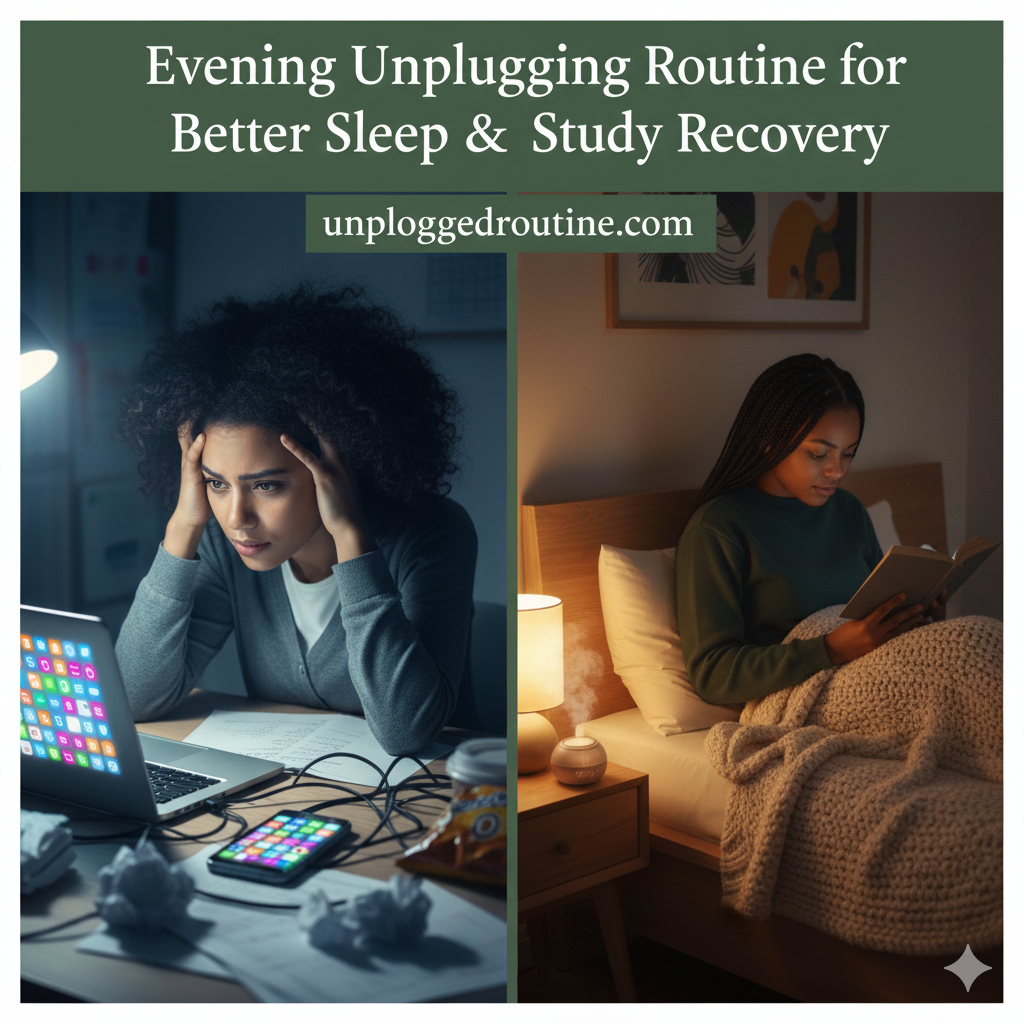
You’ve spent eight hours staring at a laptop, three hours scrolling through research papers, and probably another two hours “relaxing” by looking at a smaller screen. By the time 9:00 PM hits, your brain feels like an overheated processor.
If you’re struggling to fall asleep despite being exhausted, or if you wake up feeling like you never actually rested, you’re missing a vital piece of the academic puzzle: an evening unplugging routine.
At UnpluggedRoutine.com, we know that your grades are actually made in your sleep. This is when your brain moves information from temporary “RAM” to long-term storage. If you don’t unplug, you don’t recover. Here is your definitive guide to the ultimate evening reset.
1. The “60-Minute Sunset” Rule
In 2026, our biggest enemy isn’t the workload—it’s the blue light. Blue light mimics the sun, telling your brain to stop producing melatonin. This keeps you in a state of high-alert long after you’ve closed your books.
Successful students implement a “sunset” for their tech. One hour before you intend to sleep, all screens go dark. This isn’t just a suggestion; it’s a biological necessity for study recovery.
The Hook Step: Set a “Screen Sunset” alarm on your phone for 9:30 PM tonight. When it goes off, your phone goes into a drawer. Not on the nightstand—in a drawer.
2. Transition with an “Analog Activity”
When you stop studying, your brain doesn’t just “turn off.” It needs a bridge between the high-stress environment of academics and the low-stress environment of sleep.
Replace your late-night scroll with something tactile:
- Reading Fiction: Physical books only. No e-readers with backlights.
- Adult Coloring or Sketching: Great for lowering cortisol.
- Light Stretching: Release the tension in your neck and shoulders from sitting at a desk all day.
By engaging your hands and eyes in something physical, you signal to your nervous system that the “threat” (deadlines and exams) is over for the day.
3. The “Brain Dump” for Academic Anxiety
Ever laid in bed and suddenly remembered three things you forgot to do? That’s called the Zeigarnik Effect—the tendency for the brain to obsess over unfinished tasks.
To prevent this, make a “Brain Dump” part of your evening unplugging routine. Take a physical notepad and write down:
- Three things you accomplished today.
- Your top three priorities for tomorrow.
- Any lingering “worries” or random thoughts.
Once it’s on paper, your brain feels permission to let it go. You’ve outsourced your memory to the notepad, allowing for deeper, uninterrupted sleep.
4. Optimize Your Sleep Sanctuary
Your bedroom should be for two things only: sleep and relaxation. If you study on your bed, your brain starts to associate that space with stress and caffeine.
Create an unplugged sanctuary by:
- Removing the Phone: Use a dedicated alarm clock.
- Lowering the Temp: Aim for 65-68°F (18-20°C).
- Total Darkness: Use blackout curtains or an eye mask.
Pro Tip: If you must have a device in the room, use a “charging station” on the opposite side of the room so you can’t reach it from your bed.
5. Sensory Cues for Deep Recovery
Your brain loves patterns. By using specific sensory cues, you can “trigger” sleepiness.
Try incorporating:
- Aromatherapy: Lavender or cedarwood oil.
- Warm Tea: Chamomile or Magnesium-based drinks (often called “The Sleepy Girl Mocktail”).
- White Noise: A fan or a dedicated white noise machine (not a phone app!).
When you do these things consistently, your brain begins to associate the smell of lavender or the taste of tea with the immediate release of sleep hormones.
The Recovery Breakdown: Digital vs. Analog
| Habit | The Burnout Choice | The Recovery Choice |
| Last Action | Checking Canvas/Email | Writing in a Journal |
| Light Exposure | Bright Blue Light | Dim, Warm Lamps |
| Brain State | Reactive & Anxious | Calm & Reflective |
| Sleep Quality | Fragmented/Light | Deep/REM-Heavy |
6. The Power of “Low-Dopamine” Evenings
Scrolling social media provides “variable reward” dopamine hits. This is the opposite of what you want before bed. It keeps your brain “hunting” for the next hit of information.
A successful evening unplugging routine is intentionally boring. Being “bored” for 20 minutes before bed is actually a superpower. it allows your heart rate to slow and your thoughts to settle.
Conclusion: Wake Up Ready to Win
You can’t crush your goals if you’re operating on four hours of “blue light” sleep. By reclaiming your evenings, you aren’t just sleeping better—you’re ensuring that everything you studied today actually sticks.
Study recovery is the secret weapon of the world’s most productive students. Start tonight. Unplug. Reset. Recover.
Want to build the perfect night?
Download our “Unplugged Evening Checklist” at UnpluggedRoutine.com. It’s a simple, printable guide to help you stay screen-free and sleep-ready every single night of the semester!
What is your biggest struggle with putting your phone away at night? Share it in the comments and let’s troubleshoot together!