Hey there, busy students! Are you constantly juggling textbooks, lectures, social media, and that never-ending stream of notifications? We get it. In today’s academic world, being connected feels essential, but there’s a growing whisper (or sometimes a scream!) that too much screen time is actually holding you back.
You’ve heard about digital detox, and maybe you’ve even tried it. But one question keeps popping up: “How long should a student unplug daily to actually see a difference?” Is it an hour? Three hours? Do you need to go off-grid for a week to truly benefit?
At Unplugged Routine, we believe in practical, sustainable solutions for a balanced digital life. We’re here to cut through the noise and give you clear, actionable advice on finding your sweet spot for daily screen-free time. Forget extreme measures; let’s talk about smart, consistent habits that will boost your focus, reduce stress, and genuinely improve your student life.
Ready to discover the ideal amount of unplugged time that works for you? Let’s dive in!
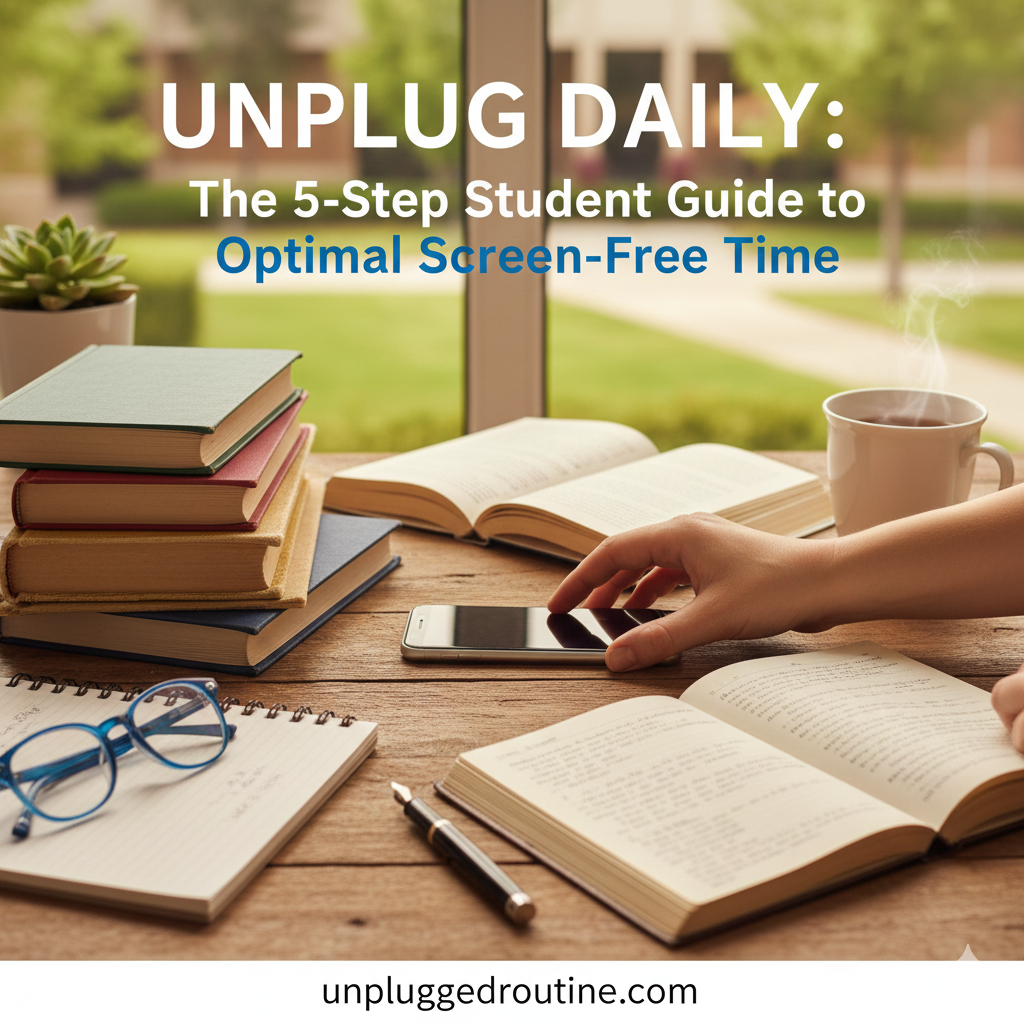
The Modern Student’s Digital Tightrope Walk
Being a student in the 21st century is a unique challenge. On one hand, technology is an indispensable tool: online lectures, research databases, collaborative platforms, communication with professors, and even digital textbooks. It has revolutionized access to information and learning opportunities.
On the other hand, the digital landscape is also a minefield of distractions. Social media feeds, streaming services, gaming, endless rabbit holes of content – all competing for your precious attention. This constant battle for focus can lead to:
- Fragmented Attention: Jumping between tasks, making deep work difficult.
- Mental Fatigue: Your brain is constantly processing new information, leading to exhaustion.
- Increased Procrastination: Digital entertainment offers an easy escape from difficult academic tasks.
- Burnout: The pressure to be always available and constantly “on” takes its toll.
So, how do you harness the power of technology for learning without letting it overwhelm your well-being and academic performance? The answer isn’t total abstinence, but rather strategic, consistent unplugging.
Why “How Long” Matters: The Science Behind Unplugging
It’s not just about feeling less stressed (though that’s a huge bonus!). There’s solid science behind why regular breaks from screens are beneficial for cognitive function and mental health, especially for developing student brains.
- Restoring Focus: Our brains have a finite amount of attentional resources. Constant digital stimulation depletes these. Unplugging allows these resources to replenish, improving your ability to concentrate on complex tasks.
- Reducing Cognitive Load: Every notification, every new piece of information, adds to your brain’s “cognitive load.” Reducing this load allows your brain to process existing information more effectively and think more clearly.
- Enhancing Memory Consolidation: Deep sleep, often disrupted by late-night screen use, is crucial for consolidating memories from the day. Unplugging before bed directly improves this process.
- Boosting Creativity: The “default mode network” in our brains, active during periods of rest and mind-wandering, is strongly linked to creative thinking and problem-solving. This network thrives when we’re not constantly stimulated by screens.
- Regulating Emotions: The comparison culture of social media and the constant influx of information can heighten anxiety and negative emotions. Stepping away provides emotional regulation.
So, the question isn’t if you should unplug, but how much to unlock these powerful benefits.
The Golden Rule: There’s No Single “Perfect” Number
Before we dive into recommendations, it’s crucial to understand this: there is no one-size-fits-all answer for how long a student should unplug daily. Your ideal time will depend on several factors:
- Your Course Load: A STEM student with intense lab work might have different digital needs than a humanities student primarily focused on reading and writing.
- Your Learning Style: Some students thrive with digital tools; others prefer pen and paper.
- Your Personal Habits: Are you prone to endless scrolling, or do you use technology mostly for specific tasks?
- Your Well-being: Are you experiencing burnout, eye strain, or sleep issues? This might indicate a greater need to unplug.
However, we can establish some highly effective guidelines and strategies to help you find your optimal unplugged routine.
The 5-Step Student Guide to Optimal Daily Unplugging
Let’s break down how to integrate effective screen-free time into your student life, without feeling deprived or falling behind.
Step 1: Establish a “Digital Sunset” (Minimum 1 Hour Before Bed)
This is arguably the single most impactful step any student can take. The science is clear: blue light from screens suppresses melatonin, the hormone that tells your body it’s time to sleep. Beyond that, the stimulating content keeps your mind active, making it difficult to wind down.
- Goal: At least 1 hour, ideally 2 hours, before your desired bedtime, put away ALL screens (phone, laptop, tablet, TV).
- Why it works: Allows your body to naturally produce melatonin, calms your mind, and sets you up for deeper, more restorative sleep.
- What to do instead: Read a physical book, journal, listen to calming music, do light stretching, talk to a roommate, or simply sit in quiet reflection.
- Impact: Expect improved sleep quality, increased energy the next day, and better memory consolidation.
Step 2: Implement “Focused Work Blocks” (15-30 Minute Mini-Detoxes)
Deep work – the ability to focus without distraction on a cognitively demanding task – is crucial for academic success. Yet, our digital habits make it incredibly difficult. Incorporating mini-detoxes during your study sessions can dramatically boost your productivity.
- Goal: For every 60-90 minutes of study, aim for a 15-30 minute period where you are completely unplugged from non-academic digital distractions.
- How to do it: Use the Pomodoro Technique as a starting point. Set a timer for 25-45 minutes of focused study. When the timer goes off, take a 5-10 minute screen-free break. Get up, stretch, grab a drink of water, look out a window.
- Why it works: Prevents mental fatigue, allows your brain to process information, and resets your focus. It trains your brain to sustain attention for longer periods.
- Impact: More efficient study sessions, better retention of material, and a reduced likelihood of burnout.
Step 3: Embrace “Screen-Free Meals” (At Least 1 Meal Per Day)
Meals are more than just fuel; they’re opportunities for mindfulness, reflection, and social connection. Unfortunately, many students eat with a device in hand, missing out on these benefits.
- Goal: Commit to at least one meal per day (e.g., breakfast or dinner) that is entirely screen-free. If you eat with others, engage in conversation. If you eat alone, practice mindful eating, savoring your food, and letting your mind wander.
- Why it works: Improves digestion, enhances social connections, provides a regular mental break, and prevents mindless overeating.
- What to do instead: Talk to friends, read a physical newspaper, listen to the sounds around you, or simply enjoy the quiet.
- Impact: Enhanced social well-being, better digestion, and a consistent daily ritual of disconnection.
Step 4: Schedule “Dedicated Unplugged Recreation” (1-2 Hours, Several Times a Week)
Academics are important, but so is your overall well-being. Leisure time should be restorative, not just another form of digital consumption. Actively scheduling unplugged recreation is a powerful way to recharge.
- Goal: Dedicate 1-2 hours, 2-3 times a week, to an activity that is inherently screen-free and brings you joy.
- Examples: Go for a walk or run, play an instrument, draw, paint, do a puzzle, meet a friend for coffee (and keep phones away!), explore a local park, volunteer, or engage in a hobby.
- Why it works: Reduces stress, boosts creativity, improves physical health, strengthens real-world relationships, and provides a much-needed mental break from academic pressure.
- Impact: Improved mood, increased physical activity, stronger social bonds, and a greater sense of overall life satisfaction.
Step 5: Implement a “Digital Dawn” (Optional, But Powerful)
Just as a “digital sunset” prepares you for sleep, a “digital dawn” can set a positive tone for your entire day. Instead of immediately grabbing your phone when you wake up, give yourself some screen-free time.
- Goal: Aim for 15-30 minutes after waking up before you check your phone or any other screen.
- What to do instead: Hydrate, stretch, meditate for a few minutes, plan your day, journal, or simply enjoy the quiet before the digital world demands your attention.
- Why it works: Prevents immediate overwhelm from notifications, allows you to set your own agenda for the day rather than reacting to others, and promotes a more mindful start.
- Impact: Increased sense of control, reduced morning anxiety, and a more intentional approach to your day.
Putting It All Together: Your Personalized Unplugged Routine
Let’s summarize. For most students, an optimal daily unplugging strategy isn’t about rigid hours but about integrating several key screen-free moments:
- Evening: 1-2 hours before bed (Digital Sunset)
- Study Sessions: 5-10 minute screen-free breaks every 25-45 minutes (Focused Work Blocks)
- Meals: At least one meal a day (Screen-Free Meals)
- Recreation: 1-2 hours, a few times a week (Dedicated Unplugged Recreation)
- Morning: 15-30 minutes after waking (Digital Dawn)
This isn’t about adding more to your to-do list; it’s about reallocating time and attention you’re already spending, making it more effective and restorative.
Tips for Success:
- Start Small: Don’t try to implement all 5 steps at once. Pick one or two and master them before adding more.
- Be Flexible: Life happens! If you miss a day, don’t give up. Just get back on track tomorrow.
- Communicate: Let friends and family know your intentions so they don’t worry if you’re not instantly responsive.
- Find Alternatives: Identify what you’ll do instead of being on screens during your unplugged times.
- Observe and Adjust: Pay attention to how you feel. Are you more focused? Sleeping better? Less stressed? Adjust your unplugged times based on what works best for you.
The Takeaway: Consistency Over Quantity
Ultimately, the answer to “How long should a student unplug daily?” isn’t a fixed number of hours, but rather the consistency and intentionality of your screen-free moments. Even short, regular breaks from digital devices can create a profound positive ripple effect on your academic performance, mental health, and overall quality of life.
By integrating these practical unplugging strategies, you’re not just taking a break; you’re actively sharpening your mind, reducing stress, and building sustainable habits for a healthier, more successful student journey. It’s about empowering yourself to use technology as a tool, not letting it become a distraction or a burden.
Ready to reclaim your focus and well-being? What’s the first unplugged routine step you’ll try today? Share your commitment in the comments below! Let’s build a community of students thriving with intentional disconnection.