The year 2026 is here, and with it comes the perfect opportunity to hit reset on your relationship with screens. Are you tired of the endless scroll, the constant notifications, and the feeling that your device is dictating your life? You’re not alone. In an increasingly digital world, reclaiming your time and attention from screens isn’t just a trend—it’s a necessity for well-being. This year, let’s make your “no-screen rule” a reality, not just a fleeting resolution.
This comprehensive guide will walk you through seven powerful, actionable steps to help you successfully implement and stick to your no-screen rule. We’ll explore practical strategies, offer insightful tips, and provide the motivation you need to create a truly unplugged routine. Get ready to discover a life with more presence, deeper connections, and renewed focus.
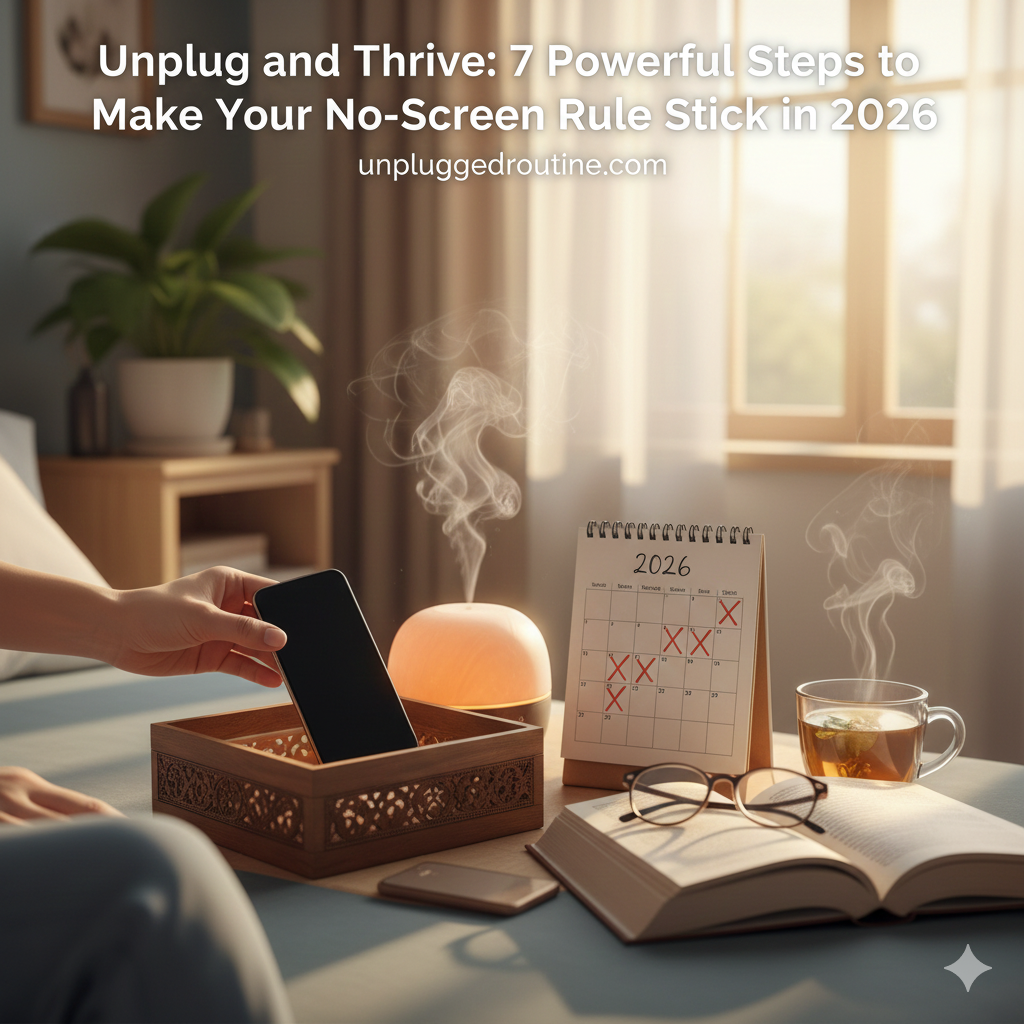
The Digital Dilemma: Why We Need a No-Screen Rule
Before we dive into the “how,” let’s briefly touch upon the “why.” Our screens, while offering incredible convenience and connection, also present a unique set of challenges.
Constant exposure to blue light from screens can disrupt our sleep patterns, leading to fatigue and reduced productivity. The endless stream of information and social media updates can contribute to anxiety, comparison culture, and a feeling of being constantly “on.” Moreover, the sheer amount of time we spend looking at screens often comes at the expense of other enriching activities – reading, hobbies, spending time in nature, or connecting with loved ones face-to-face.
A no-screen rule isn’t about shunning technology entirely. It’s about creating healthy boundaries, regaining control over your attention, and intentionally choosing how and when you engage with your devices. It’s about prioritizing your mental, emotional, and even physical health.
Step 1: Define Your “No-Screen” – Clarity is King
The first and most crucial step to making your no-screen rule stick is to define exactly what it means for you. “No-screen” can be a broad term, and ambiguity often leads to failure.
Ask yourself:
- Which screens are included? Is it just your smartphone, or also your tablet, laptop, and TV?
- What times are off-limits? Is it no screens after 8 PM? No screens during meals? A digital detox day once a week?
- Are there any exceptions? Do you need your laptop for work, or your phone for emergencies? Be realistic and specific.
Pro Tip: Start small. Instead of declaring a 24/7 no-screen zone, begin with a manageable goal. Perhaps no screens for the first hour after waking up, or during dinner. Success in small steps builds momentum.
Action Hook: Grab a notebook and pen right now. Jot down your initial thoughts on what your ideal no-screen rule looks like. Be as specific as possible. This is your personal blueprint.
Step 2: Prepare Your Environment – Out of Sight, Out of Mind
Our environment plays a massive role in our habits. If your phone is constantly within arm’s reach, vibrating with notifications, resisting the urge to pick it up becomes an uphill battle.
Physical Distance:
- Create a “charging station” outside your bedroom. This is crucial for avoiding late-night scrolling and ensuring a better night’s sleep.
- Designate “no-phone zones” in your home. The dining table, the bathroom, or a specific reading nook can be screen-free sanctuaries.
- Use physical barriers. Put your phone in a drawer, a different room, or even a timed lockbox (yes, they exist!).
Digital Declutter:
- Turn off non-essential notifications. Do you really need to know every time someone likes your post? Prioritize only truly important alerts.
- Delete distracting apps. If an app consistently pulls you in and offers little value, uninstall it. You can always reinstall it later if needed.
- Rearrange your home screen. Move addictive apps off your primary screen, making them harder to access impulsively.
Action Hook: Spend 15 minutes right now decluttering your phone and physically moving your main distraction devices. Try charging your phone in the living room tonight instead of next to your bed.
Step 3: Fill the Void – Replace, Don’t Just Remove
Simply removing screens without replacing the activity can leave a void that’s easy to fill with the very thing you’re trying to avoid. The key to making your no-screen rule stick is to have appealing, screen-free alternatives ready to go.
Brainstorm a “Replacement Activities” List:
- Hobbies: Reading physical books, journaling, drawing, knitting, playing a musical instrument, gardening.
- Movement: Taking a walk, stretching, practicing yoga, playing with pets.
- Connection: Calling a friend, having a face-to-face conversation with family, playing board games.
- Relaxation: Listening to music (non-screen device), meditating, taking a bath.
- Chores/Productivity: Organizing a drawer, prepping meals, planning your week.
Make it Accessible: Keep your replacement activities visible and easy to access. Place a book on your nightstand, a journal on your coffee table, or your art supplies within reach.
Action Hook: Create a list of 5-10 screen-free activities you genuinely enjoy or want to try. Keep this list handy for those moments when you feel the pull of the screen.
Step 4: Communicate Your Intentions – Get Support
You don’t have to embark on this journey alone. Communicating your no-screen rule to your family, friends, and even colleagues can provide invaluable support and understanding.
Inform Your Inner Circle:
- Family: Let your household know about your screen-free times or zones. This helps set expectations and reduces interruptions.
- Friends: Explain that you might be slower to respond to texts or social media messages during certain periods. They’ll likely respect your commitment to well-being.
- Work (if applicable): If your rule impacts work communication, discuss it with your team or manager to find solutions that respect your boundaries.
Encourage Participation: Maybe your family wants to join you in a screen-free dinner, or a friend is interested in trying a digital detox day. Shared goals can strengthen commitment.
Accountability Partner: Find someone who also wants to reduce screen time. Check in with each other regularly, share successes, and offer encouragement during challenges.
Action Hook: Have a conversation with at least one person close to you today about your no-screen rule and what you’re hoping to achieve.
Step 5: Embrace Boredom – The Unsung Hero of Creativity
In our always-on culture, boredom has become a taboo. We instantly reach for our phones to fill any moment of quiet or inactivity. However, embracing boredom is a superpower for cultivating creativity, problem-solving, and self-reflection.
Allow Yourself to Just Be:
- Instead of immediately grabbing your phone when waiting in line, sitting on public transport, or during a quiet moment at home, simply observe. Look around, listen, or let your mind wander.
- This “whitespace” allows your brain to process information, make connections, and generate new ideas. It’s often where true innovation and insight occur.
Journal Your Thoughts: If boredom feels uncomfortable, try channeling it into a journal. Write down whatever comes to mind – observations, feelings, ideas.
Action Hook: The next time you experience a moment of boredom, resist the urge to pull out your phone for just 5 minutes. See what happens.
Step 6: Track Your Progress and Celebrate Wins
Making a new habit stick is a marathon, not a sprint. Tracking your progress allows you to see how far you’ve come, identify patterns, and stay motivated. Celebrating small wins reinforces positive behavior.
Simple Tracking Methods:
- Calendar X’s: Mark an “X” on your calendar for every day you successfully adhere to your no-screen rule.
- Journaling: Briefly note your successes and challenges each day.
- App-based trackers: While ironic, some apps are designed to help you track screen-free time (e.g., Forest, Screen Time on iOS, Digital Wellbeing on Android). Use them mindfully.
Celebrate Your Successes:
- Small Rewards: Did you go a whole week with no screens in the bedroom? Treat yourself to a new book, a nice bath, or a delicious, screen-free meal.
- Acknowledge the Feeling: Notice and appreciate the positive impacts of your no-screen time – better sleep, reduced anxiety, more presence. These intrinsic rewards are powerful motivators.
Learn from Setbacks: Don’t view a lapse as a failure. It’s an opportunity to learn. What triggered the screen time? How can you better prepare for that situation next time? Adjust your strategy and move forward.
Action Hook: Choose a simple tracking method right now. Put a calendar on your wall or open a note on your computer. Start tracking your progress today.
Step 7: Practice Mindful Engagement – When Screens Are Necessary
Remember, the goal isn’t necessarily to become a digital hermit. It’s about intentional and mindful engagement. When you do choose to use screens, do so with purpose.
Ask Yourself Before Engaging:
- What is my purpose in picking up this device/opening this app? Am I checking for important information, connecting with someone specific, or just mindlessly browsing?
- Is this the best tool for this task? Could I achieve the same goal in a screen-free way?
- How long do I intend to use it? Set a timer if needed.
Minimize Distractions While Using Screens:
- Close unnecessary tabs.
- Put your phone on “do not disturb.”
- Focus on one task at a time.
Schedule Screen Time: Instead of letting screen time bleed into every moment, designate specific times for checking emails, social media, or entertainment. Treat it like an appointment.
Action Hook: Before you pick up your phone or open your laptop next, pause for 5 seconds and ask yourself, “What is my intention?”
The Long-Term Benefits of an Unplugged Routine
Sticking to your no-screen rule in 2026 isn’t just about limiting technology; it’s about unlocking a wealth of benefits that will enrich your life:
- Improved Sleep Quality: Less blue light exposure before bed means your body can produce melatonin more effectively, leading to deeper, more restorative sleep.
- Enhanced Focus and Productivity: With fewer distractions, your brain can concentrate better, allowing you to accomplish tasks more efficiently and creatively.
- Stronger Relationships: More present face-to-face interactions foster deeper connections with family and friends.
- Reduced Stress and Anxiety: Stepping away from the constant barrage of news and social comparisons can significantly lower your stress levels and improve your mental well-being.
- Rediscovered Hobbies and Interests: Free time that was once consumed by screens can now be dedicated to passions you’ve neglected or new activities you want to explore.
- Greater Self-Awareness: Without constant external input, you’ll have more space for introspection and understanding your own thoughts and feelings.
Imagine waking up feeling truly refreshed, enjoying meals without the distraction of a glowing screen, and spending quality time with loved ones, fully present in the moment. This isn’t a pipe dream; it’s the reality you can create with a dedicated no-screen rule.
Conclusion: Your Unplugged Journey Begins Now
Making your no-screen rule stick in 2026 is a journey, not a destination. There will be days when it’s easy, and days when the pull of the digital world feels overwhelming. But with clarity, preparation, support, and a commitment to mindful engagement, you absolutely can create a healthier, more balanced relationship with technology.
Start small, celebrate every win, and be kind to yourself when you experience setbacks. The goal isn’t perfection, but progress towards a more present, focused, and fulfilling life. Your well-being is worth it.
Ready to reclaim your attention and live more fully? Visit unpluggedroutine.com today for more resources, tips, and a community dedicated to helping you thrive in an increasingly digital world. Start your unplugged journey today!