In an era where the average American spends over seven hours a day looking at a screen, our homes have slowly transformed from sanctuaries of rest into digital hubs of endless notification pings. We eat with our phones, sleep with our tablets, and even “relax” by scrolling through stressful news feeds.
But what if your home could be a place where the Wi-Fi signal takes a backseat to human connection?
At UnpluggedRoutine.com, we believe that true wellness starts when you put the phone down. Creating screen-free zones isn’t about hating technology; it’s about loving your peace of mind more.
In this comprehensive guide, we’re going to walk you through a room-by-room blueprint to help you reclaim your space. Let’s dive in.
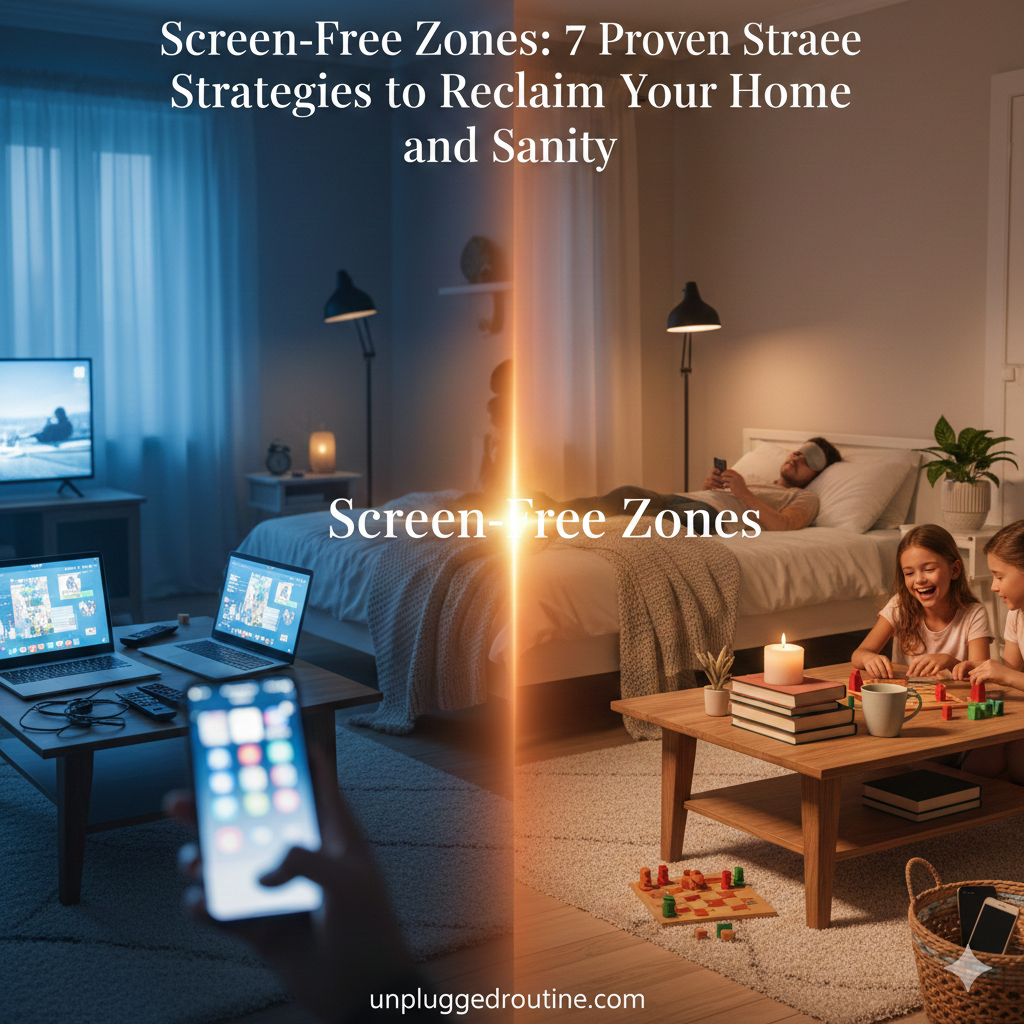
Why Screen-Free Zones Are No Longer Optional
Before we get into the “how,” let’s talk about the “why.” Your brain wasn’t designed to be “on” 24/7. When every room in your house allows for digital consumption, your nervous system never truly enters a state of deep rest.
Screen-free zones act as physical boundaries for your mental health. They reduce cortisol levels, improve sleep quality, and—perhaps most importantly—they force us to engage with the people we live with.
If you feel like your family is “alone together” (everyone in the same room but on different devices), this guide is your roadmap back to connection.
1. The Master Bedroom: The Ultimate Sanctuary
The bedroom is the most critical room to declare a screen-free zone. This is where your day begins and ends.
The Hook: The “Blue Light” Trap
Did you know that the blue light emitted by your phone mimics morning sunlight? When you scroll in bed, you’re essentially telling your brain to stop producing melatonin. You aren’t just “winding down”; you’re chemically keeping yourself awake.
The Strategy:
- The Charging Station Rule: Charge your phones in the kitchen or hallway. If your phone is your alarm, buy a $10 analog alarm clock.
- The “No Tech” Nightstand: Replace the tablet on your nightstand with a physical book, a journal, or a carafe of water.
- Ban the TV: If you have a TV in your bedroom, consider moving it to a common area. Bedrooms should be for two things only: sleep and intimacy.
Why it works: By removing screens, you create a psychological association between the room and rest. Within a week, you’ll find yourself falling asleep faster and waking up feeling less “foggy.”

2. The Dining Room: Reclaiming the Art of Conversation
Dinner time used to be the cornerstone of family connection. Today, it’s often a race to see who can finish their meal while watching a YouTube video.
The Hook: Digestion and Presence
When we eat while distracted by screens, we often overeat because our brain doesn’t register fullness signals. More importantly, we miss the subtle cues from our partners or children about their day.
The Strategy:
- The Phone Basket: Place a decorative basket at the entrance of the dining room. Every person “checks” their phone into the basket before sitting down.
- The “First to Touch” Game: If you’re eating with friends, everyone stacks their phones in the center of the table. The first person to grab theirs has to do the dishes (or pay for the meal).
- Focus on Sensory Details: Use the absence of screens to focus on the flavor of the food and the sound of laughter.
Why it works: Making the dining table a screen-free zone turns a routine chore (eating) into a meaningful ritual.
3. The Bathroom: Breaking the “Infinite Scroll” Habit
It’s the “dirty” little secret of the digital age: we take our phones into the bathroom.
The Hook: The Time Sink
Have you ever gone into the bathroom for five minutes and emerged twenty minutes later because you got stuck in a TikTok rabbit hole? This isn’t just a waste of time; it’s a habit that prevents us from ever being alone with our own thoughts.
The Strategy:
- Strict “No-Carry” Policy: Make a rule that the phone stays on the counter outside the door.
- Audio Alternatives: If you need noise while showering, use a dedicated Bluetooth waterproof speaker rather than bringing the phone into the “danger zone.”
- Mindfulness Moments: Use those few minutes of privacy to practice deep breathing or simply be present.
Why it works: Breaking the habit of bringing tech into the bathroom is one of the fastest ways to reduce your total daily screen time.
4. The Living Room: Strategic Zoning
This is the hardest room to tackle because it’s usually where the big TV lives. You don’t have to get rid of the TV, but you should create screen-free zones within the room.
The Hook: The Passive Consumption Cycle
Often, we turn on the TV just for background noise while we scroll on our phones. This “second screening” is a recipe for digital burnout.
The Strategy:
- The “Unplugged Corner”: Designate one chair or a corner of the couch as a tech-free nook. If you sit there, the phone stays away.
- The Hidden TV: Use a TV cabinet with doors or a “Frame” TV that displays art when not in use. This makes the screen a choice, not a focal point.
- Analog Entertainment: Keep board games, puzzles, or card decks visible. If they are easier to reach than the remote, you’re more likely to use them.
Why it works: It shifts the living room from a “media center” back to a “living” center.

5. The Kids’ Playroom: Protecting Development
For parents, creating screen-free zones in play areas is vital for a child’s cognitive development and imagination.
The Hook: Boredom is a Gift
When children are constantly entertained by iPads, they lose the ability to be bored. Boredom is the “soil” in which creativity grows.
The Strategy:
- Zero-Tolerance Policy: The playroom should be 100% tech-free. No tablets, no handheld consoles.
- Model the Behavior: If you are in the playroom with your kids, your phone must be out of sight. Kids do what we do, not what we say.
- Creative Stations: Fill the room with building blocks, art supplies, and costumes.
Why it works: It encourages deep play, which is essential for problem-solving skills and emotional regulation in children.
6. The Home Office: Deep Work vs. Distraction
Wait, a screen-free zone in an office? Yes!
The Hook: The “Switching Cost”
Every time you check a notification while trying to work, it takes an average of 23 minutes to get back into a state of “flow.”
The Strategy:
- The “Analog Desk”: If you have space, have a small secondary desk or a portion of your desk that has zero electronics. This is where you do your brainstorming, sketching, or planning with a pen and paper.
- The Notification Black Hole: When you are at your computer, your smartphone should be in another room or inside a drawer.
- Scheduled Unplugging: Set a timer for 50 minutes of work, followed by a 10-minute screen-free break (stretch, walk, hydrate).
Why it works: By separating your “thinking” space from your “digital” space, your productivity will skyrocket.
7. The Entryway: The Digital “Decompression Chamber”
The entryway is the threshold between the stressful outside world and your peaceful home.
The Hook: The Immediate “Check”
Most of us walk through the door and immediately check our notifications to see what we missed during the drive. This keeps us in a state of high alert.
The Strategy:
- The Valet Tray: Set up a beautiful tray or charging station right by the front door.
- The “30-Minute Buffer”: Commit to leaving your phone at the door for the first 30 minutes after you get home. Use that time to greet your family, pet your dog, or change into comfortable clothes.
Why it works: It creates a transition period that helps you mentally “arrive” at home.
How to Enforce Your New Zones (Without Being a Dictator)
Setting the rules is the easy part; sticking to them is where the challenge lies. Here is how to make your screen-free zones a success:
- Have a Family Meeting: Don’t just spring these rules on your partner or kids. Explain why you’re doing it. Focus on the benefits (more fun, better sleep) rather than the restrictions.
- Start Small: Don’t try to flip the whole house overnight. Start with the bedroom and the dining table. Once those habits stick, move to the next room.
- Use Visual Cues: A small, stylish sign or a specific basket can serve as a gentle reminder of the room’s purpose.
- Forgive Lapses: You will mess up. You’ll find yourself scrolling in the “forbidden” zone eventually. When you do, don’t give up. Just put the phone away and try again.
The Hidden Benefits of an Unplugged Routine
When you commit to these screen-free zones, you’ll start to notice “micro-joys” that you previously ignored.
You’ll notice the way the light hits the wall in the afternoon. You’ll hear the birds outside your window. You’ll have a conversation with your spouse that goes deeper than “what’s for dinner?”
These zones aren’t about self-punishment. They are about self-preservation. In a world that wants your attention every second of the day, giving that attention back to yourself and your loved ones is a radical act of self-care.
Conclusion: Your Journey to a Balanced Home Starts Now
Transforming your home into a tech-balanced sanctuary doesn’t require a total lifestyle overhaul. By strategically implementing screen-free zones room-by-room, you are reclaiming your time, your focus, and your relationships.
Remember, your home should be the one place on earth where you aren’t a “user” or a “consumer”—but simply a human being.
Ready to take the leap and reclaim your peace? Join our community at UnpluggedRoutine.com! [Sign up for our 7-Day Digital Detox Challenge here] and get daily tips, printable “Screen-Free Zone” signs, and the support you need to make these habits stick.
Let’s put the phones down and pick our lives back up. What room are you going to make screen-free first? Tell us in the comments below!