Balancing work and fitness when your office is ten steps from your bedroom is a modern-day paradox. On one hand, you have unparalleled flexibility. No commute! Your gym is right in your living room! You can wear sweatpants all day! On the other hand, the lines have never been more blurred. Your workday bleeds into your evening, your laptop is always within reach, and the motivation to swap a client call for a set of squats can feel impossibly out of reach.
It’s the classic remote work trap: you have more time, but somehow less opportunity. The day starts with the best intentions. “I’ll work out at lunch,” you promise. But lunch becomes a sandwich inhaled over the keyboard while answering emails. “I’ll do it after my last meeting,” you vow. But that meeting runs late, and the siren song of the sofa and Netflix is just too strong to resist.
Before you know it, another day has passed where your most significant physical activity was walking to the coffee machine. You feel sluggish, your focus is shot, and the guilt of neglecting your health starts to creep in.
If this sounds familiar, take a deep breath. You are not lazy or unmotivated. You’re just missing a system. The key to balancing work and fitness at home isn’t about willpower; it’s about structure. It’s about creating a schedule so seamless that your workouts become as non-negotiable as your 9 AM team meeting. This guide will provide that structure, with actionable tips and sample schedules to help you reclaim your energy, sharpen your focus, and build a healthier, more productive you.
Table of Contents
The Mindset Shift: Your Workout is a Work-Enhancing Drug
First, we need to fundamentally reframe how we view exercise. Stop seeing your workout as something that takes away from your workday. Instead, see it for what it truly is: a powerful tool that enhances your work performance.
Think of it this way:
- A Natural Nootropic: A short burst of exercise increases blood flow to the brain, improving focus, creativity, and problem-solving abilities for hours afterward.
- The Ultimate Stress Reducer: Physical activity is one of the most effective ways to metabolize cortisol, the stress hormone that builds up during demanding workdays.
- An Energy Multiplier: It sounds counterintuitive, but expending energy through exercise actually creates more energy. A midday workout can be more effective than a third cup of coffee for beating the afternoon slump.
When you see your workout as a critical part of your professional toolkit—as essential as your laptop or a reliable internet connection—prioritizing it becomes a no-brainer.
1. Time Blocking: Make Your Fitness a “Hard Appointment”
This is the most critical strategy. If you vaguely hope to “fit in” a workout, it will never happen. You must schedule it with the same seriousness as a meeting with your boss.
- Open Your Calendar Now: Look at your week. Find realistic, recurring slots for 20-30 minutes of activity.
- Block it Off: Create an event. Label it “Fitness Appointment” or “Do Not Schedule.” Set a reminder.
- Protect This Time Ruthlessly: If a colleague tries to book a meeting over it, respond with, “I have a conflict at that time, can we do 30 minutes later?” You don’t need to explain. It’s a hard appointment.
2. The 5-Minute Rule: How to Beat Procrastination
On days when motivation is at an absolute zero, the thought of a 30-minute workout can be overwhelming. This is where you use the 5-Minute Rule.
Tell yourself you only have to do it for five minutes. Anyone can do something for five minutes. Put on your shoes, start your workout video, or just begin some jumping jacks. Nine times out of ten, once you’ve started and the endorphins kick in, you’ll feel empowered to continue. And if you don’t? You still did five minutes of movement, which is infinitely better than zero.
3. Create a Dedicated “Third Space”
One of the biggest challenges of working from home is the lack of physical boundaries. Your living room is your office, your cafeteria, and your relaxation zone. To work out effectively, you need to create a “third space” for fitness, even if it’s temporary.
- Define Your Zone: This doesn’t mean you need a full home gym. It can be a specific corner of your living room. Roll out a yoga mat, set up your weights, and that corner is now your “gym.”
- The Power of Ritual: When you enter that space, it’s a mental cue that it’s time to work out. When you’re done, put the equipment away. This ritual of setting up and packing down helps create the mental separation you need.
4. “Movement Snacking”: The New Coffee Break
Embrace the concept of micro-workouts or “movement snacks.” These are 5-10 minute bursts of activity spread throughout the day. They break up sedentary time and keep your energy levels stable.
- The Pomodoro Plus: Use the Pomodoro Technique (25 minutes of work, 5 minutes of break). In your 5-minute break, don’t scroll social media. Do one of these:
- 20 squats and 20 push-ups.
- A 3-minute plank.
- Run up and down your stairs five times.
- A deep stretching sequence for your neck and back.
- The “Walking Meeting”: If you have a call where you don’t need to be on camera, pop in your earbuds and walk around your house or backyard.
5. Habit Stacking: Link Fitness to Your Work Routine
Anchor your workout habit to an established part of your workday. This removes the decision-making process.
- “Immediately after my last meeting of the day, I will change into my workout clothes.”
- “Right before I check my email in the morning, I will do my 10-minute stretching routine.”
- “As soon as I close my laptop for lunch, I will start my 20-minute workout.”
The Home Schedule Blueprints: Find Your Fit
Here are three sample schedules. Use them as inspiration to build a routine that works for your specific work style and energy levels.
Schedule 1: The “Morning Maximizer”
Ideal for early birds who want to get their workout done before the day’s chaos begins.
- 6:00 AM: Wake up, hydrate, light snack (e.g., banana).
- 6:15 AM – 6:45 AM: Protected Workout Block. This could be a HIIT session, a run, or an online strength class. It’s done before emails and notifications start flying.
- 7:00 AM: Post-workout shower and breakfast.
- 8:00 AM: Start workday feeling accomplished, energized, and focused.
- 12:30 PM: During your lunch break, use 15 minutes for a brisk walk outside to reset your mind and get some fresh air.
Schedule 2: The “Lunchtime Power Hour”
Ideal for those who need the morning to ease into work but hit an energy slump in the afternoon.
- 8:00 AM – 12:00 PM: Focused morning work block.
- 12:00 PM – 1:00 PM:Protected Lunch & Fitness Hour.
- 12:00 – 12:30: High-intensity workout. This is perfect for a quick HIIT circuit, a stationary bike session, or a power yoga flow. The goal is to get sweaty, fast.
- 12:30 – 12:45: Quick rinse-off/shower.
- 12:45 – 1:00: Eat a pre-prepped, healthy lunch.
- 1:00 PM: Return to work feeling completely refreshed and ready to tackle the afternoon with renewed energy, bypassing the 2 PM slump entirely.
Schedule 3: The “Post-Work Decompress”
Ideal for those whose brains are fried after work and need a physical way to signal the end of the day.
- 5:00 PM: Hard Stop. Set an alarm. When it goes off, the laptop closes. No exceptions.
- 5:01 PM: Immediately change into workout clothes. This is a crucial step to prevent you from sinking into the couch.
- 5:15 PM – 6:00 PM: Protected Workout Block. This is a great time for a workout that helps you de-stress. Think of a long run, a strength training session to work off frustration, or a restorative yoga class.
- 6:15 PM: Shower, dinner, and enjoy your evening, having created a powerful mental and physical separation from your workday.
Pro-Tip: Make Your Tech Work for You.
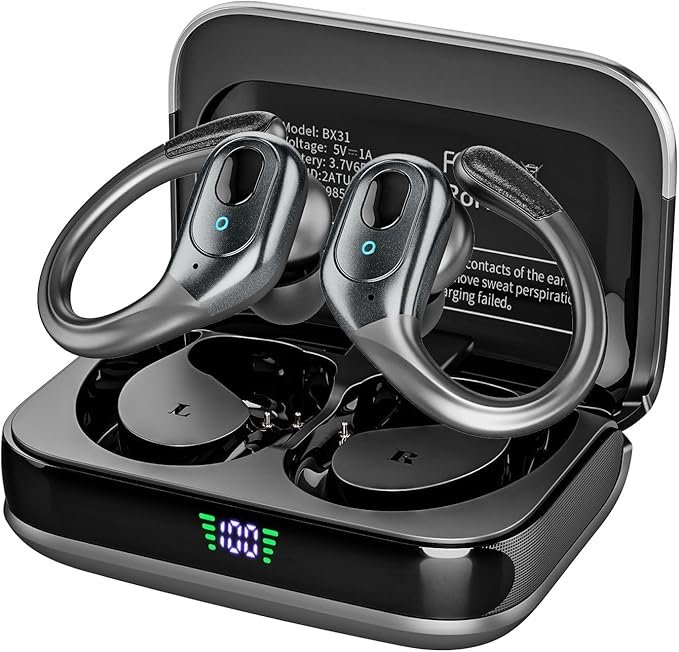
To make habits like the “walking meeting” or tuning into a lunchtime fitness class truly seamless, a great pair of noise-canceling wireless earbuds is essential. They allow you to switch from a work call to a workout playlist instantly, providing the audio privacy you need in a shared home and the motivation to keep moving.

6. Master the Art of Meal Prep
You can’t out-train a bad diet, and when you’re working from home, the pantry is always calling. Spending two hours on a Sunday prepping healthy lunches and snacks for the week will save you countless hours and poor food choices during your busy workdays.
7. Find Your Digital Community
One of the downsides of working out from home is the lack of camaraderie. Combat this by finding an online community. Whether it’s a Peloton tribe, a Facebook group for a specific program, or a live-streamed class where you can see the instructor, that sense of shared struggle and accountability is incredibly powerful.
8. Gear Up for Success (Without Breaking the Bank)
You don’t need a fancy home gym. Start with the basics:
- A good quality exercise mat.
- A set of resistance bands.
- A pair of adjustable dumbbells (the ultimate space-saver).
Having this gear readily accessible removes a major barrier to starting your workout.
9. Listen to Your Body: The Flexibility Rule
Some days you’ll be full of energy and ready to crush a high-intensity workout. Other days, you’ll be tired and stressed. On those days, don’t skip your workout—adapt it. Swap your HIIT session for a 30-minute deep stretching routine or a gentle walk. Honoring your body’s needs is key to long-term consistency.
10. The Hard Stop Ritual
For remote workers, the most important part of the day can be the end. Create a “hard stop” ritual that involves movement. It could be a 15-minute walk around the block, a stretching session, or your full workout. This ritual acts as a clear signal to your brain: “The workday is over. It is now time for my personal life.”
Your Blueprint for a Better Work-Life Balance
Balancing work and fitness from home is not a puzzle to be solved once, but a rhythm to be practiced daily. It’s about building a structure that serves you, protecting your time as your most valuable asset, and giving yourself grace when you fall off track.
Don’t try to implement all ten of these tips at once. Pick one. Just one that resonates with you. Maybe it’s time-blocking your lunch workout for this week. Maybe it’s committing to a 5-minute movement snack every afternoon.
Start small, celebrate your consistency, and watch as you build a powerful, sustainable routine that fuels not only your health but also your career.
What is your number one challenge when it comes to working out from home? Share it in the comments below—let’s find a solution together!