Are you feeling constantly overwhelmed, wired, and struggling to find a moment of peace? In our hyper-connected world, it’s easy to get caught in the relentless current of notifications, emails, and endless scrolling. But what if there was a simple yet powerful antidote to this digital overload? It’s called unplugging, and its benefits are far more profound than you might imagine.
Welcome to unpluggedroutine.com, where we believe in reclaiming your time, energy, and well-being from the digital din. Today, we’re diving deep into the transformative power of disconnecting. Get ready to discover how stepping away from your screens can revolutionize your life, from the quality of your sleep to the clarity of your thoughts.
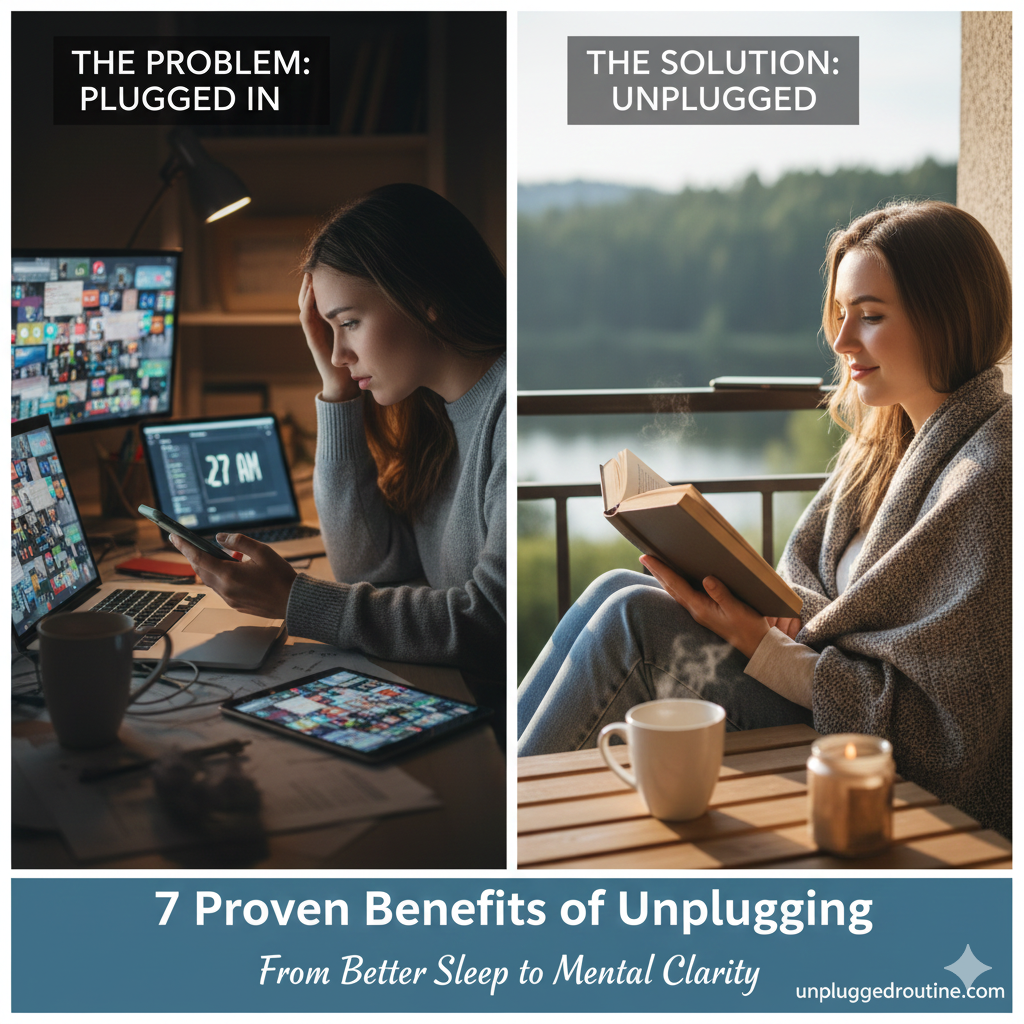
The Hidden Cost of Being Always-On
Before we explore the incredible benefits, let’s acknowledge the elephant in the room: unplugging can feel daunting. We rely on our devices for work, communication, entertainment, and even basic information. The idea of stepping away might trigger anxiety, fear of missing out (FOMO), or even boredom.
However, it’s precisely this constant reliance that makes unplugging so crucial. Our brains are not designed for the perpetual stimulation of the digital age. This constant “on” state leads to mental fatigue, stress, and a diminished capacity for deep focus and creativity.
Think of it like this: your devices are tools, and like any tool, they should serve you, not the other way around. Unplugging isn’t about rejecting technology; it’s about mastering it, taking control, and intentionally creating space for what truly matters—your life, right now.
The 7 Proven Benefits of Unplugging
Ready to unlock a calmer, more focused, and happier version of yourself? Here are the seven proven benefits you gain when you commit to an unplugged routine.
Benefit 1: Enhanced Sleep Quality
Let’s kick things off with one of the most immediate and impactful benefits: better sleep. This isn’t just about feeling less tired; it’s about deep, restorative sleep that recharges your body and mind.
The blue light emitted from screens (phones, tablets, computers, TVs) is a major culprit in disrupting our sleep cycles. This blue light actively suppresses the production of melatonin, the hormone responsible for signaling to your body that it’s time to sleep.
When you use your phone right before bed, you are essentially telling your brain it’s still daylight, throwing off your natural circadian rhythm. The content you consume—be it stressful news or engaging social media—adds mental stimulation, making it harder to calm down.
The Solution: Make your bedroom a screen-free zone, especially in the hour or two leading up to bedtime. Instead of scrolling, try reading a physical book, listening to calming music, or journaling. You’ll be amazed at how quickly your body adjusts and how much more refreshed and energized you feel in the morning.
Benefit 2: Sharper Mental Clarity and Focus
Have you ever sat down to work only to find your mind immediately wandering, pulling you toward the next notification? That’s the effect of a constantly interrupted brain.
Constant digital interruptions—the “ding” of an email, the vibration of a text—train your brain to expect novelty and distraction. Psychologists call the fragmented attention left behind “attention residue.” This residue severely hinders your ability to concentrate on the task at hand.
When you unplug for dedicated periods, you remove these powerful distractions. This allows your brain to settle into a state of “deep work.” Studies show that uninterrupted time significantly enhances cognitive functions, including memory, learning capacity, and problem-solving skills.
By creating pockets of device-free time, you stop reacting and start intentionally focusing. This practice is the key to unlocking your true productivity and intellectual power. Your brain gets the chance to reset and work at its highest level.
Benefit 3: Significant Reduction in Stress and Anxiety
Our devices, particularly social media, have become silent, continuous sources of stress and anxiety. The pressure to appear successful, the constant comparison to curated “highlight reels,” and the fear of missing out create an underlying sense of inadequacy and urgency.
Even beyond social media, constantly checking work emails outside of business hours keeps your nervous system in a state of high alert. You are literally in a state of chronic low-level fight-or-flight, which keeps stress hormones like cortisol elevated.
Taking a deliberate break—a digital detox—is like giving your emotional self a vacation. When you silence the noise, you eliminate the triggers that fuel anxiety. You create space for self-reflection and emotional processing, which naturally leads to a more balanced and calmer perspective.
Removing yourself from the comparison trap allows you to appreciate your own life and journey. This leads to a substantial decrease in symptoms of depression and anxiety, replacing them with a sense of peace and self-acceptance.
Benefit 4: Stronger, More Meaningful Relationships
When you are with a friend, family member, or partner, but your phone is visible or you’re checking it, you are sending a clear, albeit non-verbal, message: something on that screen is more important than you are.
Technology, while connecting us globally, often disconnects us locally. Unplugging forces you to be fully present with the people in front of you. This is the foundation of genuine connection.
When you put your phone away, the quality of your conversations improves dramatically. You become a better listener, more attuned to subtle emotional cues, and more capable of expressing genuine empathy. Shared experiences—like a meal, a walk, or a game night—become deeper and more memorable.
Prioritizing face-to-face, device-free time is an investment in your personal life. It fosters trust, strengthens bonds, and creates the real-life support system that contributes most significantly to overall life satisfaction.
Benefit 5: Boosted Creativity and Problem-Solving
Do you ever wonder why your best ideas seem to pop into your head in the shower or during a walk? It’s because these are moments when your brain is unoccupied and allowed to wander. This is when your default mode network (DMN) activates.
When you’re constantly stimulated by screens, your brain is too busy processing information to engage its creative gears. The DMN is the part of your brain responsible for introspection, planning, and—most importantly—connecting seemingly unrelated ideas.
Unplugging creates the necessary mental space for this process to occur. When you swap screen time for activities like walking in nature, practicing a non-digital hobby, or simply sitting in quiet contemplation, you allow your subconscious mind to work its magic.
The result is a surge in creative thought, innovative ideas, and improved complex problem-solving abilities. You shift from passively consuming content to actively creating your own path.
Benefit 6: Improved Physical Health and Wellness
The benefits of unplugging aren’t just mental; they are profoundly physical as well. Excessive screen time is often linked to a sedentary lifestyle, which is a major risk factor for various chronic diseases.
Unplugging provides the motivation and time to move your body. The time previously spent scrolling can be repurposed for a walk, a yoga session, or a new fitness routine. This active shift is crucial for heart health, maintaining a healthy weight, and boosting your mood through natural endorphins.
Furthermore, reducing your screen time alleviates common digital-age physical ailments:
- Less Eye Strain: Staring at screens reduces your blink rate, leading to dry eyes and fatigue. A break gives your vision a rest.
- Fewer Headaches: Constant screen exposure and the associated tension often contribute to headaches and migraines.
- Better Posture: Stepping away from the “tech neck” hunch is vital for reducing neck and back pain, preventing long-term orthopedic issues.
Benefit 7: Rediscovering the Joy of Offline Hobbies
When was the last time you painted, played a musical instrument, baked a complicated recipe, or worked on a physical project just for the joy of it? For many, the passive entertainment of screens has replaced the active fulfillment of hobbies.
Unplugging gives you back hours in your day that you didn’t know you had. It compels you to rediscover the activities that truly nourish your soul and provide a sense of tangible accomplishment.
Hobbies provide a non-digital source of dopamine—the pleasure chemical—that is healthier and more sustainable than the quick, fleeting hit from a “like” or notification. This shift from passive consumption to active creation is essential for long-term fulfillment and self-worth.
When you start dedicating time to an offline passion, you cultivate a sense of mastery and inner satisfaction that no amount of scrolling can replicate. You become the creator of your free time, not just the consumer.
How to Start Your Unplugged Routine Today (Your Hook Steps)
Ready to reap these powerful benefits? Starting your unplugged routine doesn’t require a radical, cold-turkey approach. Start with these three simple, immediate “hook steps”:
- The 9 PM Power Down: Commit to putting all screens away (phone, tablet, laptop) at least 60 minutes before bedtime. Use this time for reading, talking to your partner, or light stretching. Remember, this is the single biggest step to better sleep.
- The Tech-Free Meal: Designate your dining table as a zero-tolerance tech-free zone. This includes all meals, even when you are eating alone. Use this time to savor your food and engage in mindful eating or genuine conversation.
- Silence the “Dings”: Turn off all non-essential notifications for social media and news apps. Keep only calls and texts from important contacts. This minimizes the constant interruption and trains your brain to stop expecting external distractions.
Conclusion: Reclaim Your Life, One Disconnection at a Time
The evidence is clear: the simple act of intentionally and periodically unplugging is one of the most powerful things you can do for your mental, physical, and emotional health. From achieving deeper, restorative sleep to gaining the mental clarity needed for your best work, the benefits cascade through every area of your life.
This is not a trend; it’s a necessary balance in the modern age. It’s about taking back control of your attention, your time, and your peace.
Ready to start your journey toward a more mindful, focused, and present life?
Call to Action (CTA)
We want to help you make unplugging a sustainable, joyful habit!
Click here to download our FREE 7-Day Digital Detox Starter Kit! It includes daily challenges, activity ideas, and printable trackers to help you implement these proven benefits immediately. Start your new, unplugged routine and discover the transformative peace that’s waiting for you offline.