Let’s face it, getting teenagers and parents to willingly ditch their screens for an evening can feel like trying to herd cats – digitally-addicted cats, at that! You dream of family game nights, meaningful conversations, and laughter that isn’t interrupted by a “ding” or a “buzz.” But the reality often looks more like everyone staring at their own glowing rectangle.
At Unplugged Routine, we get it. The digital world is a powerful magnet, especially for teens. But imagine a night where the focus isn’t on likes or streaks, but on genuine connection and fun. That’s the magic of a family unplug night, and it’s not as impossible as it sounds.
In this post, we’re going to dive into actionable, teen-approved strategies and activities that will actually get everyone excited about disconnecting. Get ready to reclaim your evenings and build stronger family bonds, one screen-free moment at a time!
The Silent Divide: Why Screens Are Creating a Gap Between Teens and Parents
Before we jump into the fun stuff, let’s acknowledge the elephant in the room. Screens, while offering connection to the outside world, can inadvertently create a chasm within the family unit. Parents might feel frustrated by silent dinners, and teens might feel misunderstood or constantly monitored.
A dedicated family unplug night isn’t about punishment; it’s about bridging that gap. It’s about consciously choosing presence over pixels, and reminding everyone in the household what it feels like to truly engage with each other. It’s a powerful way to hit the reset button on family dynamics.
Hook Step 1: The “Why” Before the “What” – Get Buy-In From the Start 🤝
Trying to force an unplug night on a teen is a recipe for rebellion. The key is to involve them in the decision-making and highlight the benefits for them.
1. Pitch the “Recharge” Aspect. Teens are constantly online, managing school, friends, and social pressures. Frame the family unplug night not as a deprivation, but as a much-needed mental break. “Hey guys, I was thinking we all need a break from screens. A night to just chill and actually talk without notifications. How about we try a ‘recharge night’ this week?”
2. Let Them Choose the Activity (or at least narrow it down). Give your teen a sense of agency. Present a few options, rather than dictating. “Would you rather do a game night, a movie without phones, or try cooking something new together?” When they have a say, they’re more likely to invest.
3. Emphasize Mutual Participation. This isn’t just about teens unplugging; it’s about everyone unplugging. Parents need to commit just as much, if not more, by putting away their work emails and social feeds. Lead by example!
Hook Step 2: The “Setup for Success” – Creating an Irresistible Environment ✨
Once you have some buy-in, the environment makes all the difference. Make your family unplug night feel special, not like a chore.
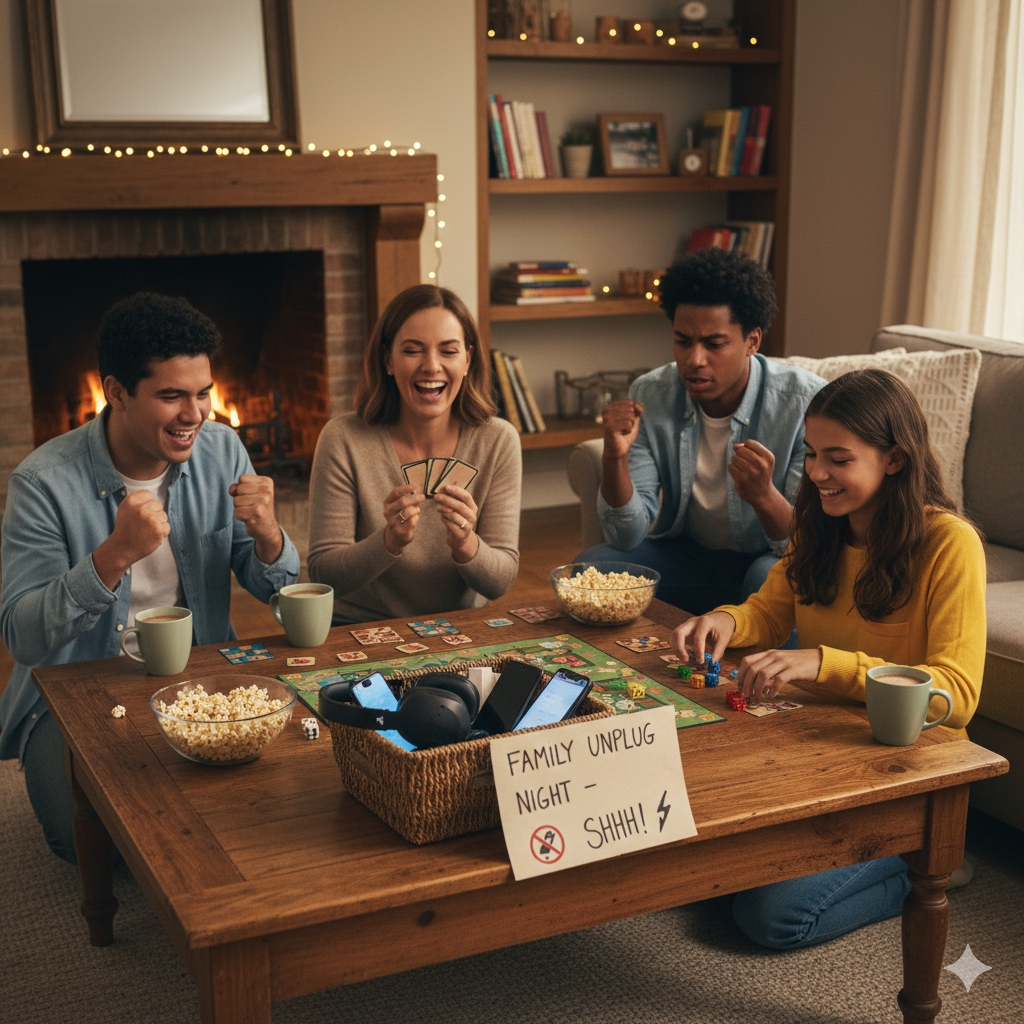
4. Create a “Phone Jail” or Charging Station. Designate a specific spot away from the activity area where all phones (and tablets, smartwatches, etc.) go. A kitchen safe with a timer can be a fun, physical commitment device. The out-of-sight, out-of-mind rule is crucial.
5. Prep Everything in Advance. Minimize reasons for anyone to “just quickly check something.” Have all game pieces ready, movie snacks laid out, or cooking ingredients prepped. Smooth transitions keep the focus on the activity.
6. Ambiance Matters. Dim the lights, light some candles (safely!), put on some background music (if appropriate for the activity), and make the space feel cozy and inviting. This signals that something different and special is happening.
Hook Step 3: 7 Epic Family Unplug Night Activities That Actually Work! 🎲
Now for the fun part! These activities are designed to be engaging for both teens and parents, fostering connection without needing a screen.
Activity 1: The Ultimate Board Game Tournament 🏆
- Why it works: Board games are the quintessential unplugged activity. They require strategy, communication, and a good dose of friendly competition. Choose games that appeal to different interests.
- Teen-friendly suggestions: Catan, Ticket to Ride, Sushi Go!, Exploding Kittens, Code Names, Wavelength. Even classic card games like Uno or Spades can spark lively interactions.
- Pro-Tip: Have a rotating “DJ” for some background music, or make a small trophy for the winner!
Activity 2: Culinary Team Challenge 🧑🍳
- Why it works: Cooking together is a fantastic way to collaborate, learn new skills, and enjoy the delicious fruits of your labor. Plus, everyone has a role!
- Teen-friendly suggestions: Make homemade pizza from scratch, bake cookies, try a new international dish, or have a “Chopped” style challenge using mystery ingredients from the pantry.
- Pro-Tip: Assign specific roles (chopper, stirrer, recipe reader) and put on some upbeat music. The focus isn’t just on the food, but the process.
Activity 3: Retro Movie Night (with a Twist!) 🍿
- Why it works: Everyone loves a good movie. The “twist” is that phones stay off! This means no mid-movie scrolling, no fact-checking actors, just pure, uninterrupted cinematic enjoyment.
- Teen-friendly suggestions: Let your teen pick a classic movie from your youth, or introduce them to a cult classic. Alternatively, pick a movie from their childhood that everyone can reminisce about.
- Pro-Tip: Create a cozy fort in the living room, make gourmet popcorn, and have a post-movie discussion about favorite scenes or plot holes.
Activity 4: Creative DIY / Craft Night 🎨
- Why it works: Engaging in hands-on creativity is incredibly therapeutic and a wonderful way to express yourselves without words. It’s also something you can often enjoy side-by-side with minimal pressure.
- Teen-friendly suggestions: Tie-dye t-shirts, paint canvas together (each person adds to the same canvas), build with LEGOs, try a challenging puzzle, or do some simple origami.
- Pro-Tip: Put on an audiobook or a podcast in the background while you create. It adds to the shared experience without being visually distracting.
Activity 5: Themed Storytelling or Charades 🎭
- Why it works: These activities tap into imagination, humor, and quick thinking. They often lead to hilarious moments and inside jokes that build family bonds.
- Teen-friendly suggestions: Pick a theme (e.g., “superheroes,” “school life,” “future careers”) for charades or Pictionary. For storytelling, try a “round-robin” where each person adds a sentence or two to a developing story.
- Pro-Tip: Don’t be afraid to be silly! The more laughter, the better. Record some of the stories (audio only!) to listen back to later.
Activity 6: The “Interview” Night (Reverse Roles!) 🎤
- Why it works: This is a fantastic way to bridge the generational gap. Teens often feel like they are the only ones being questioned. Turning the tables makes them feel heard and valued.
- How it works: Let your teen “interview” you about your childhood, your biggest mistakes, or what you were like at their age. Then, switch! Ask them about their perspectives on the world, their favorite memories, or their dreams for the future.
- Pro-Tip: Use a set of “Conversation Starter” cards to keep things flowing if you hit a lull. You’d be surprised how much you don’t know about each other!
Activity 7: Collaborative “Bucket List” Planning ✈️
- Why it works: It focuses on the future and shared goals. It shows your teen that you value their input on family experiences.
- How it works: Grab a large piece of poster board and some markers. Together, brainstorm a list of things you want to do as a family over the next year—trips, local adventures, or even small goals like “try every ice cream shop in town.”
- Pro-Tip: Keep the “Analog” vibe going by using travel magazines or printed photos for a vision board effect.
Hook Step 4: Troubleshooting Common Obstacles 🚧
Even the best-planned family unplug night can hit a snag. Here’s how to handle them like a pro:
The “I’m Bored” Complaint. Boredom is actually a gateway to creativity! Acknowledge the feeling, but don’t rush to fix it with a screen. Suggest a different activity or just let the boredom sit for a minute—usually, someone will come up with a funny idea or a new game.
The “Emergency” Text. Establish the rule early: unless the house is on fire or a relative is in the hospital, it can wait. If a teen is genuinely anxious about missing a specific time-sensitive message, build in a “10-minute tech check” halfway through the night—but only as a last resort.
Resistance to Specific Activities. If a teen hates board games, don’t force it. Be flexible. The goal is togetherness, not the activity itself. If they just want to sit on the porch and talk while stargazing, that’s a massive win!
The Long-Term Impact: Building a Culture of Presence 🌳
A successful family unplug night isn’t just about those few hours of screen-free time. It’s about building a household culture where presence is prioritized.
When your teen sees that you can have a blast without a phone in your hand, it gives them “social permission” to do the same. Over time, these nights become a tradition that everyone looks forward to—a safe haven from the noise of the digital world.
You’ll notice the benefits leaking into the rest of the week: better eye contact at breakfast, more spontaneous conversations in the car, and a general sense of being “in sync” as a family.
Conclusion: Start Your Unplugged Tradition Tonight! ✨
Reclaiming your family time from the digital void is one of the most rewarding investments you can make. By choosing engaging family unplug night activities and involving your teens in the process, you aren’t just “turning off” devices—you’re “turning on” your relationship.
Remember, it doesn’t have to be perfect. There might be some eye-rolling at first, but the memories you create will far outlast any viral video or social media trend.
Ready to take the plunge? Pick a night this week, put the phones in a basket, and try one of these activities. We’d love to hear how it went! Drop a comment below and tell us which activity your family loved the most (or which one was a hilarious disaster)!
Would you like me to create a “Family Unplug Night” invitation template you can print out, or perhaps a list of 50 “Non-Awkward” conversation starters for teens and parents?