Crafting the perfect full-body workout schedule can feel like the ultimate solution to at-home fitness, and for good reason. If you’ve ever felt lost in the maze of “chest days,” “leg days,” and “arm days,” you know how complicated and time-consuming traditional workout splits can be. Miss one day, and your whole week feels off-balance.
But what if there was a simpler, more efficient, and arguably more effective way to build strength, burn fat, and improve your overall fitness from your living room?
Enter the full-body workout. This approach is the gold standard for anyone who wants maximum results with minimum complexity. Instead of isolating one or two muscle groups per session, you train your entire body in a single, cohesive workout. This guide will not only provide you with a powerful, easy-to-follow schedule but will also teach you the science behind why it works so well, how to perform the key exercises, and how to progress for long-term success.

Table of Contents
Why Choose a Full-Body Workout Schedule? The Science of Efficiency
Before we lay out the plan, it’s crucial to understand why this method is so powerful, especially for those of us working out at home.
- Unmatched Time Efficiency: Life is busy. Instead of needing 5-6 days a week to hit every muscle group, a full-body routine gets the job done in just 3-4 sessions. You get a better workout in less time, making it easier to stay consistent.
- Increased Calorie Burn: By engaging multiple large muscle groups in every workout (like your legs, back, and chest), you create a massive metabolic demand. This means you burn more calories during the workout and for hours afterward compared to isolated exercises.
- Optimal Hormonal Response: Full-body workouts that incorporate compound movements (exercises using multiple joints) have been shown to stimulate a greater release of muscle-building hormones like testosterone and growth hormone.
- Perfect for Consistency: If you miss a workout on a traditional split, that muscle group might not get trained for a whole week. With a full-body schedule, you miss one day and you can just pick it up the next, knowing you’ll still hit every muscle group multiple times that week.
The Anatomy of a Perfect Full-Body Workout
A truly effective full-body workout isn’t just a random collection of exercises. It’s a balanced meal of fundamental human movements. Your schedule should include an exercise from each of these categories in every workout.
- Upper-Body Push: Exercises where you are pushing weight away from your body. (e.g., Push-Ups, dumbbell presses).
- Upper-Body Pull: Exercises where you are pulling weight towards your body. (e.g., Rows, pull-ups). This is crucial for posture and back strength.
- Squat Pattern: A lower-body movement focused on the quads and glutes. (e.g., Bodyweight Squats, Goblet Squats).
- Hinge Pattern: A lower-body movement focused on the hamstrings and glutes. (e.g., Glute Bridges, Deadlifts).
- Core Work: Exercises that stabilize your spine and strengthen your midsection. (e.g., Plank, Leg Raises).
The Ultimate Full-Body Workout Schedule (3 Days/Week)
This is your foundation. This schedule is perfect for beginners or anyone looking for a solid, time-efficient plan. The goal is to perform this workout on three non-consecutive days (e.g., Monday, Wednesday, Friday) to allow for adequate recovery.
Perform each exercise for the prescribed sets and reps. Rest for 60-90 seconds between sets.
| Exercise Category | Exercise Example | Sets & Reps |
| Lower Body (Squat) | Bodyweight Squats | 3 sets of 10-15 reps |
| Upper Body (Push) | Push-Ups (on knees or toes) | 3 sets of as many reps as possible |
| Upper Body (Pull) | Dumbbell Rows (or Band Rows) | 3 sets of 10-12 reps per arm |
| Lower Body (Hinge) | Glute Bridges | 3 sets of 15-20 reps |
| Core | Plank | 3 sets, hold for 30-60 seconds |
Want More Frequency? The 4-Day A/B Split
For those who want to work out four days a week, we use an A/B split. You’ll have two different full-body workouts (Workout A and Workout B) that you alternate. This allows you to include more exercise variety.
- Week 1: Mon (A), Tues (B), Thurs (A), Fri (B)
- Week 2: Mon (B), Tues (A), Thurs (B), Fri (A)
Workout A
- Goblet Squats: 3 sets of 10-12 reps
- Push-Ups: 3 sets of as many reps as possible
- Dumbbell Rows: 3 sets of 10-12 reps per arm
- Reverse Lunges: 3 sets of 10 reps per leg
- Leg Raises: 3 sets of 15 reps
Workout B
- Romanian Deadlifts (with Dumbbells): 3 sets of 12 reps
- Overhead Press (with Dumbbells): 3 sets of 10 reps
- Band Pull-Aparts: 3 sets of 20 reps
- Glute Bridges: 3 sets of 20 reps
- Plank: 3 sets, hold for 60 seconds
Your At-Home Exercise Library: How to Perform the Moves
Knowing the schedule is only half the battle. Performing the exercises with good form is essential for getting results and preventing injury.
1. Bodyweight Squat
- How-to: Stand with your feet shoulder-width apart, toes pointing slightly out. Keep your chest up and back straight. Lower your hips back and down as if you’re sitting in a chair. Go as low as you can comfortably, aiming for your thighs to be parallel to the floor. Press through your heels to return to the starting position.
- Pro-Tip: Imagine you have a glass of water on your head that you can’t spill. This will help keep your torso upright.
2. Push-Up
- How-to: Start in a high plank position with your hands slightly wider than your shoulders. Your body should form a straight line from your head to your heels. Lower your body until your chest is just above the floor. Push back up to the starting position.
- Modification: If this is too hard, perform the exercise with your knees on the floor.
3. Dumbbell Row
- How-to: Place one knee and the same-side hand on a bench or chair. Hold a dumbbell in the opposite hand with your arm extended. Keeping your back flat, pull the dumbbell up towards your chest, squeezing your back muscles. Lower it slowly.
- No Dumbbell? Use a resistance band looped around a sturdy anchor point.
4. Glute Bridge
- How-to: Lie on your back with your knees bent, feet flat on the floor close to your glutes. Press through your heels to lift your hips off the floor until your body forms a straight line from your shoulders to your knees. Squeeze your glutes at the top. Lower back down slowly.
- Pro-Tip: For an extra challenge, hold a dumbbell across your hips.
5. Plank
- How-to: Place your forearms on the floor with your elbows directly under your shoulders. Extend your legs back, resting on your toes. Your body should form a perfectly straight line. Engage your core and glutes, and don’t let your hips sag.
- Pro-Tip: Imagine you’re trying to pull your elbows towards your toes to create full-body tension.
How to Keep Making Progress (Progressive Overload)
To keep getting stronger, you must continuously challenge your muscles. This is called progressive overload. Here’s how to apply it to your full-body workout schedule:
- Increase Reps: If you can comfortably complete 10 reps, try for 11 or 12 in your next session.
- Increase Sets: Once you can hit the top of the rep range for all your sets, add an extra set.
- Increase Weight: If you have dumbbells, this is the most straightforward way to progress. Once you can easily complete your reps, move to the next weight up.
- Decrease Rest Time: Shaving 15 seconds off your rest periods can make the workout significantly more challenging.
The Ultimate Tool for Progression: Adjustable Dumbbells
While increasing reps and sets is effective, the most powerful way to build strength over the long term is by increasing weight. But for at-home fitness, buying a full rack of dumbbells is expensive and takes up a huge amount of space. This is where adjustable dumbbells become a game-changer.
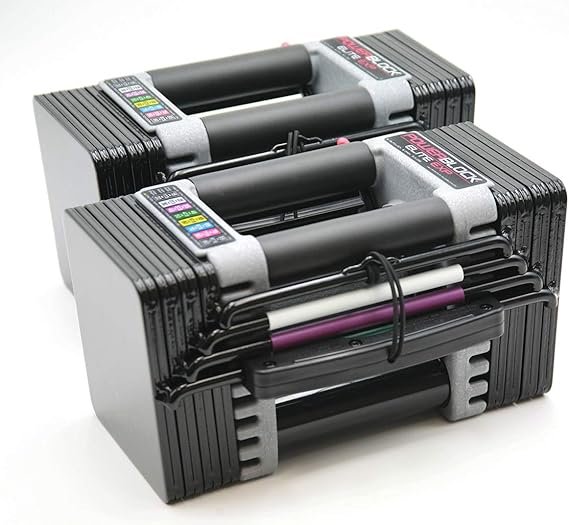
Our Top Recommendation for Serious Results: A quality set of Adjustable Dumbbells.
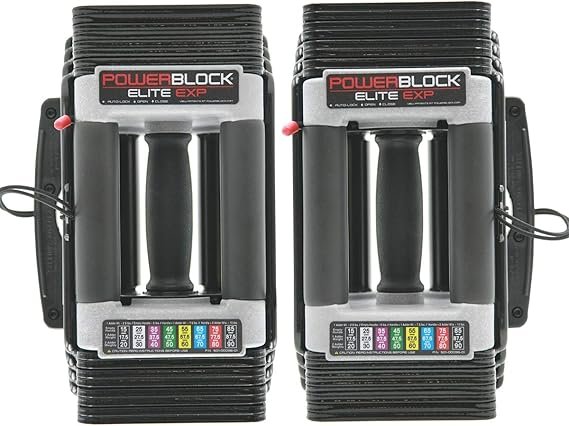
Think of these as an entire weight rack in a single, compact package. With the simple turn of a dial or shift of a pin, you can change the weight from 5 lbs all the way up to 50 lbs (or more), depending on the model. This makes them the perfect investment for your full-body workout schedule, allowing you to use a lighter weight for exercises like overhead presses and a heavier weight for squats and rows, all within the same workout. For anyone serious about transforming their body at home, adjustable dumbbells are the single best investment you can make.
Frequently Asked Questions (FAQ)
1. Can I do a full-body workout every day?
No, this is not recommended. Your muscles need time to recover and grow. Stick to 3-4 non-consecutive days per week to allow for at least one day of rest between sessions.
2. How long should my workouts take?
Including a warm-up and cool-down, these workouts should take approximately 45-60 minutes. The focus should be on the quality of your reps, not rushing through them.
3. What if I don’t have any dumbbells?
You can still get an incredible workout! The 3-day beginner schedule is primarily bodyweight. For a pulling motion, you can purchase an inexpensive resistance band or even use a sturdy table for inverted rows.
The Simple Path to a Stronger You
You don’t need a complicated plan to achieve incredible fitness results. A well-designed full-body workout schedule is the most reliable and efficient tool for building a strong, capable, and resilient body. Embrace the simplicity, focus on your form, and stay consistent. You have the plan; now it’s time to put in the work.
Ready to take your routine to the next level? Sign up for the Unplugged Routine newsletter for more free workout plans, nutrition tips, and a weekly dose of motivation to help you stay on track!