You did it. You bought the dumbbells, the resistance bands, the yoga mat. You carved out a corner of your home and declared it your new fitness sanctuary. For a few days, it was glorious. Then, life happened. A busy week at work, a change in routine, a dip in motivation—and suddenly, your workout corner starts gathering dust. This story is incredibly common. The number one reason home fitness plans fail isn’t a lack of equipment or even a lack of motivation; it’s the lack of a realistic, sustainable plan. This guide will show you how to build a home fitness schedule that works for your real life, not a fantasy one.
A schedule written on a piece of paper is just a wish. A schedule that is intelligently designed around your goals, your energy levels, and your non-negotiable life commitments is a powerful tool for transformation. It’s the difference between starting over every Monday and building unstoppable momentum.
This is your complete blueprint for becoming the architect of your own consistency. We will move beyond generic advice and give you a step-by-step system, complete with templates, to create a plan so perfectly integrated into your life, it becomes as natural as brushing your teeth.

Table of Contents
The Foundation: 3 Crucial Steps Before You Plan Anything
Jumping straight into scheduling is like building a house without a foundation. It’s destined to crumble. The most successful fitness schedules are built on a bedrock of self-awareness and clear intention.
Step 1: Define Your “Why” with Unshakable Clarity
We’ve talked about motivation before, but when it comes to scheduling, your “Why” is the fuel that will get you to show up on a rainy Tuesday morning when you’d rather stay in bed. Your “Why” must be a deep, emotional driver.
- Surface Goal: “I want to lose 15 pounds.”
- Deeper “Why”: “I want to have the energy to chase my kids around the park without feeling winded.” or “I want to feel confident and strong in my body again after years of putting myself last.”
Write this “Why” at the top of your planning document. It is your mission statement.
Step 2: Conduct an Honest Time Audit
You don’t “find” time; you make time. To do that, you need to know exactly where your time is going. For three days, track your time in 30-minute blocks from when you wake up to when you go to sleep. Be brutally honest.
- How much time is spent on social media?
- How long is your lunch break really?
- When are your peak energy hours? When do you feel a slump?
This audit will reveal the pockets of time you never knew you had and, just as importantly, the times you absolutely should not plan a workout (like during your post-lunch energy crash).
Step 3: Set SMART Fitness Goals
A goal of “get in shape” is useless because it’s not measurable. A schedule needs a target. Use the SMART goal framework.
- Specific: What exactly do you want to achieve? (e.g., “I want to be able to do 10 full push-ups.”)
- Measurable: How will you track your progress? (e.g., “I will test my max push-ups every 2 weeks.”)
- Achievable: Is this realistic for your current fitness level? (e.g., Starting with wall push-ups and progressing from there is achievable.)
- Relevant: Does this goal align with your deeper “Why”? (e.g., “Getting stronger will help me feel more capable and energetic.”)
- Time-bound: When will you achieve this goal? (e.g., “I will achieve 10 push-ups in 8 weeks.”)
With this foundation of purpose, realism, and specific goals, you are now ready to build the schedule itself.
The Building Blocks: Components of a Well-Rounded Fitness Schedule
An effective schedule isn’t just about lifting weights every day. A balanced approach prevents burnout, reduces injury risk, and delivers holistic health benefits. Your weekly plan should ideally include a mix of the following:
- Strength Training (2-4 days/week): This is the cornerstone of building muscle, boosting metabolism, and increasing bone density. This can be done with weights (dumbbells, kettlebells), resistance bands, or your own bodyweight (push-ups, squats, planks).
- Cardiovascular Exercise (2-3 days/week): This is for your heart and lung health. It can be High-Intensity Interval Training (HIIT) with a jump rope, a dance cardio session on YouTube, running, or even a brisk walk.
- Flexibility & Mobility (Incorporate daily or 2-3 dedicated sessions/week): This is your body’s maintenance plan. Stretching, yoga, and foam rolling improve range of motion, reduce soreness, and prevent injuries. This can be a 10-minute session in the morning or a longer yoga flow on an active recovery day.
- Active Recovery (1-2 days/week): These are not “do nothing” days. Active recovery days involve light, restorative movement like a long walk, a gentle stretching session, or a leisurely bike ride. This helps your muscles repair and gets the blood flowing without causing more stress.
Designing Your Blueprint: How to Build a Home Fitness Schedule That Works (Templates)
Here is where the planning comes to life. Use these templates as a starting point and adjust them based on your time audit and goals.
Template 1: The Beginner’s Blueprint (3 Days/Week)
Goal: Build foundational strength and make exercise a consistent habit.
Focus: Full-body workouts to maximize efficiency.
| Day | Activity | Duration | Notes |
|---|---|---|---|
| Monday | Full Body Strength A | 30-45 mins | Focus on compound movements: squats, push-ups, rows, planks. |
| Tuesday | Rest or Active Recovery (Walk) | 20-30 mins | |
| Wednesday | Full Body Strength B (different exercises) | 30-45 mins | e.g., Lunges, overhead press, glute bridges, bird-dog. |
| Thursday | Rest or Active Recovery (Stretching) | 10-15 mins | |
| Friday | Full Body Strength C (or a cardio/fun day) | 30-45 mins | Repeat A or B, or try a HIIT session or dance cardio. |
| Saturday | Active Recovery (Long Walk, Light Activity) | 30-60 mins | |
| Sunday | Full Rest | – |
Template 2: The Fat Loss & Conditioning Blueprint (4-5 Days/Week)
Goal: Maximize calorie burn and improve cardiovascular health.
Focus: A strategic mix of strength training and HIIT.
| Day | Activity | Duration | Notes |
|---|---|---|---|
| Monday | Full Body Strength | 45 mins | Prioritize heavy compound lifts to build metabolism-boosting muscle. |
| Tuesday | HIIT Cardio | 20 mins | e.g., Jump rope, burpees, high knees. 30 seconds on, 30 seconds off. |
| Wednesday | Full Body Strength | 45 mins | |
| Thursday | LISS Cardio (Low-Intensity Steady-State) | 30-45 mins | e.g., Brisk walk, light cycling. Keeps you moving on a recovery day. |
| Friday | Metabolic Conditioning (Full Body Circuit) | 30 mins | Lighter weight, higher reps, minimal rest between exercises. |
| Saturday | Active Recovery (Yoga or Long Walk) | 30-60 mins | |
| Sunday | Full Rest | – |
Template 3: The Muscle Building Blueprint (4-Day Split)
Goal: Maximize muscle growth (hypertrophy).
Focus: Splitting workouts by muscle group to allow for more volume and recovery.
| Day | Activity | Duration | Notes |
|---|---|---|---|
| Monday | Upper Body Strength (Push/Pull) | 45-60 mins | Bench press, rows, overhead press, pull-ups, bicep curls. |
| Tuesday | Lower Body Strength | 45-60 mins | Squats, deadlifts, lunges, glute bridges, calf raises. |
| Wednesday | Active Recovery or Rest | 20-30 mins | A walk or light stretching. |
| Thursday | Upper Body Strength (Push/Pull) | 45-60 mins | Focus on different exercises or rep schemes than Monday. |
| Friday | Lower Body Strength | 45-60 mins | Focus on different exercises or rep schemes than Tuesday. |
| Saturday | Optional: Light Cardio or Mobility Work | 20-30 mins | |
| Sunday | Full Rest | – |
The Secret Sauce: 7 Strategies to Make Your Schedule Stick
Creating the schedule is the easy part. Sticking to it is where the magic happens. These strategies will help you stay on track for the long haul.
- Treat it Like a Doctor’s Appointment: Your workout slots are non-negotiable meetings with yourself. Put them in your calendar with reminders. Protect that time fiercely.
- Use “Habit Stacking”: Attach your workout habit to an existing, established habit. For example: “After I have my morning coffee, I will immediately change into my workout clothes.”
- Prep the Night Before: Lay out your workout clothes, fill your water bottle, and have your equipment ready. This removes friction and makes it incredibly easy to start the next day.
- Embrace Flexibility (The “Something is Better Than Nothing” Rule): Life will get in the way. If you planned a 45-minute workout but only have 15 minutes, do the 15 minutes. Don’t skip it entirely. The goal is to maintain the habit, even on imperfect days.
- Listen To Your Body: If you are genuinely exhausted or feeling pain, it’s smarter to take a rest day or do a gentle stretching session than to push through and risk injury or burnout.
- Schedule Your Rest Days: Plan your rest and active recovery days with the same intention as your workout days. They are a critical part of the process, not a sign of failure.
- Find Accountability: Tell a friend or partner about your schedule. Better yet, find a workout buddy (even a virtual one) to check in with. Knowing someone else is aware of your goals can be a powerful motivator.
Putting It On Paper
This final step makes your plan real and holds you accountable. While a digital calendar is great for sending reminders, there’s a unique power in physically writing down your goals and schedule. The tactile process can create a stronger mental connection to your commitment.
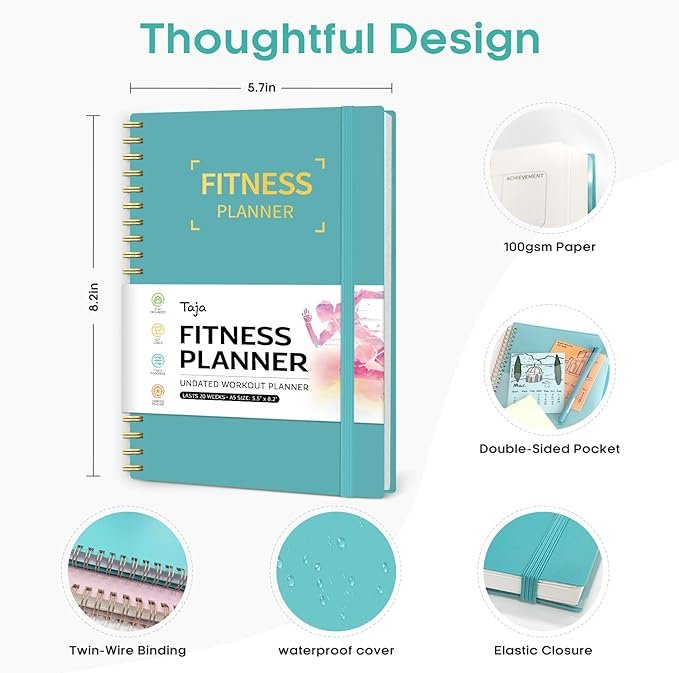
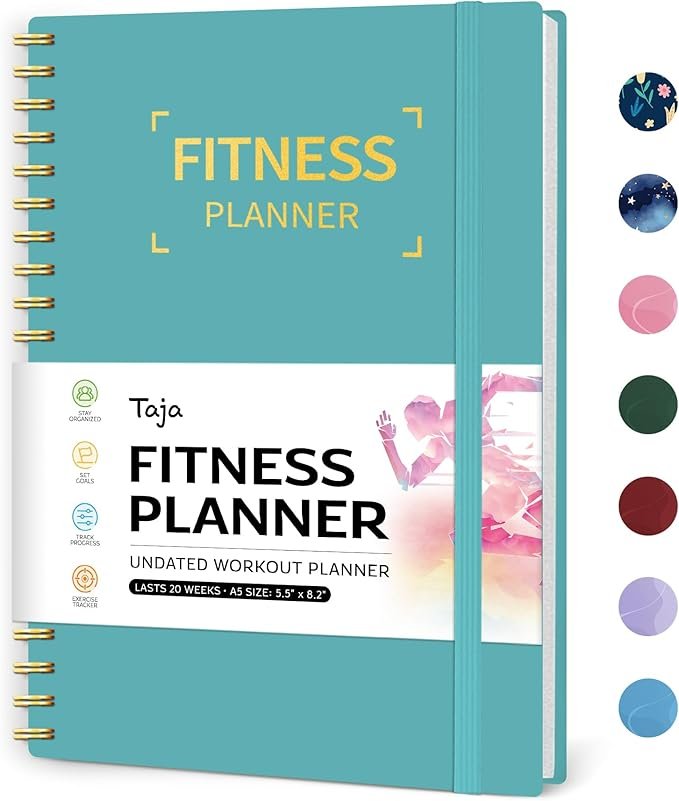
For this, a dedicated fitness planner like the popular Clever Fox Planner or a simple, highly-rated journal is an invaluable tool. These planners go beyond simple scheduling, with dedicated space to define your “why,” track your SMART goals, log your workouts, and note your progress over time. It becomes your personal fitness command center and a powerful record of how far you’ve come.
Frequently Asked Questions (FAQ)
Q1: How long should my workouts be to be effective?
A: This is a common question, and the answer is quality over quantity. For strength training, a focused 30-45 minute session is highly effective. For HIIT, workouts as short as 15-20 minutes can yield incredible cardiovascular benefits. The most important factor is consistency. A 20-minute workout that you do consistently four times a week will always produce better results than a 90-minute workout you only manage to do once every two weeks.
Q2: What if I’m not a “morning person”? I can never seem to work out before my day starts.
A: That is completely fine! There is no magic “best time” to work out; the best time is the time that you can consistently stick to. Refer back to your “Time Audit” from the article’s foundation steps. Many people thrive with a lunchtime workout to break up the day, while others prefer an evening session to de-stress from work. The key is to schedule it for a time when your energy is relatively high and you have the fewest potential interruptions.
Q3: How do I stick to a schedule when my life is so unpredictable?
A: The key is to build a flexible plan, not a rigid one. First, accept that some weeks will be better than others. Second, have a backup plan. On your busiest days, have a go-to “15-Minute Emergency Workout” ready (like a quick jump rope session or a bodyweight circuit). This follows the “Something is Better Than Nothing” rule and, crucially, keeps the habit of daily movement alive even when your full schedule falls apart.
Q4: How quickly should I expect to see results from my new schedule?
A: It’s important to have realistic expectations. You will likely feel results much sooner than you see them. Within the first 2-3 weeks, you might notice you have more energy, are sleeping better, and feel stronger during your workouts. Visible changes in body composition typically take longer, often in the 6-8 week range, assuming your nutrition is also aligned with your goals. Remember to track your progress in multiple ways (strength gains, photos, how your clothes fit), not just the number on the scale.
Q5: What should I do if I start to get bored with my routine after a few weeks?
A: Boredom is a natural part of the process and a sign that it’s time to introduce some variety! You don’t need to scrap your entire schedule. Instead, try “micro-changes.” You can keep the same schedule (e.g., Strength on Mon/Weds/Fri), but swap out the exercises. If you’ve been doing squats, try lunges. If you’ve been doing push-ups, try pike push-ups. You can also try a completely new style of workout for one of your cardio days, like a dance routine or kickboxing video from YouTube.
Q6: Are rest days really necessary, or can I work out every day to see faster results?
A: Rest days are not just necessary; they are critical for seeing results. During strength training, you create microscopic tears in your muscle fibers. The “magic” of muscle growth and strength-building happens when your body repairs these fibers during rest. Working out every day, especially the same muscles, can lead to overtraining, burnout, and injury. Embrace your scheduled rest and active recovery days—they are when your body is hard at work rebuilding you stronger.
Q7: How should my schedule look if my goal is both to lose fat AND build muscle?
A: This is a common goal called “body recomposition.” The most effective schedule for this is the “Fat Loss & Conditioning Blueprint” outlined in the article. The strategy is to prioritize strength training (3-4 days a week) to send a strong signal to your body to build or maintain muscle. Then, incorporate 2-3 sessions of cardiovascular exercise (like HIIT or steady-state cardio) to help increase your total calorie burn, which aids in fat loss. This approach, combined with a protein-rich diet, tells your body to build muscle while using stored fat for energy.
Q8: Do I need a full home gym with lots of equipment to follow a consistent schedule?
A: Absolutely not. The most important piece of equipment you own is your own body. A schedule based on bodyweight exercises like squats, lunges, push-ups, planks, and burpees can be incredibly effective for building both strength and cardiovascular fitness. The schedule templates in the article can all be adapted for a bodyweight-only routine. Consistency with a simple plan will always be more effective than inconsistency with a complex, equipment-heavy one.
You Are the Architect of Your Consistency
The perfect fitness schedule isn’t the most grueling one you can find online. The perfect schedule is the one you can stick to week after week. It’s a living document that should adapt with you as your life and goals change.
You now have the complete system for how to build a home fitness schedule that works. You have the foundational principles, the building blocks, the templates, and the strategies to ensure your success. Stop waiting for the “perfect” time and start building the perfect plan for the life you have right now. The consistency you build today is the strength you will enjoy for a lifetime.
We all have hurdles when it comes to planning and sticking to a routine. Your experience could help someone else.
What is your single biggest challenge when it comes to building and sticking to a home fitness schedule? Share it in the comments below!