Does it ever feel like your phone has become a “digital limb”—an extension of your body you can’t seem to put down? You aren’t alone. In 2025, the average person checks their phone hundreds of times a day, often before they’ve even brushed their teeth. This constant “plugged-in” state leads to a specific kind of modern exhaustion: digital burnout.
But what if the goal wasn’t just to “unplug” for a weekend, but to weave presence into the very fabric of your day? This is the core of Lifestyle Integration & Mindfulness. It’s not about fleeing to a mountain cabin; it’s about finding stillness while waiting for the microwave to beep or while walking to your car.
At UnpluggedRoutine.com, we’re obsessed with making digital wellness feel natural, not like a chore. Here are five powerful ways to integrate mindfulness into your lifestyle so you can reclaim your peace without deleting every app on your phone.
Hook Step #1: The “Digital Pulse” Check
Take a deep breath. Right now, notice the weight of the device in your hand or the glow of the screen in front of you.
Ask yourself:
- Physicality: Is my jaw clenched? Are my shoulders hunched toward my ears?
- Intention: Did I come to this screen for a specific task, or did I “wake up” here after ten minutes of scrolling?
- Feeling: Do I feel more energized or more drained than I did five minutes ago?
This 30-second “pulse check” is your first tool for lifestyle integration. It moves you from “autopilot” back into the driver’s seat.
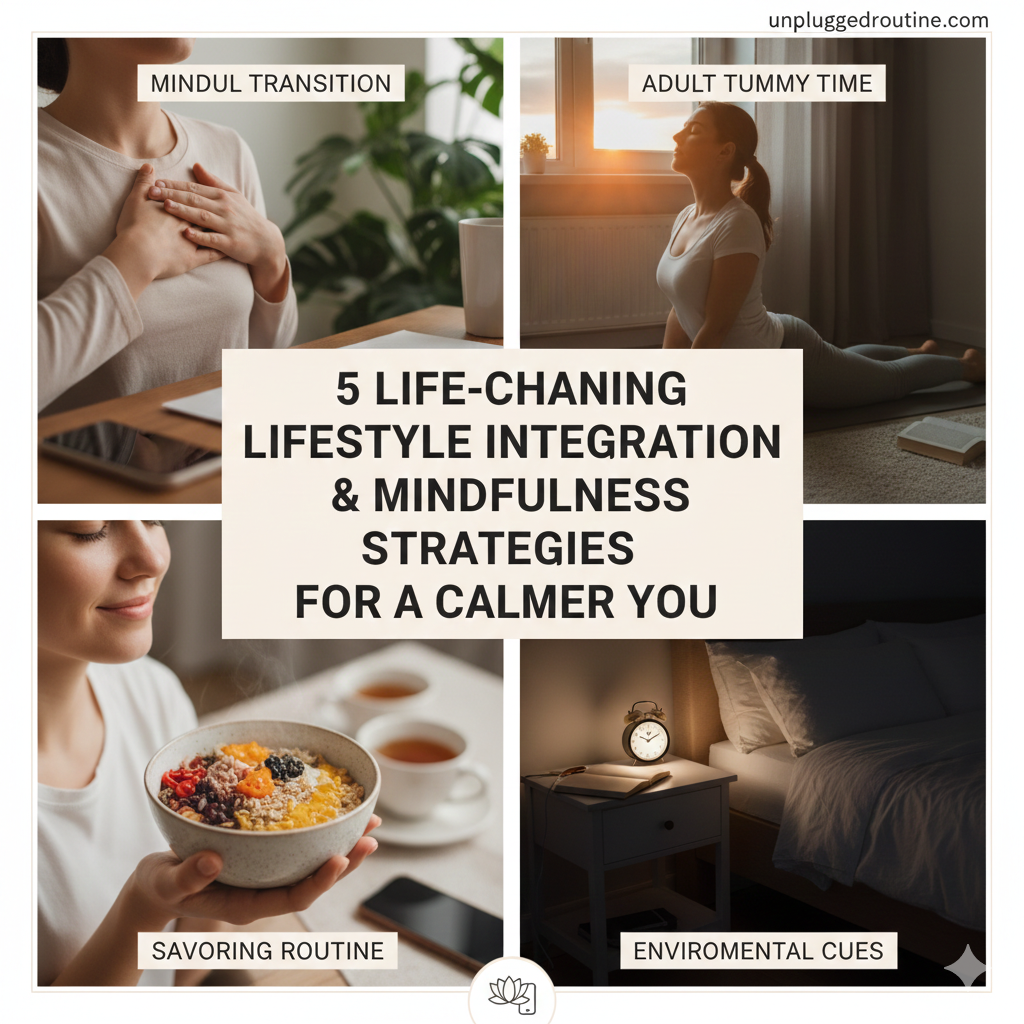
1. Master the “Mindful Transition” Technique
Most of our digital stress happens during the “in-between” moments. We finish a meeting and immediately grab our phones. We sit down for dinner and check one last email. These transitions are where we lose our presence.
Instead of jumping from one digital task to the next, try the “Three-Breath Rule.” Before you open a new app or pick up your phone after a task, take three conscious breaths.
This tiny pause creates a “buffer zone” for your brain. It shifts you from the “fast brain” (reactive) to the “slow brain” (intentional). In 2025, this technique—often called “Micro-Mindfulness”—is the #1 trend for maintaining focus in a high-speed world.
2. Practice “Adult Tummy Time” (The Sphinx Reset)
Believe it or not, a huge wellness trend in 2025 is “Adult Tummy Time.” It sounds silly, but it’s essentially the yoga Sphinx Pose.
Spend five minutes on your stomach, propped up by your forearms. This position naturally opens your chest and reverses the “tech-neck” hunch we all get from looking down at screens.
The Unplugged Twist: Do this without your phone. Use those five minutes to simply feel your breath move against the floor. It’s a physical and mental reset that integrates perfectly into a post-work or pre-bed routine.
3. Implement the “Savoring” Routine
Mindfulness doesn’t have to be meditation. It can be as simple as Mindful Eating. In our busy lives, we often “eat our screens”—scrolling through news while chewing on a sandwich we barely taste.
For at least one meal a day, commit to a “Savoring Session.”
- Put your phone in another room.
- Notice the colors, textures, and aromas of your food.
- Actually taste the first three bites before your mind starts to wander.
By integrating this into your daily life, you aren’t just “unplugging”—you’re teaching your brain that the physical world is more rewarding than the digital one.
4. Create “Environmental Cues” for Presence
Your environment often dictates your habits. If your phone is on your nightstand, you will check it. Lifestyle integration means designing your home to support your mindfulness.
Try “Environmental Anchors”:
- The “Phone Bed”: Create a dedicated charging spot outside the bedroom. This turns your sleep space into a sanctuary for “Sleepmaxxing” (the 2025 trend of maximizing sleep quality).
- The “Threshold Breath”: Every time you walk through your front door, take one deep breath. Let the “work day” stay on the other side of the threshold.
- Analog Alarms: Use a physical alarm clock. This prevents the “Morning Scroll Trap” where you check notifications before your feet even hit the floor.
5. Engage in “Sensory Grounding” During Tech Breaks
When you do take a break from work, don’t just switch from a laptop to a smartphone. That isn’t a break; it’s just a different screen.
Use the 5-4-3-2-1 Grounding Method to re-engage with your lifestyle:
- 5 things you can see (the dust motes in the light, the green of a plant).
- 4 things you can touch (the fabric of your chair, your own cool skin).
- 3 things you can hear (the hum of the fridge, a bird outside).
- 2 things you can smell.
- 1 thing you can taste.
This routine pulls your consciousness out of the “digital cloud” and drops it back into your body. It’s the ultimate antidote to the “jittery” feeling of being online too long.
Frequently Asked Questions
1. What is lifestyle integration and mindfulness exactly? It is the practice of weaving moments of awareness and presence into your existing daily routine, rather than setting aside a separate hour for meditation. It’s about being “awake” during everyday activities like washing dishes, walking, or even just sitting at your desk.
2. How can I practice mindfulness if I’m always on my phone for work? You don’t have to quit your job to be mindful! Integration is key here. Try the “Three-Breath Rule” before opening your email or use a physical timer to remind you to look away from the screen every 20 minutes. It’s about building a healthier relationship with the device, not deleting it.
3. Does mindfulness really help with digital burnout? Yes! Digital burnout often comes from “continuous partial attention”—where your brain is half-focused on ten different things. Mindfulness trains your brain to return to a single point of focus, which lowers cortisol levels and reduces that “jittery” feeling of being overwhelmed.
4. What are some simple mindfulness triggers I can use at home? The best triggers are things you already do. Try making a rule that you don’t touch your phone until you’ve finished your first cup of coffee, or practice a “threshold breath” every time you walk through a doorway in your house.
5. How long does it take to see results from these routines? Many people feel a sense of relief within just 24 to 48 hours of intentional integration. However, the goal is long-term habit change. After about three weeks of consistent “micro-mindfulness,” you’ll likely find that you reach for your phone less out of habit and more out of necessity.
Conclusion: Reclaim the Joy of Being Present
Lifestyle Integration & Mindfulness isn’t a destination; it’s a way of traveling through your day. By turning mundane moments—like brushing your teeth or waiting for a red light—into opportunities for presence, you build a life that feels spacious even when it’s busy.
You have the power to decide how much of your “real life” you’re willing to trade for “screen life.” Start small. Pick one strategy from this list and try it for three days. You might be surprised at how much more colorful the world looks when you aren’t viewing it through a 6-inch display.
Want to dive deeper? Sign up for our 7-Day Mindfulness & Unplugging Challenge at UnpluggedRoutine.com. We’ll send you one simple, daily integration tip to help you stay grounded, focused, and truly human. Your journey to a calmer life starts with a single breath!
Would you like me to create a “Mindful Morning” checklist you can print out and tape to your bathroom mirror?