Your Essential Guide to a More Present & Peaceful Life
Hook Step 1: The Constant Buzz
Ring. Ding. Buzz. Ping. Our lives have become a symphony of digital alerts, each one pulling us further away from the present moment. We scroll endlessly, reply instantly, and often feel more connected than ever, yet paradoxically, more disconnected from ourselves and the world around us.
Sound familiar?
You’re not alone. The relentless demands of our digital age have created an epidemic of distraction, stress, and mental clutter. We crave peace, presence, and genuine connection, but our devices often stand in the way.
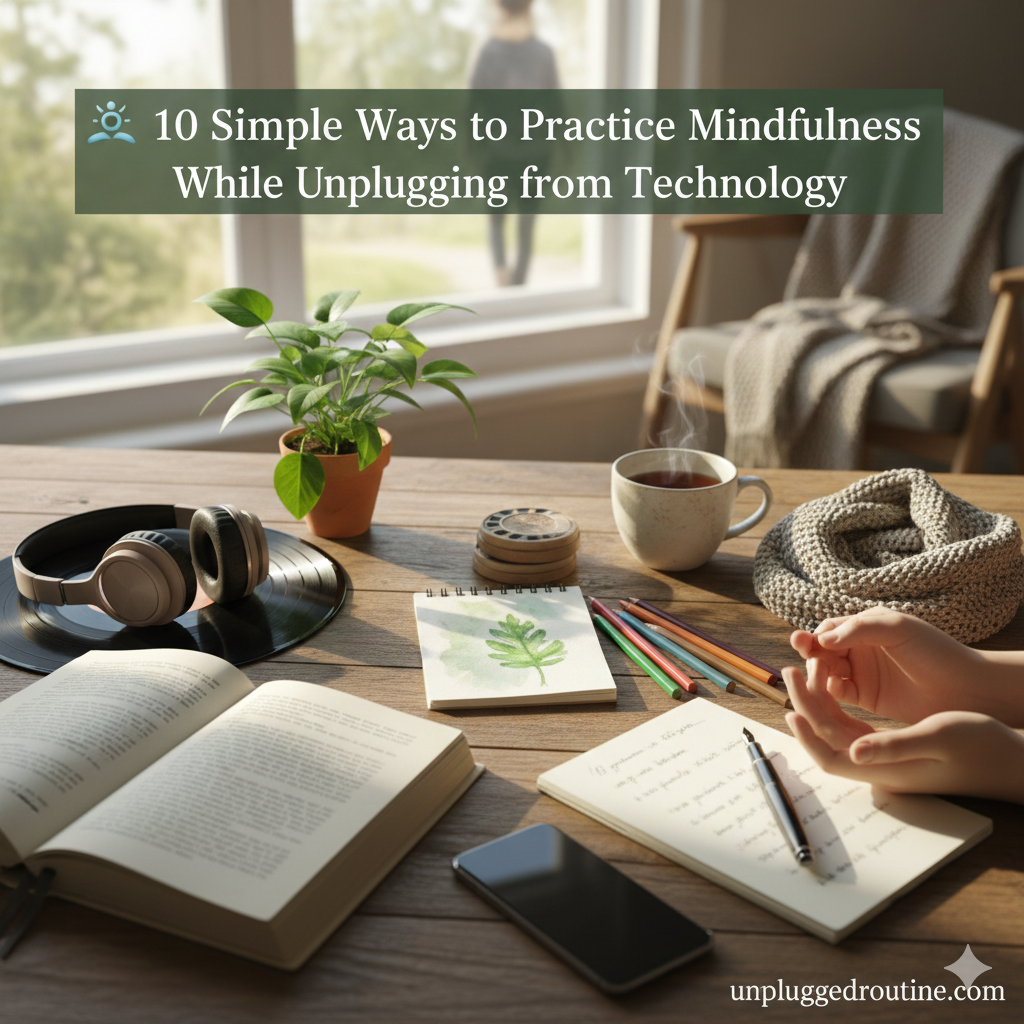
The Power of Unplugging (and Why It’s Hard)
We all know we should unplug. We recognize the benefits of stepping away from the screen. But actually doing it? That’s where the challenge lies. It’s not just about turning off your phone; it’s about what you do instead. It’s about cultivating a deeper connection to the here and now.
This is where mindfulness while unplugging comes in.
This isn’t about deprivation; it’s about liberation. It’s about reclaiming your attention, your peace, and your joy. In this guide, you’ll discover 10 simple, powerful ways to weave mindfulness into your unplugging efforts, transforming screen-free time into moments of profound presence.
Ready to find your calm amidst the chaos? Let’s dive in.
📱 The Digital Dilemma: Why We Need Mindfulness While Unplugging
Before we explore the “how,” let’s quickly understand the “why.” Our relationship with technology is complex. It offers incredible benefits, but it also comes with significant costs to our mental well-being and presence.
The Attention Economy
Every app, notification, and endless scroll is designed to capture and hold your attention. Your attention is a valuable commodity in the digital world. This constant pull fragments our focus, making it harder to concentrate on any single task or truly be present with another person.
FOMO and Comparison Culture
Social media, in particular, fuels “Fear Of Missing Out” (FOMO) and invites constant comparison. We see curated highlight reels of others’ lives and often feel inadequate, anxious, or lonely, even when surrounded by digital “friends.”
The Brain on Autopilot
When we’re constantly reacting to notifications and hopping between apps, our brains operate in a shallow, reactive mode. We lose the capacity for deep thought, creativity, and the quiet introspection that allows us to truly understand ourselves. This makes mindfulness while unplugging not just a luxury, but a necessity.
The Solution: Intentional Presence
Unplugging isn’t just about disconnecting from technology; it’s about reconnecting with yourself and the world beyond the screen. Mindfulness provides the framework for this reconnection, transforming passive screen-free time into active, intentional presence. It teaches us how to be rather than constantly do.
✨ 10 Simple Ways to Practice Mindfulness While Unplugging
Now for the practical steps! These aren’t complicated techniques, but rather gentle invitations to bring your full awareness to everyday activities, especially when you step away from your devices.
1. 🚶♀️ Take a Mindful Walk (Leave Your Phone Behind)
One of the easiest ways to dive into mindfulness while unplugging is to simply go for a walk, deliberately leaving your phone at home or in a bag.
- How to Do It: As you walk, pay attention to your senses. Feel your feet on the ground, notice the rhythm of your breath, listen to the sounds around you (birds, rustling leaves, distant traffic), and observe the colors and textures you see. Don’t judge, just notice.
- The Benefit: This simple act helps you reconnect with your environment and your body, pulling you out of your head and into the present moment. It’s a powerful way to reset your nervous system.
2. ☕ Enjoy a Mindful Sip or Bite (Savor the Experience)
How often do we eat or drink while scrolling, working, or watching TV? Mindful eating is a classic mindfulness practice.
- How to Do It: Choose a beverage (tea, coffee, water) or a small snack. Before you take the first sip or bite, look at it. Notice its color, texture, and aroma. As you consume it, pay attention to the taste, the sensations in your mouth, and the feeling of nourishment. Put your phone away and dedicate this time solely to the experience.
- The Benefit: This practice helps you slow down, appreciate simple pleasures, and tune into your body’s signals of hunger and fullness.
3. 🎨 Engage in a Creative Activity (Flow State Achieved)
When we’re absorbed in a creative pursuit, we often enter a “flow state,” a deeply mindful and fulfilling experience.
- How to Do It: Pick up a pen and paper to draw or write, knit, paint, play a musical instrument, or build something. The key is to engage fully with the process, without judgment of the outcome. Let your hands and mind work together.
- The Benefit: Creativity pulls you into the present, quietens the inner critic, and can be incredibly therapeutic. It’s an excellent way to practice mindfulness while unplugging.
4. 👂 Listen Deeply to Music (Without Distraction)
How often do we truly listen to music without doing something else?
- How to Do It: Choose a piece of music you love or something new. Sit or lie down comfortably, close your eyes if you wish, and just listen. Notice the different instruments, the rhythm, the lyrics, and how the music makes you feel. Don’t plan your day or think about your to-do list.
- The Benefit: This practice trains your attention and allows you to experience the richness of sound, offering a meditative break from visual overstimulation.
5. 📖 Read a Physical Book (Feel the Pages, Smell the Ink)
There’s a distinct tactile and sensory experience that comes with reading a physical book that a screen can’t replicate.
- How to Do It: Pick up a paper book. Notice the cover, the weight in your hands, the texture of the pages, and even the subtle scent of the paper and ink. As you read, allow yourself to become fully immersed in the story or information, noticing when your mind wanders and gently bringing it back to the words.
- The Benefit: Reading a physical book encourages sustained attention, reduces eye strain compared to screens, and provides a focused escape that supports mindfulness while unplugging.
6. 🧘♀️ Practice Mindful Breathing (Your Anchor to the Present)
Your breath is always with you, a constant anchor to the present moment.
- How to Do It: Find a quiet spot. Close your eyes or soften your gaze. Bring your attention to your breath. Feel the air entering your nostrils, the rise and fall of your chest or abdomen. Don’t try to change your breath, just observe it. If your mind wanders (which it will!), gently guide it back to the sensation of your breath.
- The Benefit: This is the foundational practice of mindfulness. Even a few minutes can calm your nervous system, reduce stress, and improve focus.
7. 🏡 Do a Mindful Chore (Transform the Mundane)
Mindfulness isn’t just for meditation cushions; it can be brought to any activity, even chores.
- How to Do It: Choose a simple chore like washing dishes, folding laundry, or sweeping the floor. Put away your phone. Focus entirely on the task at hand. Notice the sensation of water on your hands, the smell of soap, the texture of the fabric, the sound of the broom. Treat it as a moving meditation.
- The Benefit: This practice turns mundane tasks into opportunities for presence, making them less burdensome and even enjoyable. It teaches you to find stillness in motion.
8. 💬 Engage in Mindful Conversation (True Connection)
How often are we truly present in conversations, or are we secretly checking our phones or formulating our next reply?
- How to Do It: When speaking with a friend, family member, or colleague, put your phone away and give them your full, undivided attention. Listen actively, without interrupting or planning your response. Make eye contact. Notice their tone of voice, body language, and the emotions they convey.
- The Benefit: Mindful conversation deepens connections, fosters empathy, and creates a sense of genuine understanding, far more fulfilling than digital interactions. It’s a vital part of mindfulness while unplugging.
9. 🌱 Spend Time in Nature (Ground Yourself)
Nature is inherently mindful. It encourages us to slow down and observe.
- How to Do It: Go to a park, your backyard, or simply sit by a window. Disconnect from your phone. Notice the subtle details: the shape of a leaf, the texture of tree bark, the movement of clouds, the feel of the breeze on your skin. Allow yourself to simply be in nature.
- The Benefit: Nature has a profound calming effect on the mind and body. It helps to reduce stress, improve mood, and reconnect us to something larger than ourselves.
10. ✍️ Journal Your Thoughts (Unload and Reflect)
Journaling is a powerful way to practice self-reflection and bring awareness to your inner world, free from digital distractions.
- How to Do It: Find a quiet space with a pen and a physical notebook. Start writing whatever comes to mind – your thoughts, feelings, observations, or what you’re grateful for. Don’t censor yourself or worry about grammar. Just let the words flow onto the page.
- The Benefit: Journaling helps to clarify your thoughts, process emotions, identify patterns, and gain a deeper understanding of yourself. It’s a wonderful way to pause and reflect on your experiences, making it a cornerstone of mindfulness while unplugging.

🔑 Cultivating Your Unplugged, Mindful Life
The journey to practicing mindfulness while unplugging is a gradual one, not a destination. You don’t need to master all ten techniques at once. Pick one or two that resonate with you and start there. The key is consistency and gentle persistence.
Remember, the goal isn’t to demonize technology, but to use it intentionally, and to create space for presence in your life beyond the screen. Every moment you choose to put down your device and engage mindfully is a small victory for your well-being.
Your brain will thank you. Your relationships will thank you. Your peace of mind will thank you.
Start small, be patient with yourself, and celebrate every step towards a more present and unplugged life.
Conclusion: Reclaim Your Attention, Reclaim Your Peace
In a world constantly vying for your attention, choosing to practice mindfulness while unplugging is an act of self-care and empowerment. It’s about consciously stepping off the digital treadmill and into the richness of the present moment.
You now have 10 simple, powerful ways to begin this transformative journey. From mindful walks to deep listening, each practice offers a pathway back to yourself, your senses, and the tangible world around you.
Ready to start your journey to a more present life?
💡 Call to Action: Which of these 10 mindfulness practices will you try first when you unplug today? Share your chosen practice in the comments below! And for a deeper dive into creating a sustainable, mindful digital detox, sign up for our “Unplugged Routine Toolkit” email series right here and receive weekly tips and challenges to help you find more calm and clarity.