Unlock Your Peak Peace and Productivity with the Right Unplugged Routine
Hook Step 1: The Daily Digital Rush
Wake up. Grab phone. Scroll. Sleep. Grab phone. Scroll. Does this sound like your typical day? We live in an always-on world, where our screens often dictate our rhythm from the moment our alarm (usually our phone) goes off to the last flicker of light before bed.
This constant digital tethering has a profound impact on our mental state, energy levels, and overall well-being. We crave moments of peace, clarity, and genuine connection, but when is the best time to create them?
The Unplugging Puzzle: When and How?
You know the benefits of unplugging, of stepping away from the digital noise to cultivate mindfulness. But the big question remains: Morning vs. Evening Unplugging – which offers the most powerful benefits for your life?
Is it the energizing clarity of a screen-free morning? Or the calming unwind of a device-free evening?
This isn’t a one-size-fits-all answer. This guide will explore the unique advantages of both morning and evening unplugging, helping you understand how each can enhance your mindfulness practice, boost your productivity, and lead to a more balanced, peaceful existence. Discover when you can best reset, recharge, and reconnect.
Let’s dive into optimizing your daily rhythm!
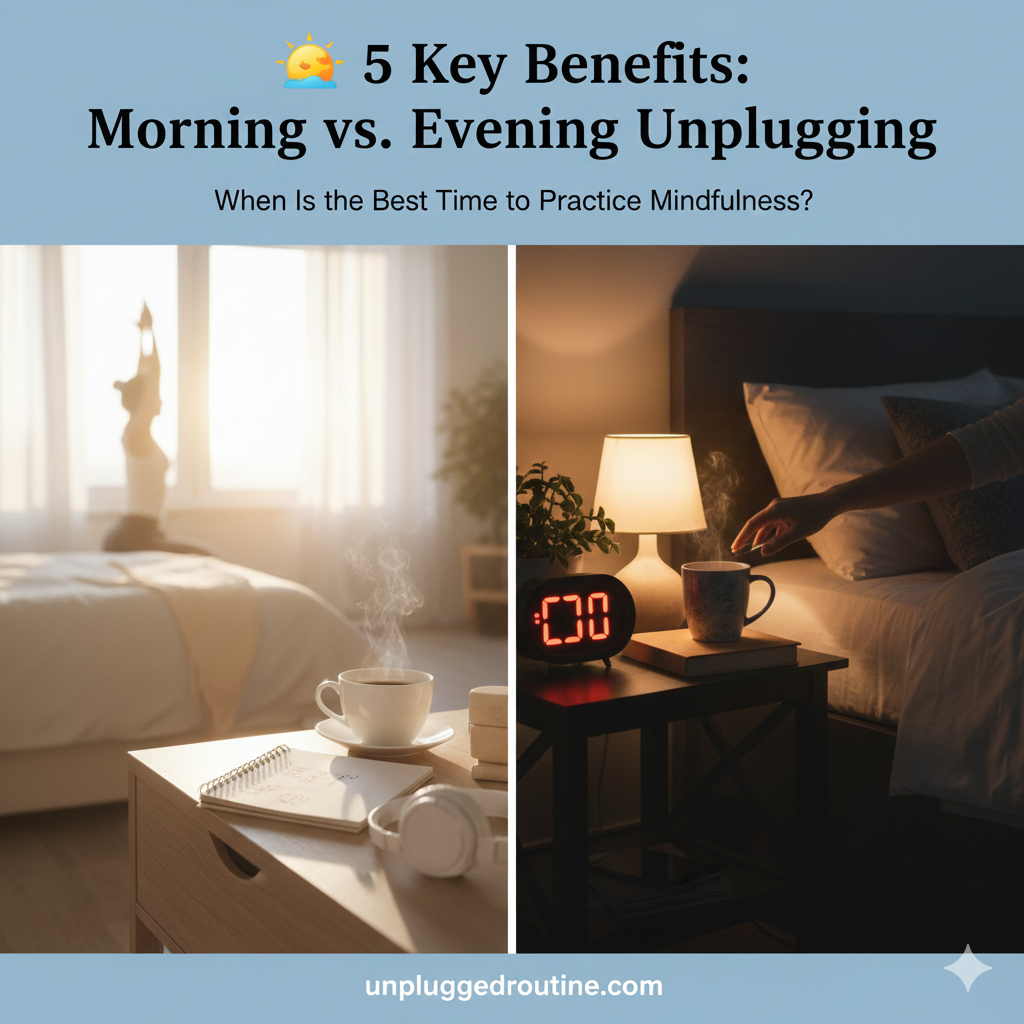
⏰ The Science of Timing: Why Unplugging Matters When It Does
Before we compare Morning vs. Evening Unplugging, let’s briefly understand the science behind why the timing of our digital breaks is so crucial for our brain and body.
Circadian Rhythms: Your Inner Clock
Our bodies operate on a powerful 24-hour cycle called the circadian rhythm. This internal clock dictates our sleep-wake cycle, hormone release, mood, and energy levels. Light is the primary synchronizer of this clock.
- Morning Light: Bright, natural light (especially blue light from the sun) signals “wake up” to your brain, boosting alertness and energy.
- Evening Darkness: The absence of light signals “wind down,” prompting the release of melatonin, your sleep hormone.
The Brain’s Operating Modes
Our brains also have different “modes” throughout the day:
- Morning: Often characterized by higher levels of focus, creativity, and problem-solving ability, especially before digital overload sets in.
- Evening: Tends towards winding down, processing the day’s events, and preparing for rest.
Understanding these natural rhythms helps us make informed choices about when to engage with technology and when to intentionally disconnect for maximum benefit. This forms the foundation for effective Morning vs. Evening Unplugging.
☀️ Morning Unplugging: Ignite Your Day with Clarity (The Dawn Advantage)
Imagine starting your day not with a flood of notifications and other people’s demands, but with calm, clarity, and intention. That’s the power of morning unplugging.
1. Boosted Focus and Productivity
When you resist the urge to immediately check your phone, you protect your prime mental real estate. The first hour or two of your day can be your most creative and focused.
- How it Works: By delaying digital input, you prevent your brain from getting hijacked by external stimuli. You give your prefrontal cortex—the part of your brain responsible for planning, decision-making, and focus—a chance to warm up without distraction.
- The Benefit: You can tackle important tasks with undivided attention, set your intentions for the day, and maintain better concentration throughout. This is a game-changer for productivity and for practicing mindfulness while unplugging.
2. Reduced Stress and Anxiety
Starting your day with a dive into emails, news, or social media often means absorbing other people’s problems, anxieties, and demands before you’ve even had a chance to fully wake up.
- How it Works: Avoiding this immediate digital onslaught prevents the morning cortisol spike often associated with checking devices. You’re not starting your day in a reactive, overwhelmed state.
- The Benefit: A calm morning sets a more peaceful tone for the entire day. You feel less rushed, more in control, and better equipped to handle whatever comes your way. This is crucial for maintaining mental well-being.
3. Enhanced Mood and Well-being
What you feed your mind first thing in the morning often dictates your mood for hours.
- How it Works: Instead of passively consuming potentially negative news or comparing yourself to others’ highlight reels, morning unplugging allows you to cultivate a positive internal state. You can engage in activities that genuinely uplift you.
- The Benefit: Starting with gratitude, gentle movement, or quiet reflection can lead to increased optimism, greater self-awareness, and a more resilient mindset.
Mindful Morning Activities to Try:
- Journaling: Pen to paper, without a screen.
- Meditation or Deep Breathing: Even 5-10 minutes can make a difference.
- Mindful Movement: Gentle stretching, yoga, or a walk in nature (leave the phone at home!).
- Reading a Physical Book: Immerse yourself in a story or learn something new without digital distractions.
- Savoring Breakfast: Truly taste your food, notice the textures, and appreciate the nourishment.
🌙 Evening Unplugging: Wind Down for Restorative Sleep (The Dusk Advantage)
The hours leading up to bedtime are critical for preparing your body and mind for deep, restorative sleep. Evening unplugging is your key to unlocking this essential rest.
1. Improved Sleep Quality and Quantity
This is perhaps the most well-documented benefit of evening unplugging.
- How it Works: Digital screens (phones, tablets, laptops, TVs) emit blue light. This blue light, especially in the evening, signals “daytime” to your brain, suppressing the production of melatonin—your body’s natural sleep hormone. By unplugging, you allow melatonin to rise naturally.
- The Benefit: You’ll fall asleep faster, experience deeper sleep cycles, and wake up feeling more refreshed and energized. Poor sleep is a massive stressor, so this directly contributes to stress reduction.
2. Reduced Mental Clutter and Processing
The evening is when your brain needs to start winding down, not revving up with new information or stimuli.
- How it Works: Unplugging allows your brain to shift from a “doing” state to a “being” state. You give yourself space to process the day’s events, let go of worries, and prepare for rest without being bombarded by new content.
- The Benefit: Less mental clutter leads to a calmer mind, fewer racing thoughts, and a greater sense of peace before bed. This is essential for both mindfulness while unplugging and overall mental health.
3. Deeper Connection with Loved Ones (and Yourself)
Evening is often a prime time for family connection, reflection, or quiet personal time. Digital devices frequently get in the way.
- How it Works: When devices are put away, you create space for genuine interaction. You can have meaningful conversations, listen actively, or simply enjoy quiet companionship. You also create space for self-reflection and personal hobbies.
- The Benefit: Strengthening personal relationships and nurturing your inner world provides a profound sense of fulfillment and reduces feelings of isolation, which can be exacerbated by excessive screen time.
Mindful Evening Activities to Try:
- Digital Sunset: Turn off all screens 90 minutes to 2 hours before bed.
- Reading a Physical Book: Allows your eyes and brain to relax.
- Gentle Stretching or Yoga: Releases physical tension.
- Warm Bath or Shower: Helps to relax muscles and signal bedtime.
- Listening to Calming Music or a Podcast: Avoid screens, use a speaker.
- Journaling: Download your thoughts and worries onto paper.
- Mindful Breathing or Meditation: Prepare your mind for rest.
🤔 Morning vs. Evening Unplugging: Which One is Right for You?
There’s no single “best” answer, as it depends on your lifestyle, habits, and what benefits you prioritize.
Consider Your Goals:
- If you struggle with focus, productivity, and morning anxiety: Prioritize Morning Unplugging.
- If you struggle with falling asleep, staying asleep, or feeling restless at night: Prioritize Evening Unplugging.
- Ideally, aim for both! The most comprehensive approach to an Unplugged Routine involves incorporating both morning and evening screen-free periods.
Start Small and Be Flexible:
- Don’t try to go from 0 to 100 overnight. Start with 15-30 minutes of unplugging in the morning, or just the last hour before bed.
- Experiment! See what feels best for your body and mind. Pay attention to how different timings impact your mood, energy, and sleep.
- Be gentle with yourself. If you slip up, simply reset and try again. The goal is progress, not perfection.
The Power of Consistency:
Whatever you choose, consistency is key. Just like any mindfulness practice, the more regularly you practice unplugging, the more profound and lasting the benefits will be. Your brain and body will learn to anticipate these screen-free periods, making the transition easier over time.
🔑 Optimize Your Day: Find Your Unplugged Sweet Spot
Understanding the specific benefits of Morning vs. Evening Unplugging empowers you to make intentional choices about your digital habits. It’s about being proactive rather than reactive, taking control of your attention and your peace.
By strategically placing periods of unplugging and mindfulness into your day, you’re not just avoiding screens; you’re actively cultivating a more present, productive, and peaceful existence. You’re giving yourself the gift of clear mornings and restful nights.
Conclusion: Design Your Day for Digital Well-being
The debate between Morning vs. Evening Unplugging isn’t about choosing one over the other, but rather understanding how each can serve unique and vital aspects of your well-being. Both offer powerful pathways to reduce stress, enhance mindfulness, and improve your overall quality of life.
By consciously choosing to integrate screen-free time into your daily rhythm—whether it’s to ignite your morning with clarity or wind down for a restorative night’s sleep—you are taking a powerful step towards a more balanced and intentional life.
Ready to transform your day with intentional unplugging?
💡 Call to Action: Which time of day—morning or evening—feels most impactful for you to start your unplugging journey? Share your thoughts in the comments below! And to help you integrate these practices seamlessly, download our free “Unplugged Routine Planner” for tailored tips and templates to create your perfect balance of digital connection and mindful disconnection.