Do you ever find yourself scrolling through pictures of beautiful hiking trails or serene beaches while sitting inside your home, glued to a screen? In our modern, indoor lives, it’s easy to fall into the trap of experiencing nature virtually rather than actually stepping outside and breathing the fresh air. Your weekends—your precious time for rest and rejuvenation—often become just another two days spent staring at a glowing rectangle.
It’s time for a change. It’s time to trade the blue light for sunshine, the notifications for bird song, and the endless scroll for actual movement. Welcome to the definitive guide to Outdoor Weekend Unplugging Challenges! These aren’t just activities; they are intentional, screen-free missions designed to reconnect you with the natural world, reset your mind, and invigorate your body.
Get ready to transform your weekends from digital distractions into profound, memorable adventures.
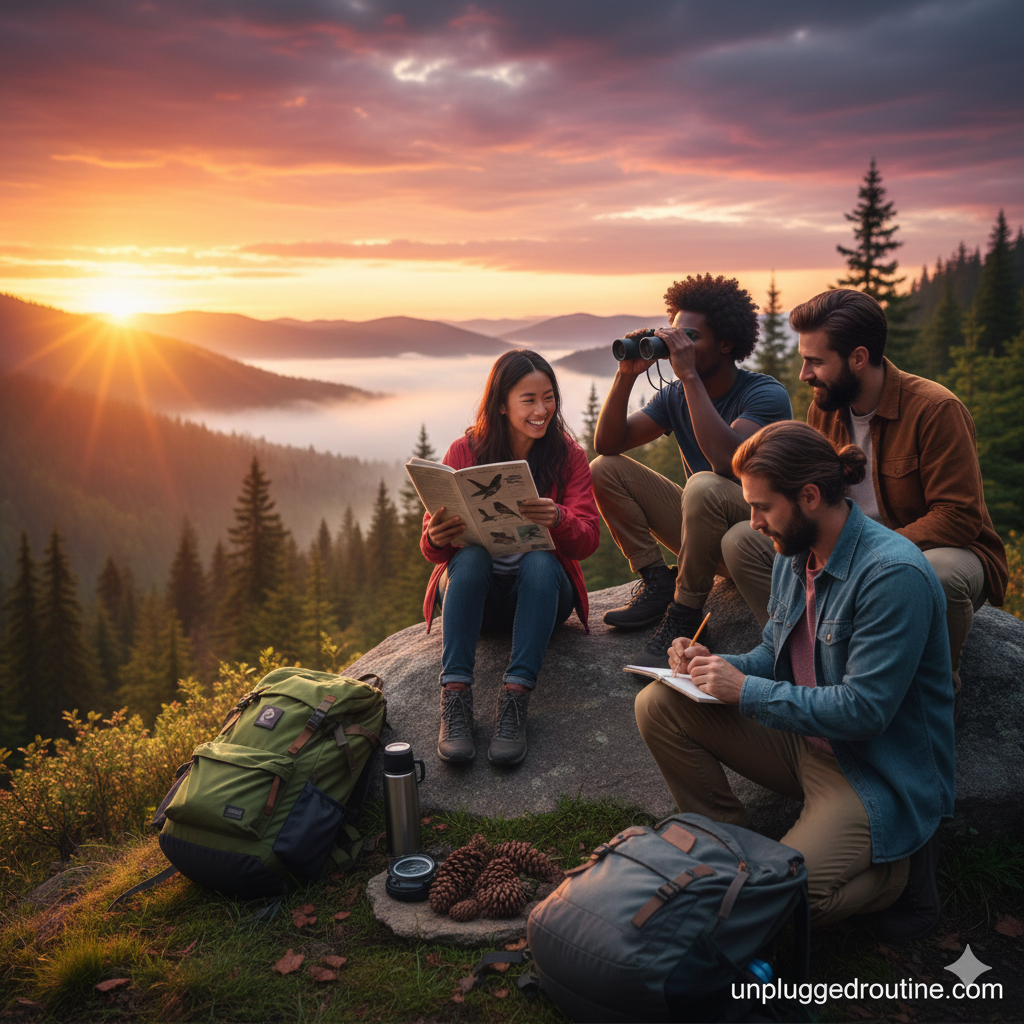
The Nature Deficit: Why We Need the Great Outdoors
We are fundamentally wired to be in nature. For centuries, humans have lived in harmony with the natural environment. However, the last few decades have seen a drastic shift, resulting in what experts call “Nature Deficit Disorder.”
This deficit contributes to:
- Increased stress and anxiety: Nature has a documented calming effect on the nervous system.
- Lowered mood: Exposure to sunlight helps regulate mood and vitamin D levels.
- Mental fatigue: Natural environments are restorative, unlike the “directed attention” required by screens.
- Physical inactivity: Spending all weekend inside contributes to a sedentary lifestyle.
An Outdoor Weekend Unplugging Challenge is your prescription for reversing these effects. By combining the benefits of a digital detox with the restorative power of nature, you’re giving your body and mind the ultimate reset button.
Unplugging in Nature: The Double Dose of Bliss
When you unplug outdoors, you multiply the benefits. You get the mental clarity of ditching the phone and the physical and emotional healing of being in nature. This synergy leads to:
- Instant Stress Reduction: Studies show that spending time in nature lowers cortisol (stress hormone) levels.
- Improved Focus and Creativity: Natural landscapes allow your mind to wander, which is essential for creative thought.
- Better Sleep: Exposure to natural light helps regulate your circadian rhythm.
- Physical Energy: Movement in the outdoors is invigorating and builds resilience.
- A Sense of Awe and Perspective: Looking up at a vast sky or an ancient tree can put your everyday worries into perspective.
Ready to trade pixels for pines and bandwidth for birdsong? Let’s explore these 12 epic challenges!
Challenge 1: The “Dawn Patrol Hike” (No Photos Allowed)
Set your alarm early and head out for a hike or walk as the sun is rising. The challenge? Leave your phone completely at home or in the car. Your goal is simply to witness the beauty of the morning light and experience the quiet transition of the day.
- Focus on the sounds: The quiet before the city wakes up.
- Smell the morning air: The dew, the pine needles, the damp earth.
- Feel the temperature change: The cool air giving way to warmth.
The Hook: Experiencing the dawn in real life, without the filter of a camera, is a uniquely grounding and spiritual way to start your weekend. You’ll gain hours before everyone else even checks their first email!
Challenge 2: The “Nature Scavenger Hunt” (Analog Only)
Create a list of 10-15 natural items or experiences to find, and use a notepad and pen to track them. Your list should require genuine searching, not just a quick glance.
- Find three types of fungi.
- Spot a bird with red plumage.
- Locate a leaf with five different colors.
- Find a smooth, grey stone shaped like an animal.
- Listen to the sound of moving water.
The Hook: This challenge trains your mind to be ultra-observant, transforming a simple walk into an engaging, mindfulness-based treasure hunt.
Challenge 3: The “Campfire Conversations” (Digital Blackout)
If you can camp, great. If not, set up a fire pit (safely!) in your backyard or a designated spot. The challenge is to spend a full evening around the fire, with all phones and screens stored away in a distant drawer.
- Tell stories: Share tales, myths, or funny memories.
- Cook over the fire: Simple hotdogs, s’mores, or foil-wrapped veggies.
- Stargaze: Lie back and look up without distraction.
The Hook: Firelight fosters deep, authentic connection. Without the distraction of screens, you’ll find that conversations flow more naturally, building stronger bonds with those around you.
Challenge 4: The “30-Minute Sit Spot”
Find a comfortable spot outdoors—your porch, a park bench, or a log in the woods—and commit to sitting there silently and motionlessly for 30 minutes. The only goal is to observe what happens around you.
- Resist the urge to check the time: Just be present.
- Notice the small movements: Insects, shifting leaves, tiny birds.
- Let your thoughts drift: Don’t try to solve problems, just observe your mind.
The Hook: This is a powerful practice in stillness and patience. You’ll be astounded by the details you notice and the clarity that emerges when you simply stop and listen.
Challenge 5: The “Outdoor Sketchbook Adventure”
Grab a small sketchbook and a pencil or some crayons. Head to a park, garden, or trail and try to sketch a landscape, a flower, a tree, or even a cloud formation. The goal is observation, not artistic excellence.
- Focus on shape and form: Simplify the details.
- Draw what you see, not what you think you see.
- Use your senses to inform your drawing: How does the bark feel?
The Hook: Sketching forces your brain into a state of deep, non-judgmental focus, engaging your creative side and making you appreciate the intricate designs of nature.
Challenge 6: The “Barefoot Earth Connection”
Find a safe patch of grass, sand, or smooth dirt and take off your shoes and socks. Spend at least 15-20 minutes walking, standing, or sitting with your bare feet directly on the earth.
- Focus on the sensation: The cool, the texture, the firmness.
- Wiggle your toes: Notice the muscles in your feet and calves.
- Breathe deeply: Imagine any tension flowing out of your body and into the earth.
The Hook: This simple act, often called “grounding,” can reduce inflammation and stress while giving you a direct, tangible feeling of connection to the planet.
Challenge 7: The “Backyard Wildlife Photography” (With Limits)
If you absolutely must use your phone camera, restrict yourself to only photographing wildlife (birds, squirrels, insects) in your backyard or local park. The rule: you can only review the photos after you return inside, and you cannot look at any social media or news feeds during the session.
- Patience is key: You must wait for the perfect moment.
- Move slowly and quietly: Be a silent observer.
The Hook: This forces you to slow down, practice patience, and become a quiet observer of the smaller world around you, turning a mundane space into a photographic wilderness.
Challenge 8: The “Foraging & Identifying Mission” (Safe & Legal)
Using a physical field guide (book) for plants, trees, or mushrooms in your region, head out to a park or trail and try to identify five different species. Crucially: do not eat anything unless you are 100% certain of its identity and safety.
- Examine leaves, bark, and flowers closely.
- Read the descriptions in the guide thoroughly.
- Take notes in your notebook.
The Hook: This engages your intellectual curiosity and gives you a powerful sense of understanding and ownership over your natural environment.
Challenge 9: The “Water Immersion Reset”
Seek out a body of water—a lake, river, ocean, or even a local public pool—and commit to spending time in the water, not just beside it.
- Swim laps, float, or simply wade.
- Feel the coolness and the resistance of the water.
- Allow the weightlessness to relax your muscles.
The Hook: Water is incredibly restorative. Immersing yourself is a profound sensory experience that washes away stress and provides a natural, full-body reset.
Challenge 10: The “Trail Maintenance Karma”
Dedicate an hour to performing some light, un-asked-for trail maintenance in a public space. This could be picking up litter, clearing small fallen branches, or reporting bigger issues to park authorities (after you’re unplugged).
- Bring gloves and a trash bag.
- Focus on leaving the space better than you found it.
- Do this quietly and without seeking recognition.
The Hook: This challenge connects you to your community and the environment in a deeply meaningful way. The satisfaction of selfless work is a reward in itself.
Challenge 11: The “Cloud Gazing Meditation”
Lie down on a blanket in a comfortable, open space (a park, your lawn) and spend at least 20 minutes watching the clouds drift by. Do not try to solve problems or think; simply observe the shapes and the movement.
- Notice the infinite shapes the clouds take.
- Consider their vastness and distance.
- Practice non-judgmental observation.
The Hook: Cloud gazing is a simple yet profound way to practice mindfulness and remind yourself of the transient nature of things—a perfect antidote to digital obsession.
Challenge 12: The “Sunrise/Sunset Photography (Film or Polaroid)”
If you have a disposable camera or a Polaroid, use it to capture a stunning sunrise or sunset. The limitation of film and the inability to instantly review the photo forces you to be deliberate and savor the moment as it happens.
- Choose your single best view.
- Wait patiently for the peak colors.
- Enjoy the process of waiting for the photo to develop.
The Hook: This challenge combines the beauty of nature with the joy of delayed gratification, making the final physical picture a cherished souvenir of a fully present moment.
Your Unplugging Strategy for Outdoor Success
To make these challenges work, you need a plan:
- Prep Your Gear: Get your hiking boots, bug spray, water bottle, and any analog materials (notebook, pencil, physical map) ready the night before.
- Set an “Out of Office” (Mentally): Tell yourself—and those who need to know—that you will be unreachable for a specific block of time.
- Choose Intentionally: Select the challenge that speaks to your current need for rest or adventure.
- Embrace the Silence: The first few minutes of unplugging can feel strange. Push past that initial urge to check your device.
- Go Alone or Be Present: If you go with others, ensure they are also committed to the unplugging rules to avoid distraction.
Conclusion: Your Adventure Starts Now!
The digital world is a wonderful tool, but it’s a terrible master. By taking on these Outdoor Weekend Unplugging Challenges, you are choosing to master your device, take back your time, and nurture the human need for connection with nature. You are prioritizing your well-being, your focus, and your joy.
Stepping outside and unplugging isn’t just a break; it’s an investment in a healthier, happier, and more present version of yourself. The benefits—reduced stress, better focus, and deeper peace—will follow you long after the weekend is over.
Are you ready to swap your screen for the spectacular? Pick one of these 12 challenges and commit to it this weekend! Share your chosen adventure in the comments below! And for more ways to enrich your life with a balanced unplugged routine, visit unpluggedroutine.com today!