Do you ever find yourself collapsing into bed at the end of a long day, only to have your mind race, replaying every moment or buzzing with tomorrow’s to-do list? You might try to unwind with a quick scroll through social media or another episode of your favorite show, but instead of feeling sleepy, you just feel more wired.
It’s a common dilemma in our always-on world: we desperately need rest, yet our habits are actively preventing us from getting it. The blue light, constant notifications, and endless stimulation from our screens have blurred the crucial boundary between our busy day and our much-needed night.
But what if there was a simple, yet profound, way to signal to your body and mind that it’s time to let go, relax, and prepare for truly restorative sleep? What if you could craft a personal sanctuary in the hours leading up to bedtime, free from the digital distractions that keep you awake?
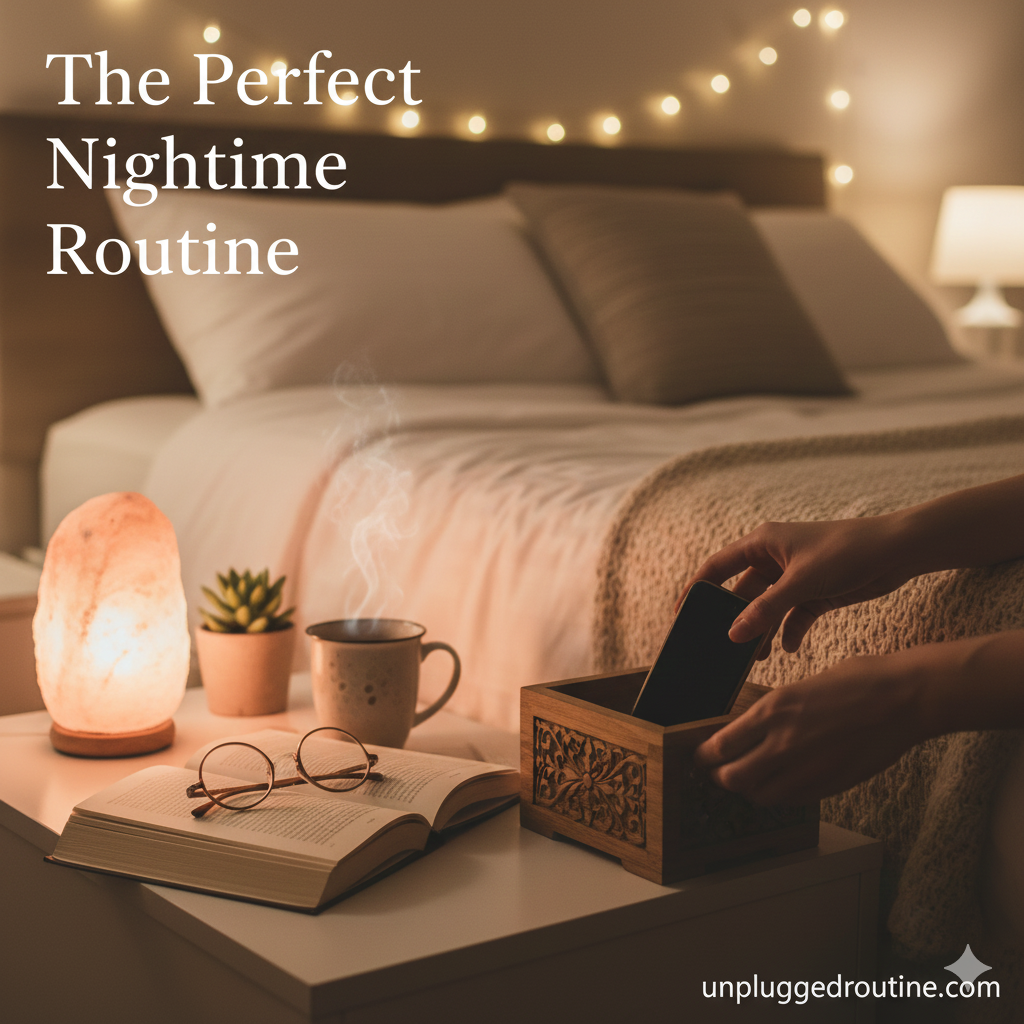
Welcome to the art of The Perfect Nighttime Routine.
This comprehensive guide will show you exactly how to wind down without screens to achieve deeper, more restful sleep. We’ll ditch the digital and embrace a collection of peaceful, human-centric practices designed to calm your nervous system, boost natural sleep hormones, and guide you gently into the slumber you deserve.
Say goodbye to restless nights and hello to waking up refreshed, energized, and ready to embrace each new day. Let’s create your perfect unplugged evening.
Why Your Current Wind-Down Might Be Working Against You
Before we build the perfect routine, let’s understand why traditional “unwinding” in the digital age often backfires.
- The Blue Light Effect: As we’ve discussed, screens emit blue light. This tricks your brain into thinking it’s daytime, suppressing melatonin production (your sleep hormone). Even “night mode” on devices isn’t a complete fix.
- Mental Overload: Social media, news, emails, and stimulating entertainment keep your brain actively engaged. Instead of slowing down, your mind continues to process information, making it impossible to switch off.
- Stress and Anxiety Triggers: Scrolling can expose you to stressful news, social comparisons, or work-related worries, triggering cortisol (stress hormone) release, which is the opposite of what you need for sleep.
- Disrupted Circadian Rhythm: Your body’s internal clock relies on consistent light-dark cues. Irregular screen use before bed confuses this rhythm, leading to inconsistent sleep patterns and daytime fatigue.
The good news? By consciously choosing to wind down without screens, you directly address these sleep saboteurs and pave the way for natural, deep sleep.
The Foundation of The Perfect Nighttime Routine: The Golden Hour Rule
The most crucial step in learning how to wind down without screens is establishing your “Golden Hour.” This is a dedicated 60-90 minute period before your desired bedtime where all screens are off.
Think of it as your personal sunset. No phone, no tablet, no computer, no TV. This allows your brain to naturally increase melatonin, quiet its activity, and physically prepare for rest. It’s the non-negotiable cornerstone of a truly effective nighttime routine.
Once you’ve committed to your Golden Hour, you can fill it with these screen-free, sleep-promoting activities.
1. Create a Calming Atmosphere: Dim the Lights & Light a Candle
Your environment plays a huge role in signaling to your body that it’s time to sleep.
- How to do it: About 1-2 hours before bed, dim the overhead lights. Use warm, low-wattage lamps or even salt lamps. If safe, light a relaxing candle.
- Why it helps: Reducing bright light helps stimulate melatonin production. Warm, dim lighting creates a cozy, safe ambiance that promotes relaxation and peace, a stark contrast to the harsh brightness of screens.
- Action Step: Invest in a few low-wattage bulbs for your bedroom and living areas. Make it a ritual to dim the lights as part of your Golden Hour initiation.
2. Embrace a Warm Water Ritual: Bath or Shower
The therapeutic power of warm water is an ancient secret for relaxation.
- How to do it: Take a warm (not scorching hot) bath or shower about 60-90 minutes before bed. Add Epsom salts and a few drops of lavender essential oil to your bath for extra muscle relaxation and aromatherapy.
- Why it helps: The warmth relaxes your muscles, and as your body cools down afterward, it mimics the natural temperature drop that signals sleep onset. The soothing steam also helps clear nasal passages.
- Action Step: Plan this into your Golden Hour. Have your favorite bath salts or essential oils ready. Make it a deliberate act of self-care.
3. Engage in Gentle, Restorative Movement: Stretching or Yin Yoga
Release the day’s physical tension to calm your mind.
- How to do it: Spend 10-15 minutes doing slow, gentle stretches or a short Yin Yoga sequence. Focus on holding poses for longer periods (3-5 minutes) to target connective tissues. Avoid anything vigorous.
- Why it helps: Gentle movement helps release accumulated physical tension, improve circulation, and activate your parasympathetic nervous system (your “rest and digest” mode). It grounds you in your body, away from mental chatter.
- Action Step: Find a free online “bedtime stretch” or “Yin Yoga for sleep” video (watch it before your Golden Hour!) or simply follow a routine from memory.
4. Journal Your Thoughts Away: The “Brain Dump”
A busy mind is often the biggest obstacle to sleep.
- How to do it: Keep a dedicated journal and pen by your bedside. During your Golden Hour, write down any lingering worries, tasks for tomorrow, thoughts, or feelings that are occupying your mind. Don’t censor yourself.
- Why it helps: This “brain dump” externalizes your mental clutter, preventing it from swirling in your head when you’re trying to sleep. It helps you process the day and provides a sense of closure, signaling to your brain that it can rest.
- Action Step: Commit to 5-10 minutes of journaling every night during your Golden Hour. Notice how much lighter your mind feels after getting everything onto paper.
5. Immerse Yourself in a Physical Book
Reconnect with the tactile pleasure of a good story.
- How to do it: Pick up a physical book (fiction, biography, inspiring non-fiction—anything that brings you joy but isn’t overly stimulating). Avoid thrillers or intensely complex subjects.
- Why it helps: Reading a physical book has no blue light, no notifications, and no temptation to click away. It engages your imagination in a calm, focused way, pulling you away from your own thoughts and into another world.
- Action Step: Keep a few interesting physical books on your nightstand. Make it a habit to reach for one instead of your phone when the Golden Hour begins.
6. Practice Mindful Breathing or Meditation
Anchor yourself in the present moment with your breath.
- How to do it: Lie down in bed or sit comfortably. Close your eyes and focus on your breath. Try a simple 4-7-8 breathing technique (inhale for 4, hold for 7, exhale for 8) or listen to a guided meditation designed for sleep (audio-only, of course!).
- Why it helps: Mindful breathing and meditation activate the parasympathetic nervous system, slowing your heart rate, relaxing your muscles, and quieting your mind. It’s a powerful tool to transition from active thinking to restful awareness.
- Action Step: Dedicate 5-10 minutes to this practice at the very end of your Golden Hour. You can even do it once you’re already in bed.
7. Enjoy a Calming Warm Beverage
A simple ritual can have a powerful impact.
- How to do it: Prepare a cup of herbal tea known for its calming properties (chamomile, passionflower, valerian root, or a specific “sleep tea” blend). Warm milk with a pinch of nutmeg can also be soothing.
- Why it helps: The warmth itself is comforting, and the specific herbs contain compounds that promote relaxation and sleep. The ritual of preparing and slowly sipping the drink signals a winding-down period.
- Action Step: Have your favorite calming teas readily available. Make a cup after dinner to allow plenty of time for digestion before sleep.
8. Engage in a Screen-Free Hobby
Divert your attention to something hands-on and calming.
- How to do it: Pick up a hobby that uses your hands and doesn’t require a screen: knitting, crocheting, drawing, adult coloring books, simple puzzles, or even listening to an audiobook (from a dedicated audiobook player, not your phone).
- Why it helps: These activities provide a gentle focus, allowing your mind to switch from active problem-solving to a more relaxed, creative state. The repetitive nature of some crafts can be incredibly meditative.
- Action Step: Keep one of these screen-free hobbies easily accessible in your relaxation zone for your Golden Hour.
9. Connect with Loved Ones (Offline)
Human connection can be incredibly soothing.
- How to do it: Instead of texting or scrolling, spend a few minutes talking with a partner, roommate, or family member, if they are present. Share a positive moment from your day, or simply enjoy quiet companionship.
- Why it helps: Positive, low-stimulation social interaction releases oxytocin, a hormone associated with bonding and relaxation. It can help you feel safe and secure, which is conducive to sleep.
- Action Step: Make it a habit to have a screen-free conversation with a loved one during your Golden Hour.
10. Prepare for Tomorrow (Briefly and Calmly)
Reduce morning stress by doing a little prep work the night before.
- How to do it: Spend 5-10 minutes briefly laying out clothes for tomorrow, packing your lunch, or writing a short to-do list (if you didn’t do a full brain dump in your journal). This should be done calmly, not rushing.
- Why it helps: Eliminating morning decisions and tasks reduces pre-sleep anxiety about the next day. It allows you to go to bed feeling organized and ready, rather than overwhelmed.
- Action Step: Choose one small task you can do tonight that will make your tomorrow morning smoother.
Conclusion: Your Gateway to Deeper Sleep Starts Tonight
Crafting The Perfect Nighttime Routine isn’t about rigid rules; it’s about intentionally creating a peaceful transition from the demands of your day to the restorative embrace of sleep. By learning how to wind down without screens, you are actively choosing to protect your mental calm, enhance your body’s natural sleep processes, and ultimately, invest in your overall well-being.
The digital world will always be there, but your sleep—and your health—are invaluable. Start with your Golden Hour, then slowly incorporate the screen-free activities that resonate most with you. You’ll be amazed at how quickly your body and mind respond to these gentle, consistent signals of rest.
Say goodbye to sleepless nights and wake up to a life that feels more energized, focused, and joyful. Your journey to deeper sleep begins now.
Ready to transform your nights and wake up truly refreshed? Visit unpluggedroutine.com for more personalized tips, guided relaxation practices, and resources to help you master The Perfect Nighttime Routine and achieve the deep, restful sleep you deserve!