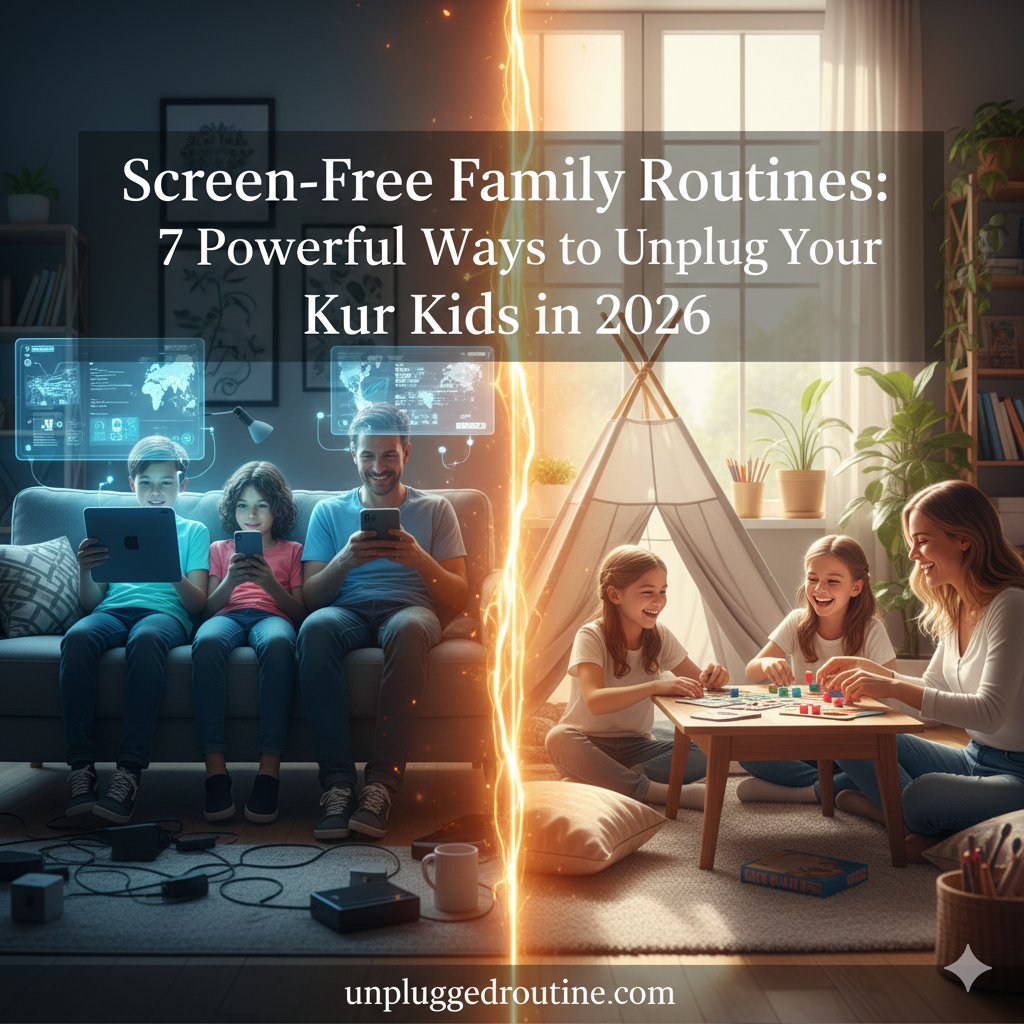
Does it feel like your kids are surgically attached to their devices? Is dinner conversation replaced by the glow of smartphones, and outdoor play a distant memory? You’re not alone. In 2026, navigating the digital landscape with children feels like an uphill battle against an invisible force.
But what if you could shift the tide? What if your home could once again be a hub of laughter, creativity, and genuine connection, free from the constant pull of screens?
At UnpluggedRoutine.com, we understand the struggle. We believe that fostering screen-free family routines isn’t about waging war on technology; it’s about reclaiming childhood, boosting well-being, and strengthening family bonds in a hyper-digital world.
This comprehensive guide will equip you with 7 powerful, practical strategies to gently (but firmly!) guide your children away from their devices and towards a more balanced, joyful life. Ready to transform your family dynamics in 2026? Let’s dive in!
The Digital Dilemma: Why Kids Are Stuck to Screens (And Why It Matters)
Before we jump into solutions, let’s understand the challenge. Modern devices are designed to be addictive, leveraging sophisticated algorithms and psychological triggers to maximize engagement. For developing brains, this is particularly potent.
The Hook: The “Dopamine Slot Machine” Effect
Every notification, every ‘like,’ every new level in a game gives a little hit of dopamine. This trains children’s brains to constantly seek immediate, high-stimulation rewards, making real-world activities (which often require patience and effort) seem boring by comparison.
The consequences for children are significant:
- Reduced Attention Spans: Difficulty focusing on single tasks.
- Impaired Social Skills: Less practice with face-to-face interaction.
- Sleep Disturbances: Blue light suppresses melatonin.
- Emotional Regulation Challenges: Difficulty managing frustration without immediate digital distraction.
It’s not about blame; it’s about awareness. Once we understand the problem, we can proactively create screen-free family routines that nurture our children’s development.
1. Establish Clear “Screen-Free Zones” (No Negotiation!)
This is foundational. Just like you wouldn’t eat dinner in the bathroom, certain areas of your home should simply not be for screens.
The Hook: Creating Sacred Spaces
Imagine designated zones where the only ‘connection’ is with each other, a book, or a board game. These aren’t just rules; they’re creating pockets of peace.
The Strategy:
- The Bedroom Ban: This is non-negotiable. No screens in bedrooms, ever. Phones charge in a common area. This protects sleep and reduces late-night scrolling.
- The Dining Table Rule: Meals are for conversation. Have a “phone basket” or “device parking lot” by the entrance to the dining area where everyone deposits their devices. Yes, parents too!
- Playroom/Common Area Designations: If you have a dedicated playroom, it’s 100% screen-free. In living rooms, designate certain furniture (e.g., “the reading chair”) or times as no-screen zones.
Why it works: Physical boundaries create psychological ones. When children know that screens simply don’t belong in certain spaces, it reduces arguments and makes unplugging feel like the natural order.
2. Implement a Family “Tech Hub” and Charging Station
Centralizing devices makes accountability easier and reinforces the idea that technology is a tool, not an appendage.
The Hook: The Digital “Time-Out” Chair
Think of it as a central docking station for all family devices when they’re not in use or when screen time is over.
The Strategy:
- Choose a Common Area: A kitchen counter, a shelf in the living room, or a hallway cabinet is ideal. This is where all phones, tablets, and even portable gaming devices “live” when not being used for approved activities.
- Invest in a Multi-Charger: Make it easy for everyone to plug in their devices.
- “Check-In” Policy: Establish a routine where devices are checked into the tech hub at specific times (e.g., before dinner, an hour before bedtime).
Why it works: This system removes the temptation of having devices constantly within reach. It also makes it clear that parents are in control of the technology, not the other way around.
3. Schedule Predictable “Unplugged Power Hours”
Kids thrive on routine. Integrating regular, predictable periods of screen-free time into your family’s schedule can dramatically reduce resistance.
The Hook: Anticipation of Analog Fun
Instead of seeing “no screens” as a punishment, frame these hours as dedicated time for fun, connection, or discovery.
The Strategy:
- The “After School Unwind”: The first hour (or two) after school is completely screen-free. Use this for outdoor play, homework, a snack, or just decompressing.
- Family Game Nights/Reading Hours: Designate a specific evening each week for board games, card games, or a family reading session where everyone reads their own book or listens to an audiobook together.
- “Weekend Wonders”: Make Saturday mornings or Sunday afternoons screen-free for family outings, hikes, bike rides, or creative projects.
Why it works: Consistency is key. When screen-free time becomes a non-negotiable part of the daily or weekly rhythm, children learn to anticipate and even look forward to these moments.
4. Offer Irresistible “Analog Alternatives” (Boredom is a Gift!)
Simply taking devices away without offering compelling alternatives is a recipe for whining and frustration. Your job is to make the offline world more appealing.
The Hook: The Magic of “I’m Bored!”
That groan of “I’m bored!” isn’t a problem; it’s an opportunity. It’s your child’s brain asking for something meaningful to do.
The Strategy:
- Stock Your Home with Creativity: Keep art supplies (paper, crayons, paint), building toys (LEGOs, blocks), musical instruments, and dress-up clothes easily accessible.
- The “Activity Jar”: Fill a jar with slips of paper listing screen-free activities (e.g., “Build a fort,” “Go for a walk,” “Draw a picture,” “Write a story,” “Help cook dinner”). When boredom strikes, they pick from the jar.
- Embrace the Outdoors: Make regular trips to parks, nature trails, or even just your backyard. Keep sports equipment handy.
- Lead by Example: If you want your kids to read, read yourself. If you want them to play outside, join them.
Why it works: By providing engaging alternatives, you guide children toward activities that foster creativity, problem-solving, physical development, and genuine joy, reducing their reliance on passive digital entertainment.
5. Model Mindful Device Use (Parents Go First!)
Kids are master imitators. If you expect them to unplug while you’re glued to your phone, your efforts will likely fail.
The Hook: “Do as I Say, Not as I Do” Doesn’t Work
Your children are watching your habits more closely than you think. Be the change you want to see.
The Strategy:
- Parental Tech Hub: Parents also “check in” their phones during designated screen-free times (meals, family time, bedtime).
- Be Present: When your child is talking to you, put your phone down, make eye contact, and truly listen.
- Explain Your Own Usage: If you need to use your phone for work, explicitly state, “Mommy needs to use her phone for work for 15 minutes now, then I’ll be done.” This teaches intentionality.
- Designate Parent-Only Screen Times: Wait until kids are asleep or engaged in their own activities to catch up on your own scrolling.
Why it works: When parents model healthy digital boundaries, it normalizes and legitimizes screen-free living for children, making them more likely to adopt these habits themselves.
6. Engage Kids in the “Why” (Age-Appropriate Conversations)
Don’t just enforce rules; explain the reasoning behind them. Empower children to understand the benefits of a balanced digital life.
The Hook: Building Digital Literacy, Not Just Rules
Teach them why too much screen time isn’t great, rather than just telling them “no.”
The Strategy:
- Discuss Brain Health: Explain (in simple terms) how too much screen time can make brains feel “tired” or make it harder to focus.
- Talk About Feelings: Ask them how they feel after a long screen session versus after playing outside.
- Share Your Own Experiences: Talk about how you feel better when you limit your own screen time.
- Focus on the Benefits: Emphasize what they gain (more fun with family, better sleep, new skills) rather than what they lose (screen time).
Why it works: When children understand the rationale behind the rules, they are more likely to internalize the values and develop self-regulation, making them partners in creating a balanced routine.
7. Gradual Implementation and Flexibility (It’s a Journey, Not a Race)
You won’t transform your family’s screen habits overnight, especially in 2026 where digital immersion is the norm. Be patient, be consistent, and be prepared for bumps in the road.
The Hook: Progress, Not Perfection
This isn’t about being a perfect family; it’s about striving for a healthier, happier one.
The Strategy:
- Start Small: Pick one or two strategies that feel manageable and implement those first.
- Expect Pushback: Children will likely resist initially. Stay firm but empathetic. Acknowledge their frustration (“I know it’s hard to put the game down right now”).
- Review and Adjust: After a few weeks, check in as a family. What’s working? What’s not? What could be modified?
- Be Flexible (Within Limits): Special occasions (long car rides, sick days) might warrant temporary relaxed rules, but make it clear they are exceptions.
Why it works: A flexible, gradual approach reduces overwhelm for both parents and children, making the transition to screen-free family routines more sustainable and less stressful.
The Real Prize: A Connected, Joyful Family in 2026
Implementing screen-free family routines isn’t just about limiting technology; it’s about investing in the well-being and future of your children and your family unit. You’re fostering resilience, creativity, deeper relationships, and a healthier relationship with the world around them.
In a world increasingly driven by screens, choosing to unplug, even in small ways, is a radical act of love and intentional parenting.
Conclusion: Reclaim Your Family Time, Starting Today!
The challenge of screen time with kids in 2026 is real, but so is your power to create a more balanced home environment. By establishing clear zones, modeling mindful use, offering engaging alternatives, and fostering open communication, you can build screen-free family routines that lead to happier, healthier, and more connected children.
Don’t let screens dictate your family’s dynamic. Take the reins and rediscover the joy of an unplugged routine.
Ready to start your family’s unplugged journey?
Visit UnpluggedRoutine.com and download our FREE “Family Unplugged Playbook for 2026”! It includes printable routine charts, activity ideas, and conversation starters to make your transition seamless.
What’s one screen-free activity your family loves to do together? Share it in the comments below!