Ever felt that subtle hum of anxiety after endlessly scrolling through social media? Or woken up feeling groggy, even after eight hours of sleep, because your last conscious act was staring at a bright screen?
You’re not imagining it. The undeniable link between screen time & mental health is becoming clearer every day. While our devices offer incredible convenience and connection, they also come with a hidden cost—a subtle erosion of our peace, focus, and overall well-being.
At UnpluggedRoutine.com, we believe that true mental resilience starts when we consciously choose to step back from the digital deluge. This isn’t about becoming a luddite; it’s about becoming intentional. It’s about understanding the profound impact our digital habits have on our minds and discovering the liberating power of unplugging.
Ready to uncover the surprising truths about your digital habits and learn how to reclaim your mental clarity? Let’s dive in.
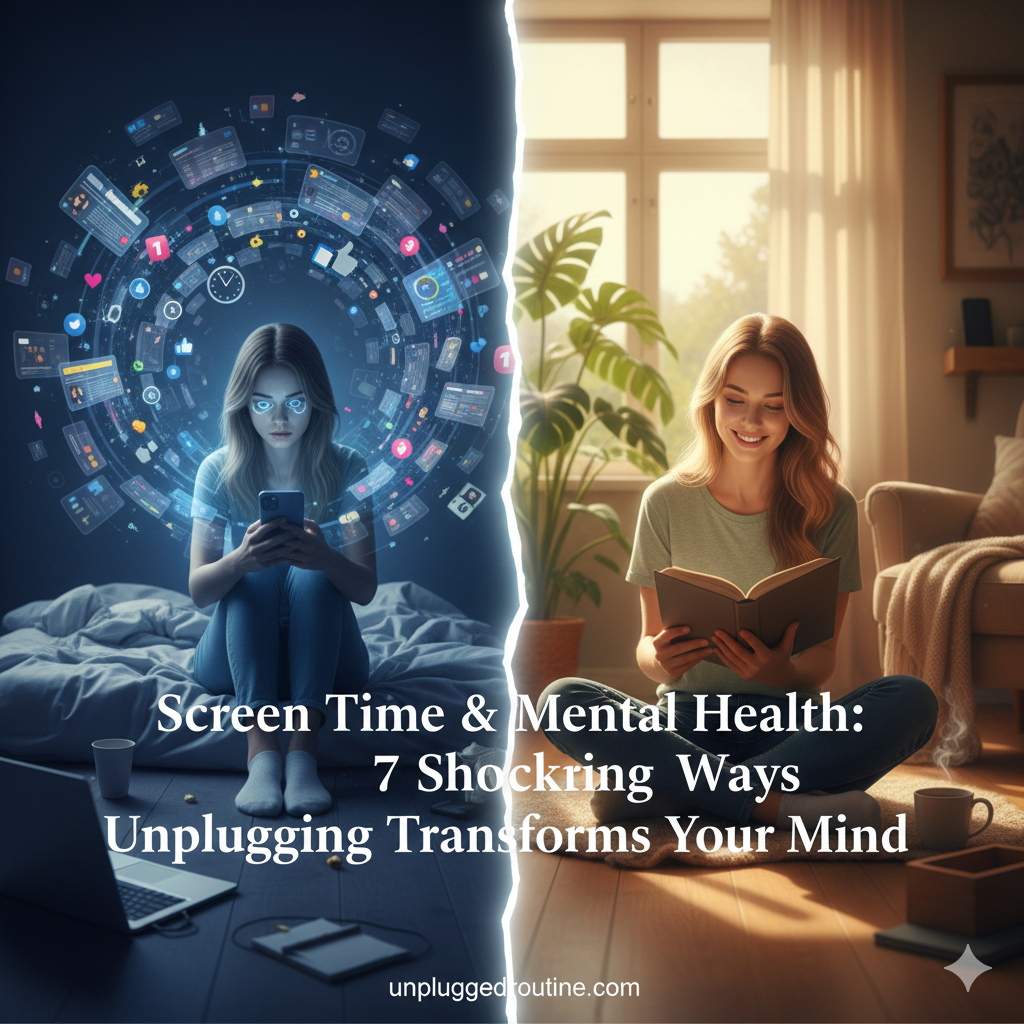
The Invisible Epidemic: How Screens Hijack Your Mind
Before we explore the incredible benefits of unplugging, let’s confront the current reality. Our brains were not designed for the constant, rapid-fire stimulation of the digital age. They thrive on deep work, slow processing, and genuine human connection.
The Hook: The “Always On” Brain
Imagine trying to relax while someone constantly shouts tiny bits of information at you. That’s what your brain experiences with constant notifications, endless feeds, and the pressure to be “always on.” This state of perpetual partial attention leads to chronic stress, anxiety, and a diminished capacity for deep thought.
Understanding the insidious ways screens affect our minds is the first step toward healing. Recognizing the problem empowers us to seek solutions and ultimately improve our mental health.
1. Unplugging Reduces Anxiety and Stress
Perhaps one of the most immediate and profound benefits of cutting down on screen time is a noticeable reduction in anxiety and stress levels.
The Hook: The Comparison Trap
Social media, in particular, often presents a curated, unrealistic highlight reel of others’ lives. This constant comparison fuels feelings of inadequacy, jealousy, and social anxiety. News feeds, designed to keep you engaged, often bombard you with negative or sensationalized content, triggering your fight-or-flight response.
What Happens When You Unplug:
- Less Social Comparison: Without constant exposure to others’ idealized lives, you naturally focus more on your own journey, reducing feelings of “not enough.”
- Reduced Information Overload: Taking a break from the endless news cycle allows your nervous system to calm down. You become less reactive to external stimuli.
- More Present Moment Awareness: When you’re not distracted by your phone, you’re more engaged with your immediate surroundings, fostering a sense of calm and presence.
Why it matters for mental health: Lower anxiety means a quieter mind, better emotional regulation, and a greater capacity to handle life’s challenges without feeling overwhelmed.
2. Improved Sleep Quality and Energy Levels
If you struggle with falling asleep, staying asleep, or waking up feeling refreshed, your screen habits are very likely a major culprit.
The Hook: The Blue Light Sabotage
The blue light emitted from screens (phones, tablets, computers, TVs) mimics daylight. Exposing your eyes to this light, especially in the evening, signals to your brain that it’s daytime. This suppresses the production of melatonin, the hormone essential for sleep.
What Happens When You Unplug:
- Melatonin Restoration: Removing screens at least an hour before bed allows your body to naturally produce melatonin, preparing you for sleep.
- Calmer Mind for Bed: Instead of winding down with stimulating content, you engage in relaxing activities like reading a physical book, journaling, or quiet conversation, leading to faster, deeper sleep.
- Reduced Sleep Fragmentation: Even if you fall asleep with your phone nearby, notifications can subtly disrupt your sleep cycles, leading to less restorative rest. Unplugging eliminates this.
Why it matters for mental health: Quality sleep is fundamental for mood regulation, cognitive function, and emotional resilience. Better sleep directly translates to better mental health and sustained energy throughout the day.
3. Enhanced Focus and Attention Span
The constant switching between apps, tabs, and notifications trains our brains for distraction, making sustained focus incredibly difficult.
The Hook: The “Attention Residue” Effect
Every time you switch tasks (e.g., checking a notification), your brain leaves a “residue” from the previous task, making it harder to fully engage with the new one. Over time, this erodes your ability to concentrate deeply.
What Happens When You Unplug:
- Rebuilding Attention Muscles: By removing constant digital interruptions, you give your brain the chance to practice sustained focus on one task.
- Reduced Multitasking Myth: You realize that effective work isn’t about doing many things at once, but doing one thing well.
- Deeper Engagement: Whether it’s a conversation, a book, or a project, you’re able to fully immerse yourself, leading to richer experiences and better outcomes.
Why it matters for mental health: Improved focus reduces mental fatigue, increases productivity (leading to less stress), and allows for deeper engagement in activities that bring genuine satisfaction.
4. Stronger Real-Life Relationships
Technology promises connection, but often delivers superficiality. We’re more “connected” than ever, yet many feel more isolated.
The Hook: The “Present Absentee”
How often have you been with friends or family, only to find everyone’s eyes glued to their phones? You’re physically present, but mentally miles away. This damages genuine connection.
What Happens When You Unplug:
- Active Listening: Without the distraction of your phone, you can genuinely listen and engage in conversations, noticing subtle cues and responding thoughtfully.
- Shared Experiences: You participate fully in activities—whether it’s a meal, a walk, or a game—creating stronger memories and bonds.
- Deeper Empathy: Face-to-face interactions allow you to read body language and emotional expressions more accurately, fostering greater empathy and understanding.
Why it matters for mental health: Strong social connections are a primary predictor of happiness and longevity. Reducing screen time helps cultivate these vital, authentic relationships.
5. Boosted Creativity and Problem-Solving Skills
When your brain is constantly fed pre-digested content, it has less opportunity to generate its own ideas. Boredom, surprisingly, is the birthplace of creativity.
The Hook: The “Consumption vs. Creation” Imbalance
Our digital lives are heavily skewed towards consumption. We watch, scroll, and read, but rarely create. This stifles our innate creative drive.
What Happens When You Unplug:
- Space for Ideas: When you’re not absorbing external input, your mind wanders. This “mind-wandering” is crucial for connecting disparate ideas and generating new insights.
- Embracing Boredom: Instead of reaching for your phone the moment boredom strikes, you allow yourself to sit with it. This pushes your brain to find novel ways to entertain or occupy itself.
- Hands-On Engagement: Unplugging frees up time for creative hobbies like writing, painting, playing music, or building things—activities that directly stimulate creativity.
Why it matters for mental health: Engaging in creative pursuits is incredibly fulfilling, boosts self-esteem, and can be a powerful outlet for processing emotions, all contributing to a healthier mind.
6. Greater Self-Awareness and Emotional Regulation
Our devices can be powerful tools for avoidance. When uncomfortable feelings arise, it’s easy to numb them with a quick scroll or a game.
The Hook: The “Digital Distraction” Trap
Feeling stressed? Check Instagram. Anxious? Watch a YouTube video. Lonely? Browse Facebook. Our phones provide an instant, albeit temporary, escape from uncomfortable emotions.
What Happens When You Unplug:
- Confronting Emotions: Without the immediate digital escape, you’re forced to sit with your feelings—stress, boredom, sadness, joy. This is uncomfortable but essential for growth.
- Developing Coping Mechanisms: You learn healthier ways to process emotions, like journaling, talking to a friend, exercising, or meditating.
- Understanding Your Triggers: You become more aware of why you reach for your phone, helping you identify underlying emotional needs.
Why it matters for mental health: Increased self-awareness and emotional regulation are cornerstones of mental resilience. They enable you to navigate life’s ups and downs with greater wisdom and calm.
7. Reconnection with the Physical World and Nature
Our digital lives often confine us indoors, staring at glowing rectangles, detached from the vibrant, stimulating physical world.
The Hook: Nature Deficit Disorder
Spending time in nature has scientifically proven benefits for mental health, reducing rumination, lowering blood pressure, and boosting mood. Yet, many of us spend mere minutes outside each day.
What Happens When You Unplug:
- More Time Outdoors: With fewer digital distractions, you’re more likely to step outside, whether for a walk in the park, gardening, or simply enjoying your backyard.
- Sensory Reawakening: You notice the smell of rain, the sound of birds, the feeling of sunlight on your skin—sensory inputs that nourish your brain and calm your nervous system.
- Perspective Shift: Connecting with the vastness of nature can put daily stressors into perspective, fostering a sense of awe and reducing feelings of being overwhelmed.
Why it matters for mental health: Reconnecting with nature is a potent antidote to digital fatigue, enhancing mood, reducing stress, and fostering a deeper sense of connection to something larger than ourselves.
The Path Forward: Making Unplugging a Habit
Understanding the benefits of reducing screen time & mental health is the first step. The next is taking action. This isn’t about perfection; it’s about progress.
- Start Small: Pick one area (e.g., no phone in the bedroom) and commit to it for a week.
- Schedule Unplugged Time: Block out specific hours or even a full day for a digital detox.
- Find Replacements: Fill the void left by screens with fulfilling analog activities (as discussed in our Digital Minimalism post!).
- Be Patient and Kind to Yourself: Breaking digital habits is challenging. Celebrate small victories and don’t get discouraged by setbacks.
Conclusion: Your Mental Well-being Deserves This
The evidence is clear: our relationship with screens profoundly impacts our mental health. From reducing anxiety and improving sleep to boosting creativity and strengthening relationships, the benefits of consciously unplugging are simply too significant to ignore.
It’s time to take control, not just of your devices, but of your mental landscape. By creating space between yourself and your screens, you’re not just taking a break; you’re building a more resilient, focused, and joyful mind. Your mental well-being is worth it.
Ready to transform your relationship with screen time and boost your mental health?
Visit UnpluggedRoutine.com and join our FREE 21-Day Mindful Unplug Challenge! Get daily prompts, practical tips, and a supportive community to help you rediscover peace and focus.
What’s the first positive change you hope to experience by unplugging more? Share your thoughts in the comments below!