Feeling overwhelmed by notifications, endless scrolling, and the constant digital hum? You’re not alone. In our hyper-connected world, achieving a true sense of calm and focus can feel like an uphill battle. But what if 2026 was the year you finally took back control?
This isn’t about ditching technology entirely; it’s about building a healthier relationship with it. It’s about intentional disconnection, creating space for what truly matters, and rediscovering the joy of being present. Welcome to the ultimate guide to your 2026 digital detox.
The Silent Epidemic: Why We Need a Digital Detox More Than Ever
Before we dive into the “how,” let’s acknowledge the “why.” Our digital lives, while offering incredible convenience and connection, often come with hidden costs.
- Attention Residue: Constantly switching between tasks leaves “attention residue,” meaning your brain is still trying to process the previous task even after you’ve moved on. This makes deep work and sustained focus incredibly difficult.
- Decision Fatigue: Every notification, every email, every new piece of content demands a micro-decision. Over time, this constant barrage can lead to decision fatigue, making it harder to make important choices in your real life.
- FOMO (Fear of Missing Out): The curated highlight reels of social media often leave us feeling inadequate or like we’re missing out on something better, leading to anxiety and dissatisfaction.
- Sleep Disruption: The blue light emitted from screens can interfere with melatonin production, throwing off your natural sleep cycle and leaving you feeling groggy and unrested.
Sound familiar? It’s time to break free.
Your 2026 Digital Detox Starts Here: Mindset Matters
The first step to any successful digital detox isn’t about tools; it’s about mindset. You need to genuinely want to make a change and understand that it’s a marathon, not a sprint. Be patient with yourself, acknowledge slip-ups, and celebrate small victories.
Think of it as training for a mental marathon. You wouldn’t expect to run 26 miles on day one, right? The same goes for retraining your brain to be less reliant on digital stimuli.
Step 1: The Digital Audit – Unmasking Your Habits
You can’t fix what you don’t understand. Your first mission is to become a digital detective and uncover your current usage patterns.
Action Point: Track Your Screen Time.
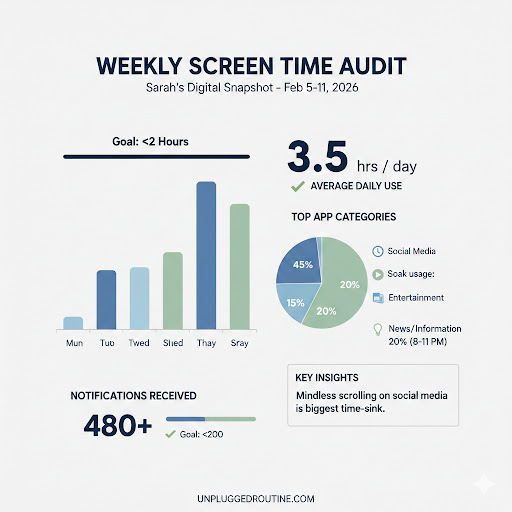
Most smartphones have built-in screen time trackers (iOS’s Screen Time, Android’s Digital Wellbeing). Spend a week simply observing your usage. Don’t try to change anything yet. Just record:
- Total screen time per day.
- Top apps used (social media, news, entertainment, productivity).
- Number of pick-ups and notifications received.
Pro Tip: Use an old-school notebook or a simple spreadsheet if you prefer. The goal is awareness, not judgment.
Reflection Questions:
- What surprised you about your usage?
- Which apps are true necessities, and which are time-sinks?
- Are there specific times of day when you’re most susceptible to mindless scrolling?
Here’s an example of what your screen time report might reveal:
Step 2: The Digital Declutter – Pruning for Peace
Now that you know where your time is going, it’s time to get ruthless. Just like decluttering your physical space, a digital declutter can be incredibly liberating.
Action Point: Uninstall and Turn Off.
Go through your phone and delete any apps you haven’t used in the last month, or that consistently make you feel anxious, distracted, or unhappy.
- Notifications: Turn off all non-essential notifications. For most apps, you don’t need a buzz or a banner. You’ll check them when you choose to check them.
- Email Subscriptions: Unsubscribe from newsletters you no longer read. Use a tool like Unroll.me to quickly manage subscriptions.
- Social Media Purge: Unfollow accounts that don’t inspire, inform, or entertain you positively. Mute noisy groups.
- Homescreen Minimalism: Remove distracting app icons from your primary homescreen. Keep only essential tools like phone, camera, maps.
Pro Tip: Create a “Distraction Folder” for all social media and entertainment apps. Bury it on the second or third screen. Make it a conscious effort to open it.
Step 3: Setting Boundaries – Creating Digital-Free Zones
Boundaries are essential for any healthy relationship, including the one with your tech. Designate specific times and places where digital devices are off-limits.
Action Point: Establish Sacred Spaces & Times.
- The Bedroom: Make your bedroom a screen-free sanctuary. Charge your phone outside the room. Invest in an actual alarm clock.
- Mealtimes: No phones at the dinner table. Engage with your family or enjoy your food mindfully.
- Pre-Bedtime: Establish a “digital curfew” 30-60 minutes before bed. Read a physical book, listen to music, or journal instead.
- Morning Ritual: Avoid checking your phone for the first 30-60 minutes of your day. Start with intention, not notification.
Template Idea: Your Daily Digital Boundary Schedule
| Time Slot | Digital Activity | Alternative Activity |
| 7:00 AM – 8:00 AM | No Phone (Morning Ritual) | Exercise, Meditate, Journal, Read |
| 12:00 PM – 1:00 PM | No Social Media (Lunch Break) | Walk, Read, Connect with colleagues |
| 6:00 PM – 7:00 PM | No Phone (Dinner Time) | Family conversation, Mindful eating |
| 9:00 PM Onwards | No Screens (Digital Curfew) | Read a book, Listen to podcast, Chat with partner |
This structured approach helps build new habits.
Step 4: The Art of Intentional Consumption – Quality Over Quantity
It’s not just about less screen time, but better screen time. When you do engage with technology, make it intentional and purposeful.
Action Point: Schedule Your Digital Engagement.
Instead of randomly checking social media or email throughout the day, designate specific times for these activities.
- Email: Check email 2-3 times a day (e.g., 9 AM, 1 PM, 4 PM) and then close the tab.
- Social Media: Allocate 15-20 minutes, once or twice a day, to catch up. Set a timer!
- News: Read a curated news digest or visit a reputable news site at a specific time, rather than constantly refreshing feeds.
Tool Tip: Use website blockers (like Freedom or Cold Turkey) during your focus times to prevent accidental browsing.
This image represents how intentional digital consumption can look:

Step 5: Embrace Analog – Rediscover the Real World
The void left by reduced screen time isn’t meant to be filled with boredom. It’s an opportunity to re-engage with the richness of the analog world.
Action Point: Curate an “Analog Activity List.”
Keep a running list of non-digital activities you enjoy or want to try. When you feel the urge to pick up your phone, consult this list instead.
- Read a physical book or magazine.
- Go for a walk in nature.
- Practice a hobby (drawing, knitting, playing an instrument).
- Call a friend or family member (a real conversation!).
- Cook a new recipe.
- Write in a journal.
- Listen to music without doing anything else.
- Do a puzzle or play a board game.
- Engage in mindful meditation.
Tips for Success:
- Keep supplies handy: Have your book by your bed, your journal on your desk, your walking shoes by the door.
- Start small: Even 10-15 minutes of an analog activity can make a difference.
- Invite others: Plan screen-free activities with friends or family.
Step 6: Leverage Technology for Good – Smart Tools for Your Detox
Paradoxically, some technology can actually help you with your digital detox. It’s about using tools as servants, not masters.
Tools & Templates for 2026:
- Focus Apps: Apps like Forest, Focus To-Do, or Tide can help you stay focused by using the Pomodoro Technique or gamifying your concentration.
- Website/App Blockers: Freedom, Cold Turkey, or StayFocusd allow you to block distracting websites and apps for set periods.
- Grey Scale Mode: Experiment with turning your phone screen to grayscale. Many people find that colors are a major draw, and removing them makes the phone less appealing. (Look in your phone’s accessibility settings).
- “Dumb” Phone/Minimalist Phone: For weekends or specific periods, consider using a basic “dumb” phone for calls and texts only, or utilizing a minimalist phone setup.
- Physical Alarm Clock: A simple, yet powerful tool to keep your phone out of the bedroom.
Template: Your Digital Detox Accountability Tracker
| Date | Screen Time Goal | Actual Screen Time | Digital-Free Hours (e.g., morning) | Analog Activity Performed | Notes/Challenges |
| Jan 1, 2026 | 2 hours | 2.5 hours | 1 hour | Reading a book | Kept checking news |
| Jan 2, 2026 | 2 hours | 1.8 hours | 1.5 hours | Long walk | Felt more present |
| Jan 3, 2026 | 2 hours | 2.1 hours | 1 hour | Painting | Had a moment of calm |
This tracker helps you stay accountable and visualize your progress.
Step 7: The Digital Detox Retreat – Going All In
For a truly transformative experience, consider a dedicated digital detox retreat, even if it’s just for a day or a weekend.
Action Point: Plan Your Mini-Retreat.
- Staycation Detox: Turn off your phone for 24-48 hours at home. Inform essential contacts you’ll be unreachable. Spend the time reading, cooking, walking, or engaging in hobbies.
- Nature Escape: Plan a camping trip, a cabin rental, or even just a day hike where cell service is limited or intentionally avoided.
- Designated “Unplugged” Weekend: Make a pact with family or friends to collectively put phones away for an entire weekend.
The experience of a complete disconnection, even for a short period, can reset your brain and remind you of the peace that exists beyond the screen.
Here’s an inspiring image of a personal digital detox retreat in nature:

Step 8: Overcoming the “Digital Withdrawal” – Handling the Urge to Scroll
Let’s be real: when you first put the phone down, you’re going to feel a twitch. You might feel phantom vibrations in your pocket or find your thumb hovering over where Instagram used to be. This is normal. It’s dopamine withdrawal.
Action Point: The 5-Minute Rule.
When the urge to check your phone strikes, tell yourself: “I can check it in five minutes.” Usually, the craving for that hits of “newness” passes within three minutes. Use that time to take five deep breaths or drink a glass of water.
Pro Tip: Acknowledge the boredom. Boredom is often the gateway to creativity. Instead of running from it with a screen, sit with it and see what thoughts arise.
Step 9: Rebuilding Social Connections – Depth Over Likes
In 2026, “connection” has become synonymous with “likes” and “comments,” but these are low-calorie social interactions. A digital detox allows you to reinvest in high-quality, real-world relationships.
Action Point: The “Phone Stack” Challenge.
When meeting friends for coffee or dinner, have everyone place their phones in a stack in the middle of the table. The first person to reach for their phone pays the bill (or buys the next round of drinks).
The “Analog Reach-Out”:
Once a week, instead of sending a text or a DM, call someone or write a physical postcard. The effort involved makes the connection significantly more meaningful for both parties.
Step 10: Long-Term Maintenance – The Unplugged Routine
A digital detox isn’t a one-time event; it’s a lifestyle adjustment. The goal is to move from a “detox” phase into a sustainable Unplugged Routine.
How to make it stick:
- Monthly Check-ins: Every first Sunday of the month, revisit your screen time audit. Are the old habits creeping back?
- The “One-In, One-Out” Rule: If you download a new app, you must delete an old one. This keeps your digital space curated.
- Find Your Community: Share your journey on unpluggedroutine.com or with friends. Having an accountability partner makes the transition 10x easier.
Why Your Future Self Will Thank You
By implementing these steps, you aren’t just “using your phone less.” You are reclaiming your cognitive sovereignty. You’ll notice:
- Improved Sleep: Without the blue light and late-night stressors, your REM cycle will thank you.
- Higher Productivity: Deep work becomes possible when you aren’t interrupted every 11 minutes.
- Lower Anxiety: Comparison is the thief of joy, and most comparison happens behind a screen.
- Better Memories: When you experience a sunset with your eyes instead of through a viewfinder, the memory is encoded more deeply in your brain.
Conclusion: Take the First Step Today
The digital world is designed to keep you hooked, but you have the power to change the channel. You don’t need to go “dark” forever; you just need to find your balance. 2026 is the year you stop being a passenger in your own digital life and start being the driver.
Whether you start by keeping your phone out of the bedroom tonight or by deleting that one app that always makes you feel “less than,” every small step counts toward a clearer, calmer, and more focused you.
Ready to reclaim your time? Download our Free 2026 Digital Detox Starter Kit below! It includes a printable version of the tracking templates used in this post, a “Digital Declutter” checklist, and a curated list of 50 analog hobbies to try this weekend.
Don’t forget to leave a comment below: What is the ONE app you know you need to spend less time on this week? Let’s hold each other accountable!