The digital world is amazing. It connects us, entertains us, and drives our modern economy. Yet, for many of us, the constant on button has become a source of subtle stress, endless distraction, and genuine burnout. If you feel like your devices are running your life rather than enhancing it, you’re ready for a change.
You don’t need a month-long cabin retreat to find peace. True digital balance isn’t about rejection; it’s about integration. It’s about learning how to incorporate unplugging into your daily life in sustainable, simple ways.
At UnpluggedRoutine.com, we understand that living completely off the grid isn’t practical. This comprehensive, step-by-step guide is designed to help you weave mindful disconnection into your existing routine, transforming your stress into presence, one small habit at a time.
The Myth of “All or Nothing” Unplugging
Many people avoid seeking digital balance because they think it means sacrificing productivity or connection. They imagine throwing their smartphone into the ocean and moving to a remote island. That’s a myth!
The truth is, even small, consistent acts of unplugging can dramatically reduce anxiety, sharpen your focus, and improve your relationships. We’re here to show you that a routine where you are present and intentional is entirely possible, even with a demanding job and a busy social calendar.
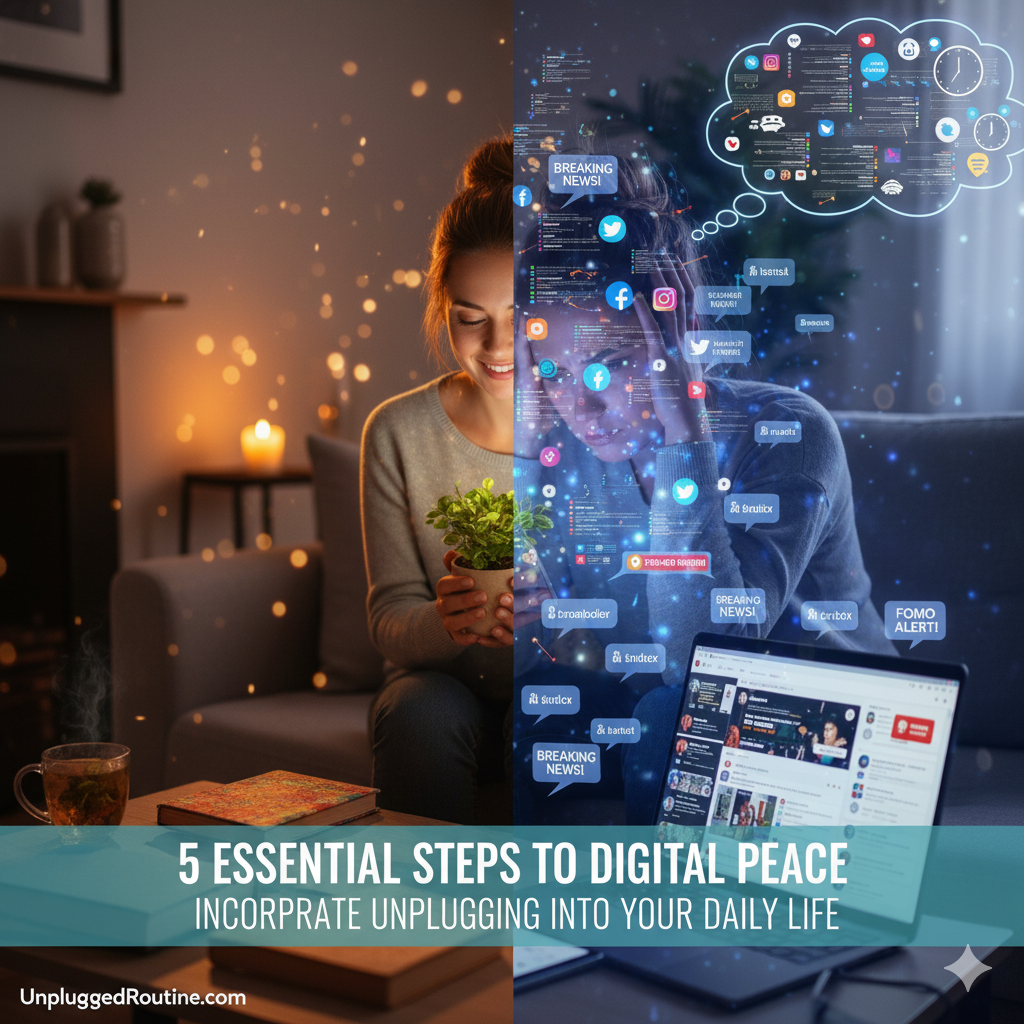
Step 1: Audit Your Digital Consumption (The Wake-Up Call)
You can’t fix what you don’t measure. The first crucial step in learning how to incorporate unplugging into your daily life is getting an honest, non-judgmental look at where your time is actually going.
Actionable Hook: Grab your phone and check your Screen Time or Digital Wellbeing report right now. What’s the number? Don’t panic—just observe.
- Identify Your Time Thieves: Which apps dominate your usage? Is it social media, endless news feeds, or maybe mobile games? Often, we spend the most time on the apps that provide the least long-term satisfaction.
- Track the “Why”: For one day, try to notice why you pick up your phone. Is it habit? Boredom? Anxiety? Recognizing the triggers is the key to breaking the cycle.
- Identify Your Peak Distraction Hours: Do you scroll mindlessly right before bed? Do you get lost in emails first thing in the morning? Pinpoint these times—they are your prime targets for the next step.
This audit gives you the necessary data to apply intentional friction where it’s needed most.
Step 2: Implement “Friction Points” to Break the Habit Loop
Smartphones are designed for convenience, which is why we reach for them without thinking. To start incorporating unplugging, you need to add small, intentional moments of “friction” to interrupt the autopilot habit.
Actionable Strategies:
- The “Out of Sight” Rule: The most effective friction is distance. When you are home, put your phone in a drawer, a basket, or a completely different room for set periods of time. If you have to get up to check it, you’ll think twice.
- Go Grayscale: Change your phone’s display settings to black and white. Color is a primary trigger for visual engagement. Without the vibrant hues, your apps instantly become less compelling and addictive.
- Hide the Time Thieves: Move all your tempting, time-wasting apps (social media, games) off your home screen and into a separate, obscure folder. You should have to search for them, not just tap them automatically.
- Silence the Distractions: Turn off all non-essential notifications. Every buzz is a mental interruption. Only allow notifications for direct phone calls and critical work/family communication.
Friction points give your brain those crucial extra seconds to choose presence over distraction.
Step 3: Schedule Your Unplugged Moments (Treat Them Like Meetings)
We tend to fill every quiet moment—waiting in line, riding an elevator, during commercials—with screen time. To genuinely incorporate unplugging, you must schedule it, just like you schedule a doctor’s appointment or a workout.
Actionable Strategies:
- The Bedtime Boundary: This is non-negotiable. Put your phone away and out of the bedroom at least 60 minutes before you plan to sleep. Read a physical book, listen to a podcast on a separate device, or talk with your partner.
- The “Walk the Dog” Rule: Dedicate certain activities to be completely phone-free. This could be cooking, walking your pet, or exercising. Use that time to let your mind wander and observe the world.
- The Analog Morning: Dedicate the first 30-60 minutes of your day to being completely phone-free. Use this time for stretching, journaling, a peaceful breakfast, or planning your day on paper. Starting your day intentionally sets a calm tone.
- The 25-Minute Focus Block: Use the Pomodoro Technique, but with a twist. Set a 25-minute timer to focus on a single task with your phone completely put away or on “Do Not Disturb.” Reward yourself with a phone break, but stick to the timer.
By scheduling these pockets of time, you create intentional space for rest and focus, ensuring the “unplugging” actually happens.
Step 4: Re-engage with the Analog World (Rediscover Your Hands)
When you successfully create space by unplugging, you need intentional, fulfilling activities to fill the void. Otherwise, boredom will inevitably pull you back to the screen. The goal here is to reconnect with activities that involve your hands, your creativity, or your physical environment.
Actionable Strategies:
- Creative Hobbies: Pick up a hobby that requires focused, non-digital attention: knitting, drawing, woodworking, playing a musical instrument, or coloring.
- Cook or Bake: Spend time preparing a meal from scratch. It’s a task that fully engages your senses and requires continuous presence.
- The “Connection Over Convenience” Rule: Instead of texting a friend, call them. Instead of ordering online, walk to a local store. These small choices prioritize real-world interaction and movement over the efficiency of a screen.
- Read Physical Books: The physical act of turning pages engages your mind differently than scrolling, and the lack of notifications allows for sustained focus and deeper comprehension.
These analog activities are incredibly restorative and provide the sustained satisfaction that quick digital hits cannot match.
Step 5: Practice Digital Minimalism and Maintenance
Unplugging isn’t a one-time event; it’s an ongoing practice of maintenance. As new apps and notifications crop up, you need a routine for keeping your digital life minimal and serving your goals.
Actionable Strategies:
- The Weekly Digital Cleanse: Once a week (perhaps on Sunday), spend 15 minutes reviewing your phone. Delete any apps you haven’t used, check your notification settings, and re-hide your “time thieves.” This prevents digital clutter from accumulating.
- The “One-In, One-Out” Rule: If you download a new social or entertainment app, challenge yourself to delete an old one. This keeps your digital landscape lean.
- Monthly Mini-Detox: Commit to one 4-hour block or one full day each month where you unplug completely. Use this time to explore nature, catch up with friends, or simply recharge. This periodic reset is powerful for long-term balance.
- Find an Accountability Buddy: Share your goals and challenges with a friend or family member who also seeks digital balance. Checking in with each other can provide the necessary motivation to stick to your routine.
Consistency is key. By making maintenance a regular part of your routine, you ensure that how to incorporate unplugging into your daily life becomes second nature.

Conclusion: Your Journey to a Present Life
Learning how to incorporate unplugging into your daily life is a powerful act of self-care and self-respect. It’s a conscious choice to prioritize your mental health, your real-world connections, and your deepest aspirations over the endless demands of the digital sphere. You don’t have to choose between productivity and peace—you can have both.
Start small. Choose just one strategy from this guide today—perhaps the “Out of Sight” rule—and practice it for a week. Notice the change. Notice the moments of calm you reclaim.
Ready to transform your relationship with technology and discover the peace of a truly present life? Visit UnpluggedRoutine.com now for more tools, worksheets, and community resources to support your step-by-step journey to lasting digital balance. Start your new, unplugged routine today!