In today’s hyper-connected world, students face an unprecedented barrage of digital distractions. From social media notifications to endless streaming options, the digital realm constantly vies for their attention. While technology undoubtedly offers incredible educational tools and opportunities for connection, an overreliance on screens can severely impact a student’s focus, mental health, and overall well-being.
This isn’t just about reducing screen time; it’s about reclaiming valuable mental space and fostering a healthier relationship with technology. This blog post from UnpluggedRoutine.com will explore seven game-changing unplugging routines specifically designed for students, helping them to cultivate better habits, enhance their academic performance, and improve their overall quality of life. Get ready to discover practical, actionable strategies that can make a real difference!
The Silent Crisis: How Constant Connectivity Affects Students
Before diving into the solutions, let’s understand the problem. Students are under immense pressure, and technology often becomes a coping mechanism or an additional source of stress.
Decreased Focus and Attention Spans: The constant switching between apps and notifications trains the brain for quick, shallow engagement rather than deep, sustained focus. This makes concentrating on lectures, reading textbooks, or tackling complex assignments incredibly challenging.
Impact on Mental Health: Social media can fuel anxiety, comparison culture, and feelings of inadequacy. The pressure to maintain an online persona, coupled with cyberbullying, takes a significant toll on a student’s mental well-being. Sleep patterns are also frequently disrupted by late-night screen use, exacerbating stress and affecting mood.
Physical Health Concerns: Extended periods of screen time contribute to sedentary lifestyles, eye strain, headaches, and poor posture. These physical symptoms can further detract from a student’s ability to perform their best.
Reduced Creativity and Problem-Solving: When answers are always a quick search away, students may lose opportunities to engage in independent thought, creative problem-solving, and critical thinking – skills vital for academic and life success.
It’s clear that fostering healthy unplugging routines isn’t just a luxury; it’s a necessity for thriving in the modern academic landscape.
Hook Step #1: The Digital Detox Audit
Before you can build new habits, you need to understand your current ones. Take 5-10 minutes to honestly assess your digital usage.
- Track Your Screen Time: Most smartphones have built-in screen time trackers. Review your usage for the past few days. Which apps consume most of your time?
- Identify Triggers: When do you reach for your phone or computer out of habit? Is it when you’re bored, stressed, procrastinating, or right before bed?
- Reflect on the “Why”: Why are you using these apps? Is it for genuine connection, information, or mindless scrolling?
This audit is not about judgment, but awareness. It’s the first crucial step towards creating more intentional unplugging routines.
Routine #1: The “Study Sprint, Tech Break” Method
This routine leverages the power of focused work followed by a deliberate tech-free break. It’s an excellent alternative to the traditional “Pomodoro Technique” if you find yourself getting lost in digital distractions during breaks.
- How it Works: Set a timer for 45-60 minutes for focused study. During this time, your phone is on silent, face down, or in another room. No social media, no checking emails unrelated to your study.
- The Unplugged Break: Once the timer goes off, take a 10-15 minute break. Instead of immediately grabbing your phone, do something completely tech-free: stretch, grab a healthy snack, take a short walk, doodle, or simply stare out the window.
- Why it Works: This method trains your brain for intense focus periods and offers a genuine mental refresh during breaks, preventing digital fatigue. It helps you associate breaks with true relaxation, not just another form of screen time.
Routine #2: The “Digital Sunset” Ritual
Poor sleep is a pervasive issue among students, often exacerbated by blue light exposure and mental stimulation from screens before bed. The Digital Sunset routine aims to reclaim your evenings for restful sleep.
- How it Works: Establish a strict “digital curfew.” This means no screens (phone, tablet, laptop, TV) for at least 60-90 minutes before your desired bedtime.
- Fill the Void: Replace screen time with calming, non-digital activities. Read a physical book, listen to a podcast (audio only!), journal, practice light stretching, meditate, or chat with a roommate or family member.
- Why it Works: Avoiding blue light helps your body produce melatonin, the sleep hormone. More importantly, it gives your mind a chance to wind down and process the day without the constant input and stimulation of digital content. Imagine ending your day feeling calm and centered, rather than wired and overwhelmed.
Routine #3: The “Focused First Hour” Approach
How you start your day often dictates its trajectory. Many students immediately reach for their phones upon waking, immediately diving into notifications and social media. This sets a reactive, rather than proactive, tone for the day.
- How it Works: For the first 30-60 minutes after waking up, commit to absolutely no digital devices. Your phone stays on airplane mode or in another room.
- Morning Rituals: Use this time for intentional activities that serve you: hydrate, stretch, meditate, review your day’s tasks, journal, or have a tech-free breakfast.
- Why it Works: This routine allows you to establish a sense of control and calm before the digital world floods in. It protects your mental space, helps you prioritize, and reduces the likelihood of starting your day feeling overwhelmed or distracted by others’ agendas. You become the master of your morning, not a slave to your notifications.
Routine #4: The “Notification Lockdown” Strategy
Constant notifications are digital interruptions that fragment your attention and pull you away from important tasks. For students, this can be particularly detrimental during study sessions.
- How it Works: Go into your phone’s settings and ruthlessly disable non-essential notifications. Ask yourself: “Does this app need to alert me immediately, or can I check it on my own terms?” For study sessions, enable “Do Not Disturb” or “Focus Mode.”
- Scheduled Check-ins: Instead of reacting to every ping, schedule specific times to check emails, social media, and messages (e.g., once every two hours, or after completing a task).
- Why it Works: You regain control over your attention. By reducing interruptions, you train your brain for sustained focus and reduce the constant urge to check your device. It minimizes context switching, which is a major productivity killer.
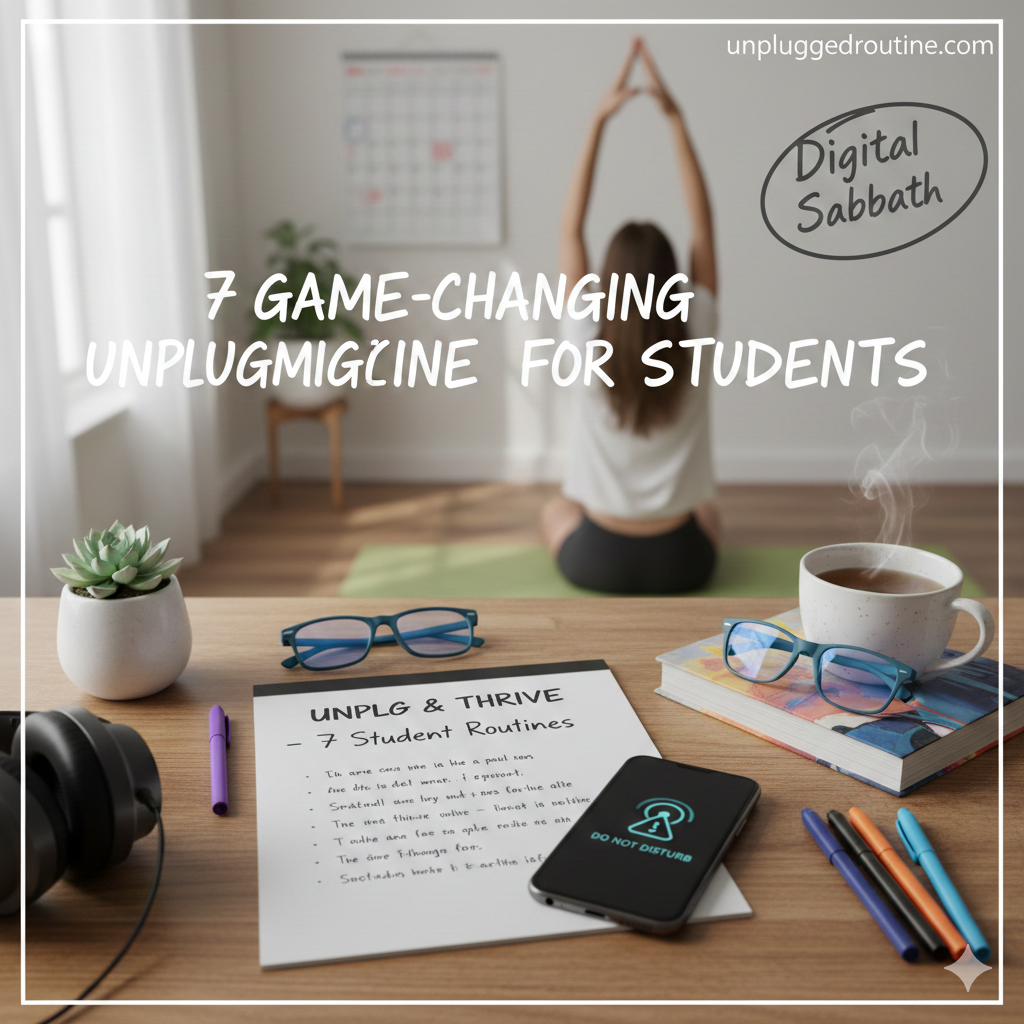
Routine #5: The “Weekly Digital Sabbath”
While daily routines are crucial, a longer, more immersive unplugging experience can offer a profound reset. A weekly digital sabbath is a powerful way to truly disconnect and reconnect with yourself and your surroundings.
- How it Works: Choose a specific block of time each week (e.g., Saturday afternoon, Sunday morning, or a full 24 hours) where you completely abstain from all non-essential digital devices. This means no social media, no streaming, no recreational internet use.
- Embrace Analog: Plan activities that are inherently non-digital: spend time in nature, pursue a hobby, read, cook, spend quality time with loved ones, volunteer, or explore your local community.
- Why it Works: This routine offers a deep cleanse from digital overload. It allows for mental decompression, fosters creativity, improves presence, and strengthens real-world connections. It reminds you that there’s a rich, fulfilling life beyond the screen.
Routine #6: The “Study Zone, Unplugged Zone” Method
Designating physical spaces as “unplugged zones” can create powerful environmental cues that support your goals.
- How it Works: Identify specific areas in your living space or on campus where screens are either forbidden or strictly limited to academic use.
- Bedroom: Make your bedroom a sanctuary for sleep and relaxation, free from laptops and phones, especially close to bedtime.
- Dining Table: Designate the dining table as a screen-free zone, promoting mindful eating and conversation.
- Specific Study Carrel/Desk: When you sit at your dedicated study spot, put your phone away.
- Consistent Enforcement: Be consistent with these zones. The more you adhere to them, the stronger the mental association becomes.
- Why it Works: Environmental design is a powerful tool for habit formation. By creating physical boundaries, you reduce the temptation to engage with screens out of habit in certain areas. It helps to differentiate between times and places for focused work/rest and times for digital engagement.
Routine #7: The “Mindful Scroll” Technique
Complete digital abstinence isn’t always practical or desirable. This routine acknowledges that you will use screens, but encourages conscious, intentional usage.
- How it Works: Before you open any social media app, streaming service, or even start browsing the internet for leisure, pause for a moment. Ask yourself:
- “What is my intention for opening this app/website?”
- “How long do I plan to spend here?”
- “Will this activity genuinely benefit me or bring me joy, or am I just mindlessly scrolling?”
- Set a Timer: If your intention is clear (e.g., “I want to check my friend’s recent posts for 10 minutes”), set a timer. When it goes off, close the app.
- Why it Works: This technique combats mindless consumption. By introducing a moment of mindfulness, you break the automatic habit loop and empower yourself to make conscious choices about your digital engagement. It transforms passive consumption into active, intentional usage, helping you derive more value from your screen time while preventing endless scrolling.
Integrating Unplugging Routines into Your Student Life
Implementing these routines isn’t about perfection; it’s about progress. Start small, pick one or two routines that resonate most with you, and commit to trying them for a week.
- Be Patient and Kind to Yourself: There will be slip-ups. Don’t let a momentary lapse derail your efforts. Acknowledge it, learn from it, and recommit.
- Find an Accountability Partner: Share your goals with a friend or roommate. Supporting each other can make a huge difference.
- Track Your Progress: Notice the positive changes! Are you sleeping better? Feeling more focused? Less anxious? Celebrating small victories reinforces the new habits.
- Customize and Adapt: These are frameworks. Adjust them to fit your unique schedule, preferences, and academic demands. The goal is to make them sustainable for you.
- Educate Yourself: Learn more about the neuroscience behind habit formation and the effects of technology on the brain. Knowledge is power and can fuel your motivation.
Conclusion: Reclaim Your Focus, Reclaim Your Life
Students today face unique challenges, but also incredible opportunities to cultivate resilience and intentionality in a digital age. By adopting smart, student-specific unplugging routines, you’re not just reducing screen time; you’re investing in your mental clarity, academic success, and overall well-being. You’re teaching yourself the invaluable skill of digital self-mastery, a skill that will serve you long after your academic career.
Ready to make a positive change? Start implementing one of these unplugging routines today and experience the transformative power of disconnecting to reconnect. Visit UnpluggedRoutine.com for more tips and resources to help you create a life that’s richer, more focused, and truly your own. Don’t let your digital devices dictate your life – take control, unplug, and unleash your full potential!