You’ve done it. You pushed through that final set, the sweat is dripping, and the satisfying feeling of accomplishment is washing over you. The only thing left between you and a relaxing shower is the cool-down. It’s so tempting to skip it, to call it a day, and just be done.
We often treat warm-ups and cool-downs as the optional, boring bits of exercise. But in reality, these moments are not chores to be endured; they are vital rituals that bookend your workout. They are the difference between a workout that leaves you feeling strong and one that leaves you feeling sore and sorry.
Think of these routines as an investment. The ten minutes you spend preparing and recovering are a direct deposit into your body’s “injury prevention” and “better results” accounts. This guide will elaborate on exactly how to warm up and cool down at home, transforming these moments from a hassle into a powerful part of your unplugged routine.

Table of Contents
Why You Should Never Skip Your Warm-Up 🔥
Think of your muscles like a rubber band. If you try to stretch a cold, stiff rubber band, it’s more likely to snap. But if you gently warm it up in your hands first, it becomes pliable, resilient, and ready for action. Your muscles, tendons, and ligaments work in precisely the same way.
A warm-up is a gradual and intentional process that tells every system in your body, “Get ready, we’re about to move.” On a physiological level, here’s what’s happening:
- Increased Blood Flow & Muscle Temperature: As you begin to move, your heart pumps more blood to your working muscles. This not only delivers vital oxygen but also literally warms the muscles up, making them more elastic and efficient.
- Joint Lubrication: Your joints contain synovial fluid, which acts as a natural lubricant. Gentle movement during a warm-up stimulates the production of this fluid, allowing your joints to move more smoothly and with less friction.
- Neuromuscular Activation: This is the process of waking up the communication pathways between your brain and your muscles. A good warm-up is like your brain making a clear phone call to your muscles, ensuring they fire correctly and in coordination when you need them to.
- Injury Prevention: This is the big one. By preparing your tissues for more strenuous work, you dramatically reduce the risk of pulls, strains, and tears.
- Mental Preparation: A warm-up is a powerful mental transition. It’s a moment to shift your focus from daily stressors to your own body, setting a clear intention for your workout and improving your overall focus.
The Perfect 5-Minute At-Home Warm-Up (Dynamic Stretching)
The gold standard for a warm-up is dynamic stretching. These are active, flowing movements that take your body through a full range of motion, mimicking the activity to come.
Here’s a simple and effective routine:
1. Arm Circles
Stand with your feet shoulder-width apart, arms extended out to your sides at shoulder height.
- How: Make small, controlled circles with your arms, gradually increasing their size.
- Focus On: Keeping your core engaged and your movements smooth, not rushed.
- Duration: 30 seconds forward, 30 seconds backward.
2. Leg Swings
Hold onto a wall or sturdy chair for balance.
- How: Swing one leg forward and backward like a pendulum. Then, switch to swinging it side-to-side across the front of your body.
- Focus On: Keeping your torso upright and your core tight to avoid arching your back. The movement should come from your hip joint.
- Duration: 30 seconds forward/backward, 30 seconds side-to-side per leg.
3. Cat-Cow Stretch
Start on your hands and knees with a neutral spine.
- How: Inhale as you drop your belly and look up, arching your back (Cow). Exhale as you press into your hands, round your spine, and tuck your chin to your chest (Cat).
- Focus On: This is a fantastic way to gently mobilize your entire spine.
- Duration: 60 seconds, flowing with your breath.
4. Torso Twists
Stand with your feet shoulder-width apart, knees slightly bent, and your arms crossed over your chest or bent at 90 degrees.
- How: Gently twist your upper body from side to side.
- Focus On: Letting the movement originate from your core, not just flinging your arms around.
- Duration: 45 seconds.
5. High Knees & Butt Kicks
- How: First, jog lightly in place, focusing on bringing your knees up toward your chest. Then, switch to kicking your heels back toward your glutes.
- Focus On: A soft, quiet landing with each step to protect your joints.
- Duration: 30 seconds of High Knees, followed by 30 seconds of Butt Kicks.
Why Cooling Down is Your Workout’s Best Friend 🧘♀️
You’ve pushed your body, and it has performed beautifully. Now it’s time to guide it back to a state of rest. A cool-down is your body’s transition from high gear back to neutral. Think of it as gently landing a plane rather than coming to a screeching halt.
Here’s why this “landing” is so crucial:
- Gradual Recovery: Abruptly stopping intense exercise can cause blood to pool in your lower extremities, which can lead to lightheadedness or fainting. A cool-down allows your heart rate and blood pressure to return to normal gradually and safely.
- Reduces Muscle Soreness: During intense exercise, your body produces metabolic byproducts like lactic acid. A gentle cool-down keeps the blood circulating, which helps to efficiently flush out these substances and deliver nutrients for repair, potentially lessening the dreaded DOMS (Delayed Onset Muscle Soreness).
- Improves Flexibility: This is the golden opportunity. Your muscles are warm, supple, and most receptive to stretching. Consistently using this time to stretch will lead to significant long-term improvements in your flexibility and range of motion.
- Promotes Relaxation: A cool-down is a signal to your nervous system to shift from a “fight-or-flight” state to a “rest-and-digest” state. This transition is crucial for lowering stress hormones like cortisol and beginning the recovery process.
Your Simple 5-Minute Cool-Down Routine (Static Stretching)
Now is the time for static stretches—holding a stretch for a period of time without movement. Breathe deeply and consistently throughout this process. Inhale to prepare, and exhale as you sink deeper into the stretch.
1. Quad Stretch
- How: Stand and hold onto something for balance. Grab your right foot and gently pull your heel toward your glute.
- Focus On: Keeping your knees close together and standing up tall to maximize the stretch in the front of your thigh.
- Duration: Hold for 30 seconds per side.
2. Hamstring Stretch
- How: Sit on the floor with one leg extended straight. Bend the other leg, placing the sole of your foot against your inner thigh. Hinge forward from your hips over the straight leg.
- Focus On: Maintaining a flat back. It’s better to not go as deep with a straight spine than to go further by rounding your back.
- Duration: Hold for 30 seconds per side.
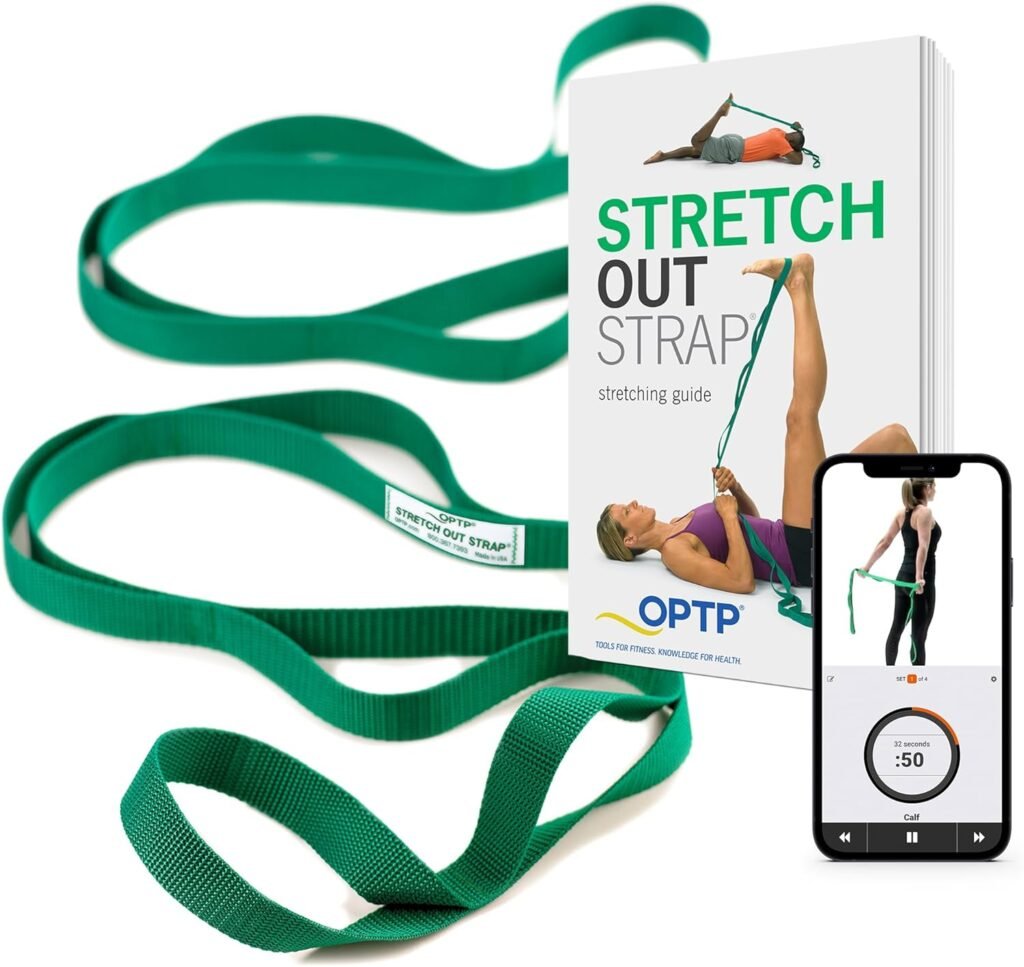
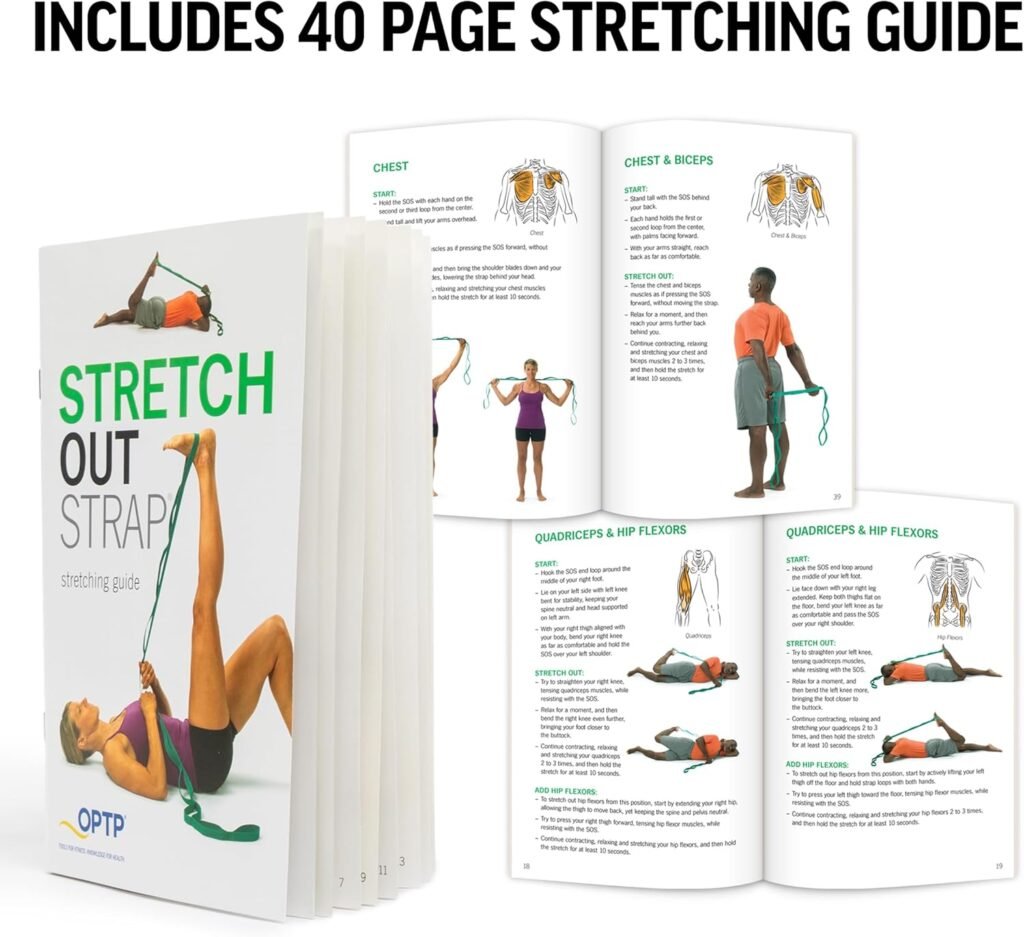
Pro-Tip: If you can’t comfortably reach your foot while keeping your back straight, don’t worry! Using a simple stretching strap around the arch of your foot can help you deepen the stretch safely and effectively.
3. Figure-Four Stretch
- How: Lie on your back with your knees bent. Cross your right ankle over your left thigh. Reach through and gently pull your left thigh toward you until you feel a stretch in your right glute and hip.
- Focus On: Keeping your head and shoulders relaxed on the floor.
- Duration: Hold for 30 seconds per side.
4. Chest Stretch in Doorway
- How: Stand in a doorway and place your forearms on the frame, creating 90-degree angles with your elbows slightly below your shoulders. Step forward gently.
- Focus On: Feeling a broad, opening stretch across your collarbones and the front of your shoulders.
- Duration: Hold for 30 seconds.
5. Child’s Pose
- How: Kneel on the floor, bring your big toes to touch, and sit back on your heels. Fold forward, extending your arms in front of you or resting them alongside your body.
- Focus On: Deep, diaphragmatic breathing. Feel your back expand with every inhale and sink deeper with every exhale.
- Duration: Hold for 60 seconds.
Frequently Asked Questions (FAQ)
- Can I do static stretching before my workout?
- It’s best to avoid it. Studies have shown that holding static stretches before a workout can temporarily reduce muscle power and performance. Always prioritize dynamic, active movements for your warm-up.
- How long should a warm-up and cool-down be?
- A good rule of thumb is 5-10 minutes for each. If you’re planning a particularly intense or long workout, you may benefit from a slightly longer warm-up to ensure your body is fully prepared.
- Do I need to warm up before lighter activities like a brisk walk?
- Yes! Even a quick 2-3 minute warm-up with arm circles and leg swings can prepare your joints and muscles for movement, reducing the risk of a surprise strain even during lower-intensity activities.
- What if I’m really short on time?
- If you absolutely must choose, always prioritize the warm-up. Preventing an injury is far more important than the post-workout stretch. A 2-minute cool-down with one or two key stretches is still better than none at all.
Conclusion: Bookend Your Workouts with Intention
Your warm-up and cool-down are not afterthoughts; they are the intentional, mindful actions that frame your physical effort. They are non-negotiable parts of a smart, sustainable fitness routine that respects the amazing machine that is your body.
Treat these moments not as a chore, but as a promise to yourself—a promise to stay safe, perform better, and recover faster. By integrating these simple 5-minute routines, you’re ensuring that every workout on your unplugged journey is not just effective, but truly nourishing from start to finish.
“Ready to protect your body and get better results? Try this 5-minute routine on your next workout and let us know how it feels!”