It’s December. The air is crisp, the trails are quiet, and there is a unique, hushed beauty that only a winter landscape can provide. But let’s be real—sometimes the hardest part of an unplugged routine in the winter isn’t the digital detox; it’s the freezing wind chill and the fear of slipping on a patch of black ice.
At unpluggedroutine.com, we believe that nature shouldn’t have an “off-season.” In fact, winter nature walks are some of the most mentally refreshing experiences you can have. The “blue light” of a winter sky and the crunch of fresh snow offer a sensory reset that summer just can’t match.
However, winter walking requires more than just a pair of sneakers and a heavy coat. To stay safe and actually enjoy the experience, you need the right strategy.
Here is your definitive guide to Winter Nature Walk Safety Tips and the ultimate gear list to keep you warm, dry, and grounded this December.
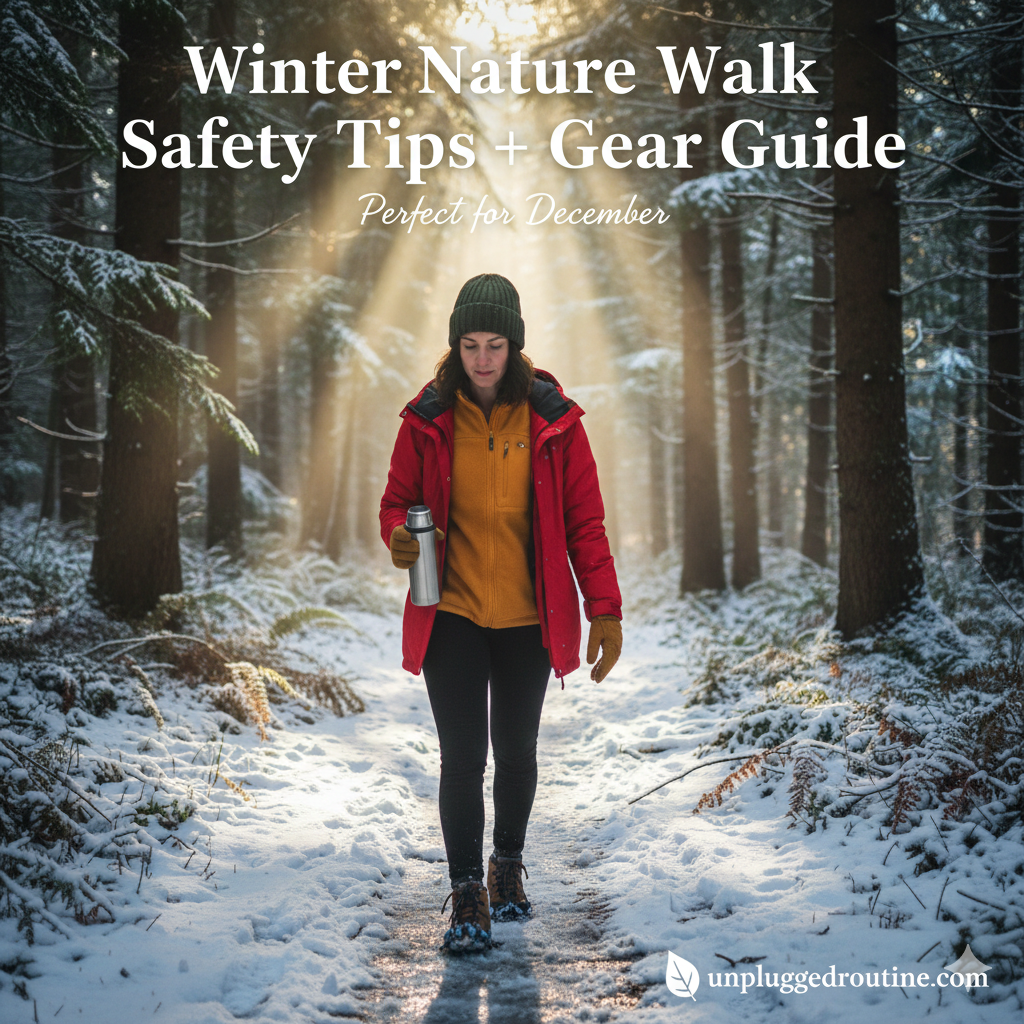
1. The Power of Three: Mastering the Layering System
When it comes to winter safety, “one big coat” is a mistake. If you get too hot while walking, you’ll sweat; once you stop, that sweat cools down and chills you to the bone.
The gold standard for winter walking is the Three-Layer System:
- The Base Layer (Wicking): This should be synthetic or merino wool. Never wear cotton! Cotton traps moisture and will make you freeze.
- The Mid-Layer (Insulating): A fleece or a “puffy” down jacket that traps your body heat.
- The Shell (Protection): A windproof and waterproof outer layer. This is your shield against December’s unpredictable elements.
2. Protect Your Extremities: Why Your Hat Matters
You’ve probably heard that you lose 40% of your heat through your head. While that specific number is a bit of a myth, your head, hands, and feet are the first places where you’ll feel the bite of the cold.
Invest in a moisture-wicking beanie and thermal gloves. For extra-cold December days, consider “mitten-gloves” (glittens) that allow you to use your fingers if you need to check a map but keep your fingers bundled together for warmth the rest of the time.
3. Traction is Action: Don’t Slip on December Ice
The most common winter injury is a fall. Even a familiar trail can become a skating rink after a quick freeze.
For Winter Nature Walk Safety, traction devices like Yaktrax or Microspikes are game-changers. These are rubber harnesses with metal cleats that slip right over your regular walking boots. They give you “velcro-like” grip on ice and packed snow, allowing you to walk with confidence instead of doing the “penguin waddle.”
How to Prep for Your December Walk: 3 “Hook” Steps
Before you head out the door into the cold, follow these three steps to ensure a successful outing:
- Step 1: The “Toasty” Warm-Up. Do five minutes of light stretching or jumping jacks inside your house before you put your coat on. Getting your blood pumping before you hit the cold air helps your body maintain its core temperature much faster.
- Step 2: Check the “RealFeel.” In December, the thermometer lies. Always check the wind chill. A 30°F day can feel like 15°F if the wind is kicking up. Plan your route accordingly—choose wooded trails that offer wind protection over open fields.
- Step 3: Tell a “Trail Buddy.” Even if you are walking for solo mental health, text a friend your planned route and your expected return time. Phone batteries drain significantly faster in cold weather, so you can’t always rely on a 911 call.
4. Hydration and Calories: Your Internal Heater
Many people forget to drink water in the winter because they don’t feel “thirsty” like they do in July. However, your body works twice as hard in December to keep your internal temperature stable.
Bring a thermos of warm herbal tea or even just warm water. Drinking cold water can actually lower your core temperature. Additionally, carry a high-protein snack. Your body burns more calories in the cold, and “stoking the fire” with food helps keep you warm from the inside out.
5. Timing Your Unplugged Session: The Early Sunset
The biggest safety hazard in December is the clock. Sunset can happen as early as 4:30 PM in many parts of the U.S.
Always start your walks earlier than you think you need to. If you are heading out after 2:00 PM, carry a lightweight headlamp—even if you plan to be back before dark. Getting lost on a trail is stressful; getting lost on a trail in the dark and the cold is a genuine emergency.
6. Footwear: The Foundation of Winter Wellness
If your feet get wet, your walk is over. Look for boots that are specifically labeled as waterproof, not just water-resistant.
Pair your boots with wool socks. Merino wool is the “magic fabric” of winter; it stays warm even if it gets slightly damp. Pro-tip: Carry a spare pair of socks in your backpack. If you accidentally step in a deep slush puddle, a dry pair of socks can save your day (and your toes)7. The “Unplugged” Phone Hack: Battery Safety
Lithium-ion batteries hate the cold. Your phone might go from 40% to 0% in a matter of minutes if exposed to December air.
Keep your phone in an inner pocket close to your body heat. If you’re using it for navigation or emergency contact, only take it out when absolutely necessary. This also helps with your digital detox—if the phone is buried under three layers of wool, you’re less likely to check Instagram!
8. Recognize the Signs: Hypothermia vs. Just Being Cold
Part of Winter Nature Walk Safety Tips is knowing when to turn back. There is no shame in cutting a walk short.
Watch for the “mumbles, stumbles, and fumbles.” If you or a walking partner start shivering uncontrollably, slurring words, or becoming clumsy, it’s time to head for warmth immediately. These are early signs of hypothermia. December beauty is worth seeing, but your health is the priority.
9. Sunlight: The Ultimate December Mood Booster
Despite the cold, December walks are the best way to fight Seasonal Affective Disorder (SAD). Natural light—even on a cloudy day—is significantly stronger than indoor lighting.
Try to time your walk between 10:00 AM and 2:00 PM when the sun is at its highest point. This maximizes your Vitamin D exposure and gives your circadian rhythm the “daytime” signal it needs to help you sleep better at night.
10. The Gear List: Your December Essentials Checklist
Before you head to unpluggedroutine.com to log your miles, make sure you have these essentials:
- Traction Cleats: For ice safety.
- Lip Balm & Sunscreen: The winter sun reflecting off snow can cause surprising burns.
- Insulated Thermos: For warm hydration.
- Emergency Whistle: Small, light, and loud.
- Power Bank: To keep that “inner pocket” phone charged.
Conclusion: Winter is Your New Favorite Season
Winter nature walks don’t have to be a test of endurance. With the right Winter Nature Walk Safety Tips and a solid gear guide, December becomes a month of quiet reflection and stunning scenery rather than a month of being stuck indoors.
Reclaiming your routine in the winter is the ultimate act of self-care. It proves that you are in control of your wellness, regardless of the weather.
Ready to gear up and head out?
Download our “December Trail Prep Checklist” at unpluggedroutine.com/winter-prep to make sure you never miss a safety step. We’d love to hear from you—what’s your favorite local trail to visit after the first snowfall? Leave a comment below!