Hey there, fellow screen-gazer! Ever felt that buzzing in your head after hours staring at a device? Or maybe a strange relief when you finally put your phone down, even if just for a moment?
It’s not just in your head (pun intended!). There’s a profound, physiological shift happening in your brain when you step away from your digital life. We live in an always-on world, where our screens are our constant companions, sources of entertainment, information, and connection. But what exactly is this constant connection doing to our most vital organ – our brain?
You’ve probably heard the advice to “unplug,” but have you ever wondered why it’s so important? What are the actual, tangible changes that occur within your grey matter when you give it a much-needed break from the digital onslaught?
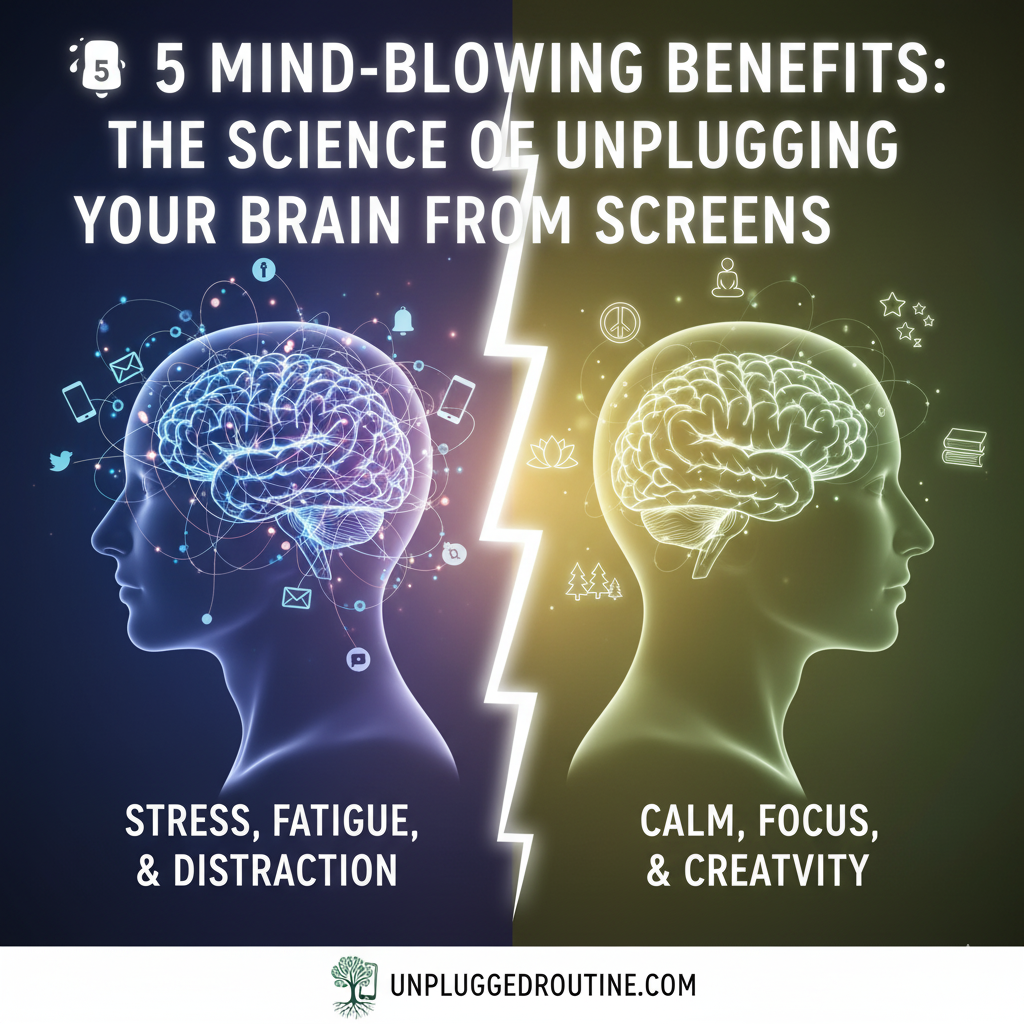
The Big Hook: Your Brain on Screens – A Constant State of “Go!”
Imagine your brain like a high-performance engine. Screens are like constantly hitting the gas pedal – even when you’re just cruising. Every notification, every new tab, every video auto-playing is a small, insistent demand on your attention.
This constant stimulation keeps your brain in a state of hyper-arousal. Your prefrontal cortex, responsible for decision-making and focus, is working overtime. Your amygdala, the brain’s alarm system, is easily triggered by negative news or social comparisons. And your dopamine reward system is constantly seeking the next digital hit.
The result? Mental fatigue, difficulty concentrating, increased anxiety, and even physical symptoms like eye strain and headaches. Your brain is craving a vacation, a moment to just be.
The good news? The solution is within reach, and it’s backed by fascinating neuroscience. This post will delve into The Science of Unplugging, revealing five mind-blowing benefits that occur when you intentionally step away from screens. You’ll understand why those moments of digital downtime are so crucial for your cognitive health and overall well-being.
Ready to understand your amazing brain better and learn how to give it the break it deserves? Let’s dive in!
Benefit 1: 🚀 Boosted Focus & Concentration – Reclaiming Your Attention Span
In our screen-saturated world, our attention spans are shrinking. We’re constantly bombarded with information, and our brains have become adept at switching tasks quickly, but less so at focusing deeply.
The Brain’s “Default Mode Network”
When you’re constantly engaging with screens, your brain is in an externally-focused, task-oriented mode. This keeps your Default Mode Network (DMN)—the brain region associated with self-reflection, introspection, and creative thinking—from fully activating.
The Science: Taking a break from screens allows your DMN to kick in. This network is crucial for consolidating memories, processing emotions, and developing a stronger sense of self. When your DMN is active, your brain can wander, make new connections, and essentially “reset” its ability to concentrate. This isn’t just about relaxation; it’s about making your brain more efficient.
Hook Step 1: The “Digital-Free” Work Sprint
Try setting a timer for 30-60 minutes and work on a single task without any digital distractions. Put your phone on airplane mode and out of sight. Close all unnecessary tabs on your computer. Notice how your ability to focus deepens over time. You’re training your brain like a muscle.
Benefit 2: 😌 Reduced Stress & Anxiety – Calming the Amygdala
The constant stream of notifications, emails, and news alerts keeps our stress response systems on high alert. This chronic, low-level stress takes a significant toll on our mental and physical health.
The Amygdala and Cortisol Connection
Your amygdala, the part of your brain that processes fear and stress, is easily activated by the perceived demands of your digital life. Every notification can trigger a small release of cortisol, the “stress hormone.” Over time, elevated cortisol levels can lead to chronic anxiety, sleep problems, and even impaired immune function.
The Science: Unplugging gives your amygdala a break. When you remove the constant digital triggers, your brain’s stress response naturally calms down. This allows your parasympathetic nervous system (your “rest and digest” system) to take over, lowering your heart rate, reducing muscle tension, and promoting a sense of calm. Studies have shown that even short digital breaks can significantly reduce perceived stress levels.
Hook Step 2: The “Notification Detox” Hour
Pick one hour each day (e.g., after work, before bed) and put your phone on “Do Not Disturb” or airplane mode. Commit to not looking at any screens during this hour. Engage in a calming activity like reading a physical book, listening to music, or taking a walk. Feel the palpable drop in your anxiety.
Benefit 3: 😴 Improved Sleep Quality – Restoring Melatonin Production
Most of us are guilty of scrolling through our phones right before bed. While it might feel relaxing, this habit is actively disrupting your body’s natural sleep cycle.
Blue Light’s Sneaky Impact
The screens of our smartphones, tablets, and computers emit blue light. This type of light is particularly effective at suppressing the production of melatonin, the hormone that signals to your body that it’s time to sleep. Blue light tricks your brain into thinking it’s still daytime, delaying your natural sleep onset.
The Science: When you unplug an hour or two before bed, you allow your body to naturally produce melatonin. This helps regulate your circadian rhythm, leading to faster sleep onset, deeper sleep cycles, and more restorative rest. Better sleep isn’t just about feeling less tired; it profoundly impacts your mood, cognitive function, and overall health.
Hook Step 3: The “Bedroom Ban” Challenge
For one week, remove all screens from your bedroom. Charge your phone in another room. Use an old-fashioned alarm clock if needed. Instead of scrolling, try reading a paperback, journaling, or listening to a podcast with your eyes closed. Notice how quickly your sleep improves.

Benefit 4: 💡 Enhanced Creativity & Problem-Solving – Letting Your Mind Wander
Our always-on culture encourages constant busyness, leaving little room for boredom or unstructured thought. Yet, it’s often in these moments of “doing nothing” that our best ideas emerge.
The Power of Mind-Wandering
When your brain is constantly engaged with external stimuli, it has less opportunity for internal processing. Creative insights often come from the brain’s ability to make novel connections between seemingly unrelated ideas. This usually happens when your mind is relaxed and allowed to wander, not when it’s overloaded.
The Science: Unplugging provides the mental downtime necessary for your brain to engage in “diffuse thinking.” This is the mode where your brain processes information, consolidates learning, and generates new ideas. Think of it like defragmenting a hard drive – it organizes information and makes new pathways. Artists, writers, and scientists have long known the power of walking away from a problem to let the subconscious work on it.
Hook Step 4: The “Boredom Buddy” Walk
Take a 15-30 minute walk without your phone or any headphones. Let your mind simply observe your surroundings, or gently wander. Don’t try to solve a problem; just allow your thoughts to flow freely. You might be surprised by the insights or creative sparks that emerge.
Benefit 5: 🫂 Stronger Real-World Connections – Activating Empathy Circuits
While screens connect us globally, they can inadvertently disconnect us from the people right in front of us. The quality of our in-person interactions often suffers when a device is present.
Mirror Neurons and Empathy
When we interact face-to-face, our brains engage “mirror neurons” that help us understand and empathize with others’ emotions. We pick up on subtle cues like body language, facial expressions, and vocal tones – details that are largely lost or misinterpreted through screens.
The Science: Putting screens away during social interactions allows you to be fully present. This deepens your ability to listen, empathize, and respond authentically. Strong social connections are fundamental to human well-being and are powerful buffers against stress and loneliness. The Science of Unplugging isn’t just about what happens inside your head, but also how it improves your interactions outside of it.
Hook Step 5: The “No Phone Zone” Dinner
If you live with others, implement a strict “no phones at the dinner table” rule. If you eat alone, turn off all screens and simply focus on your meal, savoring the tastes and textures. Observe how this small act shifts the atmosphere and allows for more meaningful connection or mindful eating
Your Brain Craves a Break – Give It the Gift of Unplugging
It’s clear: The Science of Unplugging isn’t just a trend; it’s a fundamental need for our modern brains. From boosting your focus and calming anxiety to improving sleep, enhancing creativity, and deepening real-world bonds, the benefits of stepping away from screens are profound and scientifically backed.
You don’t need to ditch technology entirely. The goal isn’t to become a digital hermit, but to become a mindful user. By understanding what happens inside your brain when you unplug, you’re empowered to make intentional choices that support your cognitive health and overall happiness. Your brain is an incredible, adaptable organ, and giving it regular breaks from screens is one of the kindest things you can do for it.
Start Your Brain’s Recharge Today!
Ready to experience these amazing brain benefits for yourself?
I challenge you to choose one of the five Hook Steps from this post and commit to it for the next three days. Which scientific benefit resonates most with you? Will you try the “Digital-Free” Work Sprint or the “Bedroom Ban” Challenge?
Tell us about your experience! Share which Hook Step you’re trying and what changes you notice in your brain and mood in the comments below. Let’s build a community that understands and values The Science of Unplugging for a healthier, happier mind.
For more insights and practical tips on creating a balanced digital life, make sure to visit us at unpluggedroutine.com!